
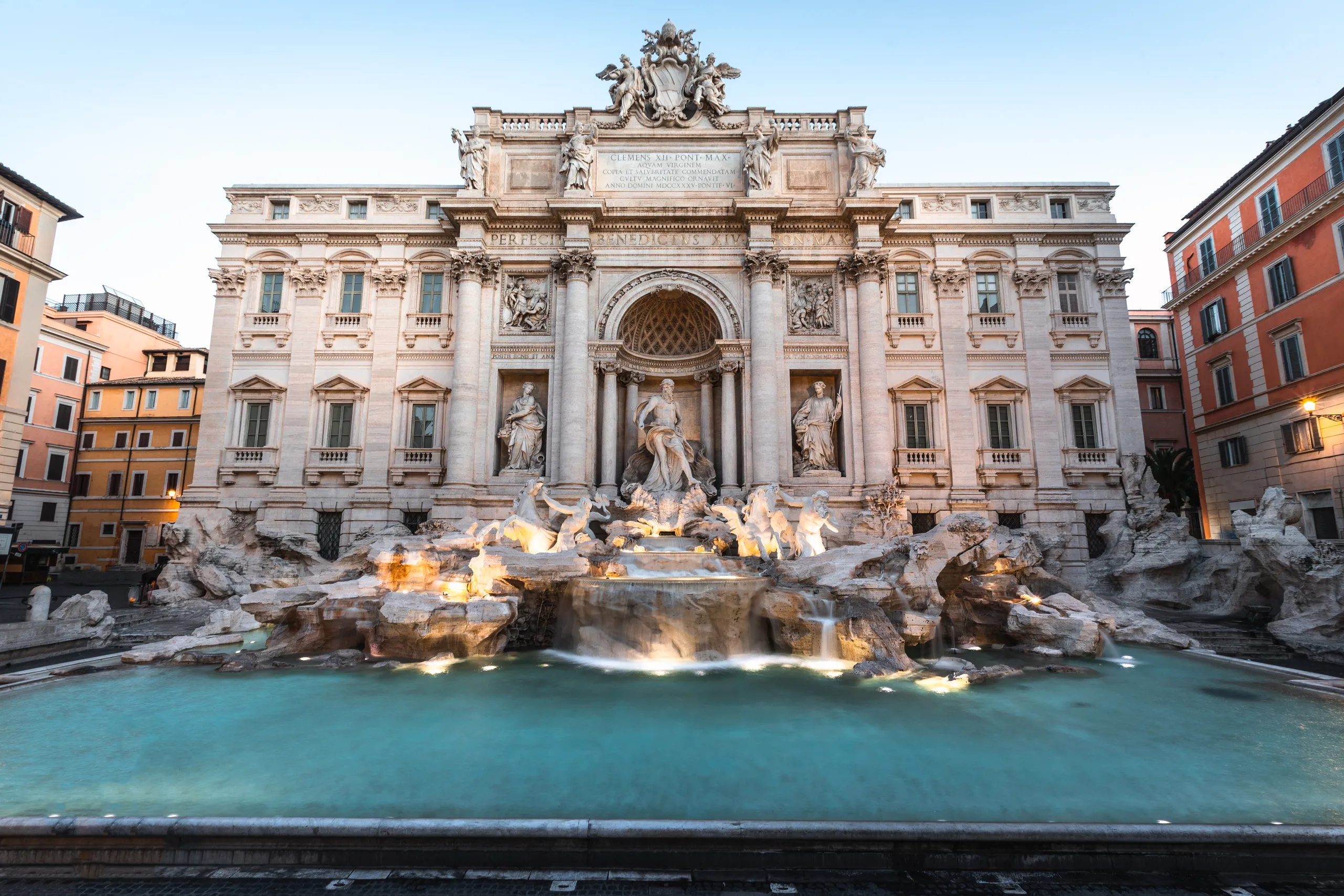
Rome's squares and fountains: outdoor rooms with a floor plan
Navona, Campo de' Fiori, Farnese, the Spanish Steps. What is under each of them, what the water is, and the two that will fine you.
Rome's squares are not gaps between buildings. Each of the ones on this page is a room with a shape that came from something specific — a stadium, a market, a theatre, a papal family with money — and once you know which, the square stops being pretty and starts being legible.
Twenty tours here, from €3,50 to €269, median €52,50. They carry 7,982 reviews at a weighted 4.90, which is among the highest scores on this site.
An honest note about that number before you read anything into it. The four most-reviewed products on this page are cooking classes that happen to be a street away from Piazza Navona, and they bring several thousand reviews with them. That is the marketplaces' geography rather than ours: a class near a square gets filed under the square. The walking tours here are excellent and there are fewer of them than the headline count suggests.
All of them are within eleven minutes of the Pantheon's portico except the Spanish Steps, which are fifteen, and they are the only stop on this page most people find underwhelming when they get there.
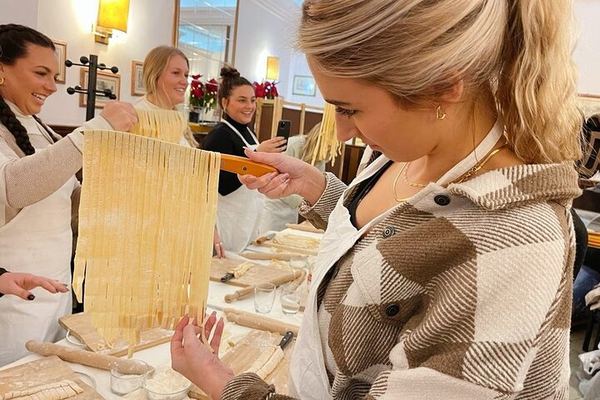
Fettuccine Class on Piazza Navona, at Ristorante Tucci
A pasta workshop held on the square itself rather than off it, with the fountains in the window and a technique that works at home with a rolling pin.
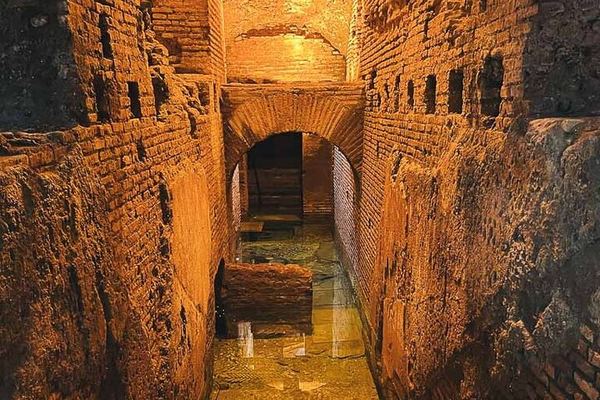
Following the Aqueduct from the Spanish Steps to the Trevi Cistern
A walk with one argument, tracing a working Roman aqueduct end to end, including the stretch exposed under a Via del Tritone department store.
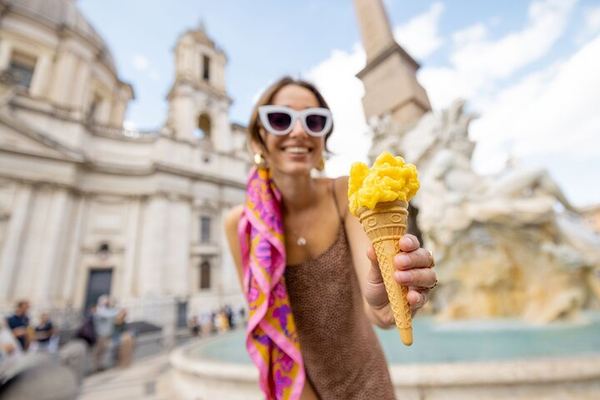
Gelato and Fettuccine Class on Piazza Navona, in Two Parts
You make both by hand, then the restaurant kitchen cooks your pasta and the waiters plate it at your table as they would anything on the menu.
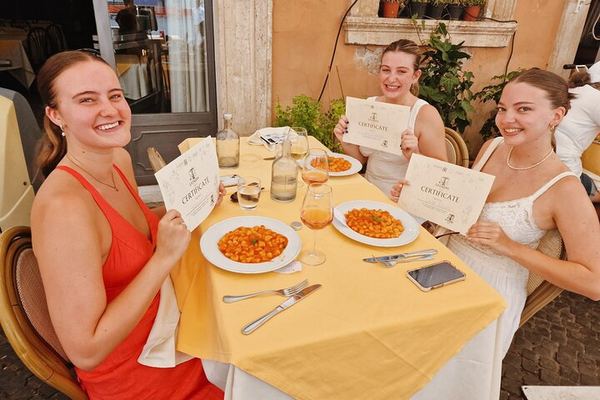
Gnocchi Class at Ristorante Panzirone on Piazza Navona
Gnocchi are won or lost in the shaping, which is why doing it once under supervision beats reading about it. Thursday is the traditional day in Rome.
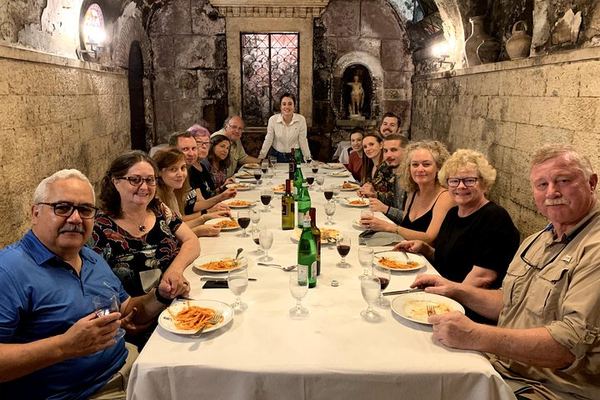
Jewish Ghetto Food Walk with Dinner among Roman Ruins
Four evening hours through the oldest inhabited quarter in Rome, with its own cooking tradition, and dinner served on the foundations of an ancient theatre.
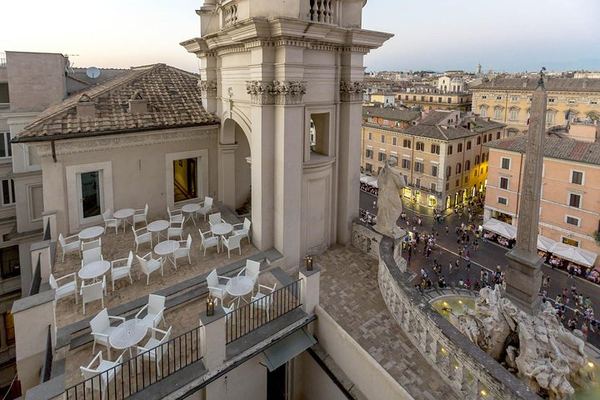
Opera on the Borromini Terrace above Piazza Navona
Verdi, Rossini and Puccini sung unamplified on the Terrazza Borromini, aperitivo included, with a visit afterwards to the Grande Bellezza roof.
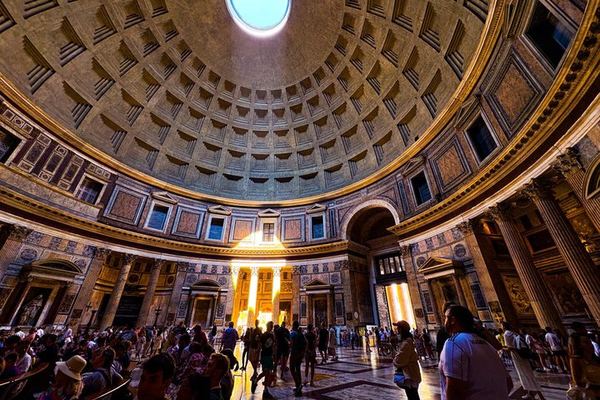
Pantheon, Sant'Ignazio and the Corners the Guidebooks Skip
Twelve people maximum, and a route past the painted false dome, the Caravaggios that cost nothing, and Domitian's stadium seen from the street.
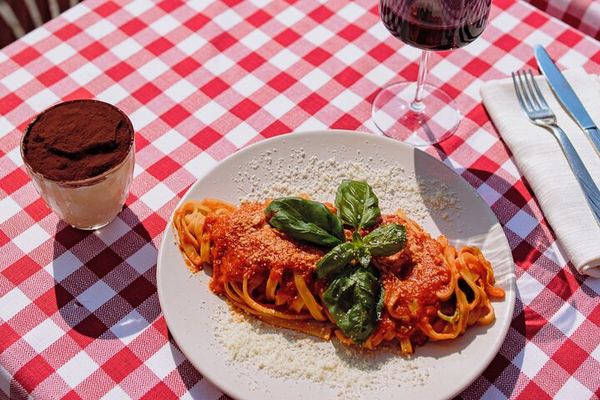
Pasta and Tiramisù Class Overlooking Piazza Navona
Two recipes rather than one, including the dessert most often made badly outside Italy, then a table on the square with drinks and appetisers included.
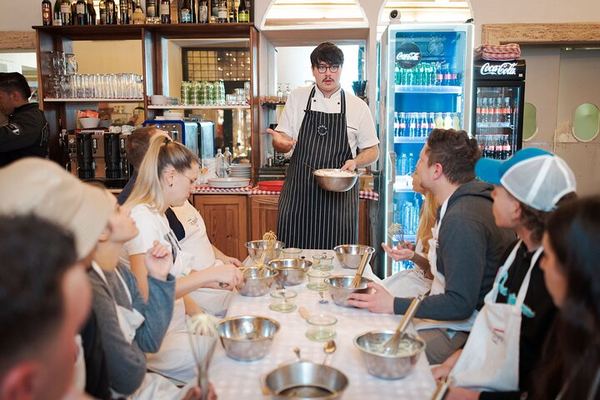
Pizza and Tiramisù Class at Antica Trattoria Agonale
The class sits on Corsia Agonale, a passage whose name preserves the ancient one for the square, and the restaurant stands on the old stadium seating.
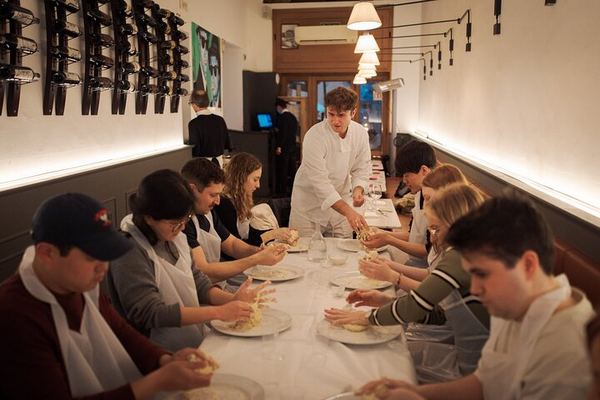
Pizza Class at Osteria Pasquino, by Rome's Talking Statue
The square outside is named after the marble torso Romans have taped anonymous satire to for five centuries, and the operator cooks in its own kitchen.
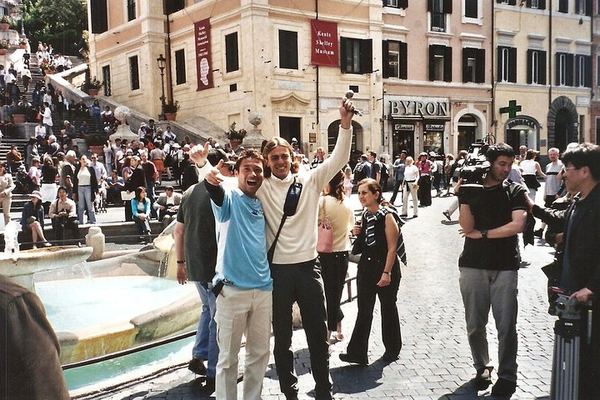
Private Squares and Fountains Walk, Popolo to the Pantheon
Down the spine of the old city with the numbers attached: 135 steps built on a French bequest, and the oldest obelisk in Rome at the start. Sales are final.
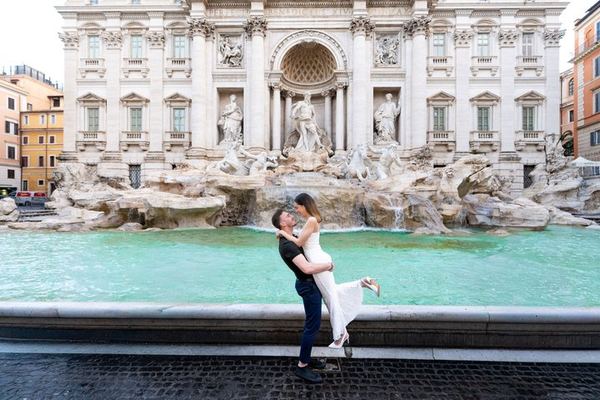
Private Trevi Fountain Photoshoot at First Light
Booked for early morning because by ten there are several hundred people between you and the water, and the stone is flat rather than warm.
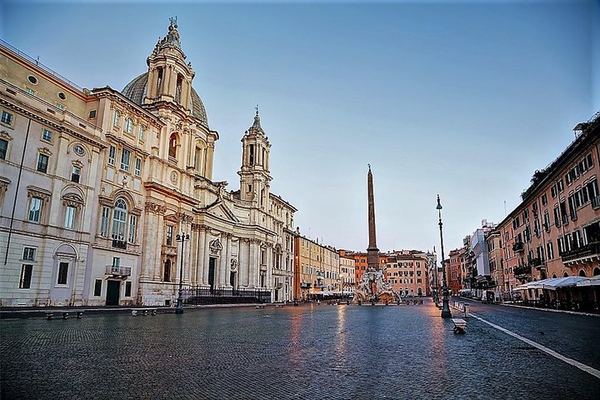
Rome at Sunrise: the Pantheon Before the Crowds, with Breakfast
The centre before the crowds arrive, in a group of six, with cappuccino and a cornetto taken standing at a bar the way Romans have it.
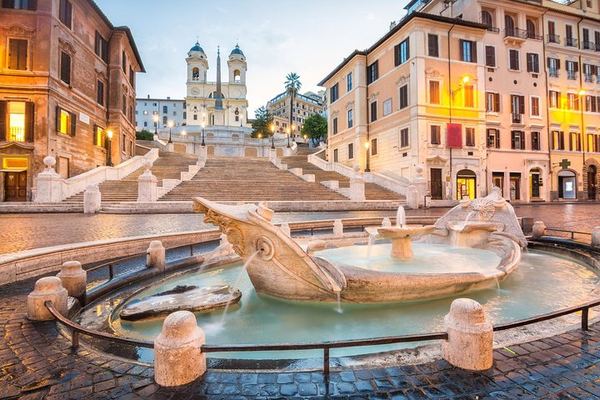
Rome by Evening: the Piazzas and Fountains, Semi-Private
A semi-private evening route through the squares after the working city has gone home, tied together by the aqueducts that still feed every fountain on it.
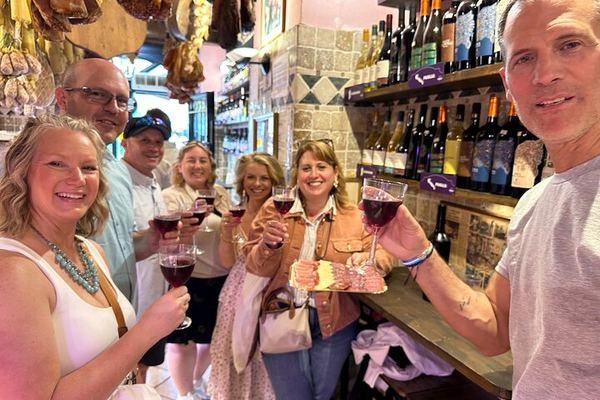
Rome Food and Wine Walk with Lunch over Pompey's Theatre
Tastings from a Norcia shop trading since 1890, a bakery from 1824 and a coffee bar from 1938, with lunch served on the ruins where Caesar was killed.
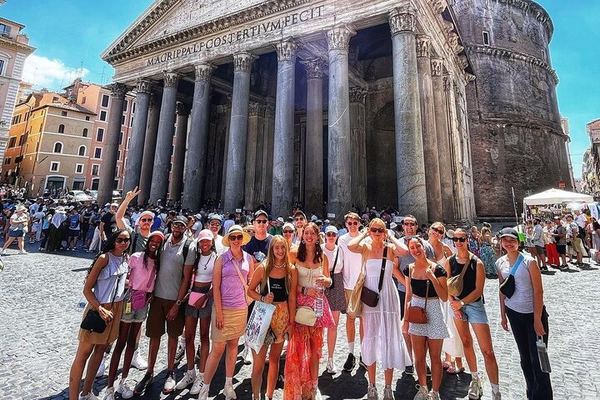
Rome from the Pilgrims' Gate to the View of St Peter's
A route with a shape: it starts where pilgrims entered the city and ends where their journey did, following the rise and collapse of the Roman state.
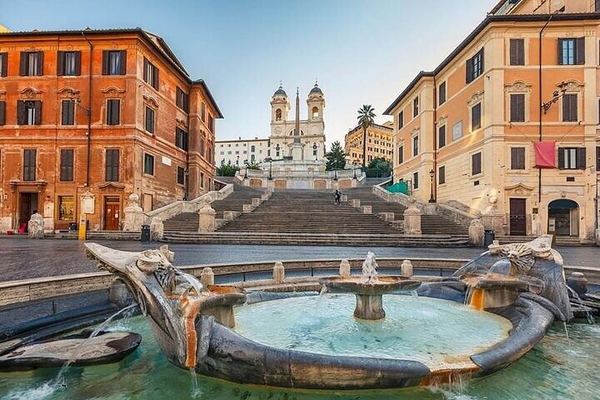
Rome Walk from Piazza del Popolo Down to Piazza Navona
A slow route down through the city from its northern gate, with the aqueduct opened in 19 BC that still supplies the water at the Trevi Fountain.
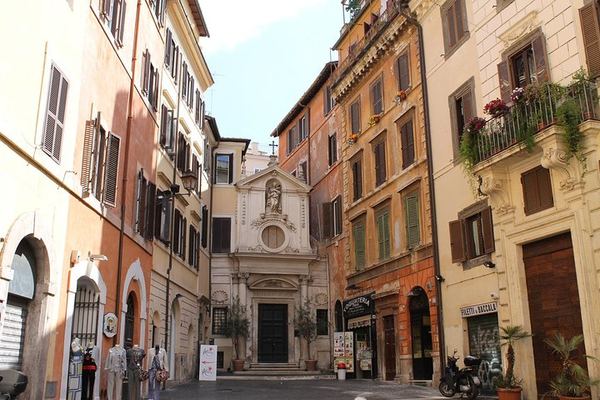
Rome Walking Tour for Six, with the Pantheon and a Gelato
Two hours from the Spanish Steps to Piazza Navona in a group of six, with the gelato paid for and a clear note on which days Pantheon entry drops out.
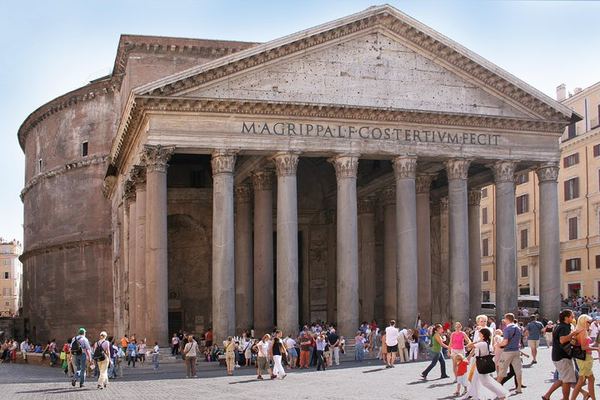
Rome Walking Tour from Caffè Greco to the Pantheon, with Ice Cream
Three hours from Caffè Greco through the government quarter to the Pantheon, taking in the columns and monuments most walking tours pass without stopping.
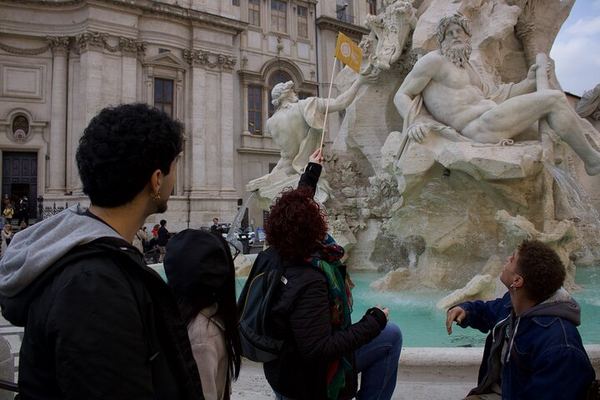
Rome Walking Tour from Piazza d'Aracoeli, with Galleria Sciarra
An award-winning route that adds two free interiors most visitors miss: a frescoed art nouveau courtyard and a Baroque dome that was never built.
Ratings collected by Viator and Tripadvisor
What is underneath each one
Rome's ground level has risen by several metres since antiquity, and these squares sit on what is left below. The shape of each one is inherited.
| Square | On foot | What it is built on |
|---|---|---|
| Piazza della Rotonda | 0 min | The Pantheon's own forecourt. The fountain is Giacomo della Porta's, 1575; the Egyptian obelisk on top was added in 1711 and came from a temple of Isis |
| Piazza Navona | 5 min | The track of Domitian's stadium, opened in 86 AD. The buildings around the square stand on the seating; the excavated remains below are currently closed |
| Campo de' Fiori | 9 min | The open ground between Pompey's theatre and the river, still a meadow in the Middle Ages. It is the only historic square in Rome with no church on it |
| Piazza Farnese | 11 min | The forecourt of a single family's palace. The two granite basins holding its fountains were lifted from the Baths of Caracalla in the sixteenth century |
| Piazza di Spagna | 15 min | A hillside, until 1725. The steps were built to connect a French church at the top with a Spanish embassy at the bottom, which is where both names come from |
The first row is the one people walk across without noticing. The fountain immediately in front of the Pantheon is older than most of what surrounds it, and the obelisk standing in it was carved for a pharaoh, shipped to Rome for an Egyptian cult, buried, dug up and stuck on a Renaissance basin in 1711. It is four metres from where you will be queueing.

Eleven minutes away
Two Roman baths, used as fountains
The pair of fountains in Piazza Farnese are held in enormous single-piece granite basins, and they are not fountain basins. They were lifted out of the Baths of Caracalla and brought here in the sixteenth century by the family whose palace faces the square.
That palace is Palazzo Farnese: begun in 1515 by Antonio da Sangallo the Younger, interrupted by the Sack of Rome in 1527, resumed when Alessandro Farnese became Pope Paul III, and finished with a third storey and a cornice by Michelangelo.
It has been the French embassy since 1936, on a ninety-nine year lease at a symbolic rent. Inside is the Loves of the Gods, Annibale Carracci's ceiling of 1597 to 1608, which is one of the great rooms in Rome and needs a booking made well in advance.
The water is two thousand years older than the fountains
The fountain in front of the Pantheon and the Trevi Fountain ten minutes away are fed by the same thing, and it is not a pump.
The Acqua Vergine was brought into service in 19 BC by Marcus Agrippa — the same man who built the first Pantheon on this spot — to supply his baths, which were Rome's first public baths and whose remains are three minutes from the portico. It runs about twenty-two kilometres, almost all of it underground, and it is the only ancient Roman aqueduct still delivering water today.
So the sequence is: one man, one aqueduct, 19 BC, and the water is still arriving. It fills the basin outside the Pantheon and the basin at Trevi, and it has never stopped. Nobody selling a fountain tour mentions this, which is a shame, because it is the only thing that connects the stops.
Campo de' Fiori is the only historic square in Rome without a church. That is not an accident, and the statue in the middle explains it.
The market, and the hours that decide your itinerary
Campo de' Fiori has held a market since 1869, when the traders moved down from Piazza Navona after that square was widened. It runs Monday to Saturday, from seven in the morning until about two in the afternoon, and it does not run on Sundays.
This single fact invalidates a large number of product descriptions. An afternoon walking tour that promises the market of Campo de' Fiori is promising an empty square with the stalls stacked at the side; a Sunday one is promising a square with cafes on it. Both are pleasant. Neither is a market.
If the market is what you want, take a morning tour and take it on a weekday. If you would rather have the square than the stalls, the evening is when it fills with people and the fine restaurants become bars.
In the middle stands Giordano Bruno, hooded, unveiled on 9 June 1889 by the sculptor Ettore Ferrari and pointed deliberately at the Vatican. He was burned on that spot on 17 February 1600. The statue was put up by the new Italian state as a gesture, and the square has had no church on it before or since.

Two squares that will fine you
Rome has been putting rules on its own postcard views, and two of them are on this page.
The Spanish Steps. Since July 2019 sitting on them is prohibited, with a fine of €250, rising to €400 for eating on them or damaging them. The staircase has 135 steps and climbs 29 metres; it was built between 1723 and 1725 by Francesco de Sanctis, paid for by the bequest of a French diplomat who had died sixty-five years earlier, and restored by Bulgari in 2016 for €1.5 million. That restoration is why the rule exists.
Guides still tell people to buy a gelato and sit on them. Several English-language pages still recommend it. It costs two hundred and fifty euro.
The Trevi Fountain. Since 2 February 2026, standing at the basin means passing a ticket gate at €2. Taking coins out of the water has always been an offence and people are still prosecuted for it. The coins — about €3,000 a day — go to Caritas.
There is a third rule that catches people out and is not square-specific: wading, paddling or bathing in any Roman fountain is prohibited and enforced, particularly in August.
The best hour for each square
These are outdoor rooms and they have a light. Since they are all free and none of them closes, this costs nothing to act on.
Piazza della Rotonda: before ten. The Pantheon's front faces north, so its facade is never in direct sun in the middle of the day. Early morning is when the square is empty and the portico is legible.
Piazza Navona: late afternoon. The square runs north to south, so the low sun rakes down its length rather than across it, and the three fountains take the light at different times.
Campo de' Fiori: eight in the morning, or nine at night. Two completely different places, and both of them better than the middle of the day.
Piazza Farnese: any time it is quiet, which is most of the time. It is a hundred metres from Campo de' Fiori and almost nobody walks the extra hundred metres.
The Spanish Steps: early, and standing up.
About the squares
Do I have to pay to see any of these?
Only the Trevi Fountain, and only for the enclosure right around the basin: €2 since February 2026, last admission 21:00. Everything else on this page is free, open around the clock, and has no queue.
When is the Campo de' Fiori market on?
Monday to Saturday, roughly 07:00 to 14:00. Not Sundays. It has been there since 1869, when the traders moved down from Piazza Navona. Any tour selling you the market in the afternoon is selling you the square.
Can I sit on the Spanish Steps?
No. A €250 fine has applied since July 2019, and up to €400 for eating on them. It is enforced. The rule was introduced after the 2016 restoration, and a good deal of English-language travel writing still has not caught up with it.
What is under Piazza Navona?
The stadium Domitian opened in 86 AD, which held about 30,000 people and measured roughly 265 by 106 metres. The square follows the outline of its track. The excavated part beneath the north end is currently closed to visitors, and several marketplaces are still selling tickets for it.
Is a squares-and-fountains tour worth booking?
It depends on what you would otherwise do. The squares are free and unmissable; you will walk through them anyway. What a guide sells is the layer underneath — which basin came from a Roman bath, why one square has no church, where the water comes from. If that sounds interesting, yes. If you want to sit and look, save the money.
Why are cooking classes listed here?
Because the marketplaces file products by the square they happen to be near, and a great many cooking schools are near Piazza Navona. They are good products and they belong on the cooking page, where they also appear. Judge this page by its walking tours.
What is under the paving
Two excavations in these streets with their own tickets: Vicus Caprarius under the Trevi district, and the stadium under Piazza Navona.
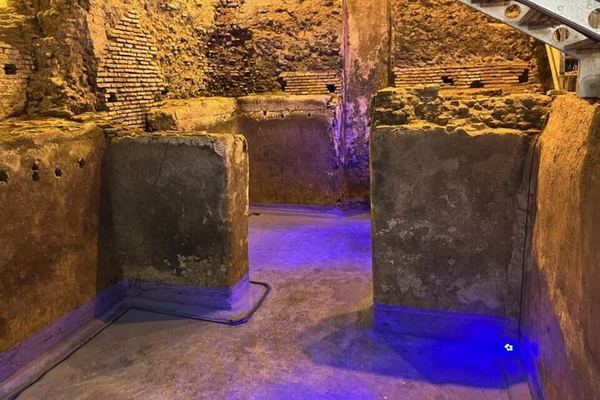
City of Water, Trevi from Above, and the Galleria Sciarra
States plainly that the fountain is seen from street level, not the basin, and ends in a frescoed courtyard most visitors never enter.
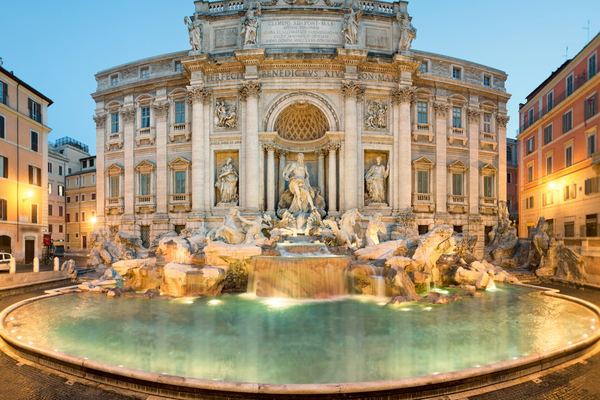
Following the Trevi Water Through the City Below It
All three sections of the site, tracing the aqueduct from the fountain into the pipes and basins of the Roman house built to use it.
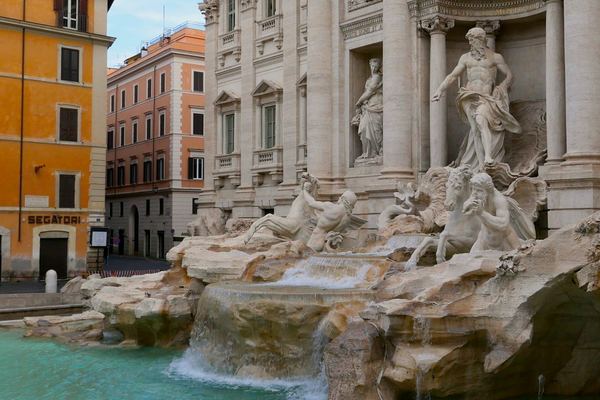
Forty Minutes at the Trevi Fountain and the Domus Below It
A guide reads the facade in the order it was composed, then takes you nine metres down to the aqueduct that has never stopped supplying it.
Ratings collected by Viator, Tripadvisor and Tiqets
The corners with nobody in them
Twenty tours of the courtyards, the forced-perspective corridor and the churches that never have a queue. Second-visit Rome, four minutes from the first-visit version.
Data verified on. Market hours from Mercati di Roma; the Spanish Steps fine and the Trevi ticket from Comune di Roma; fountain dates and attributions from the Sovrintendenza Capitolina.