
Bernini and Caravaggio near the Pantheon: six paintings, no ticket
Three churches within five minutes hold six Caravaggios between them and charge nothing. Bring a one-euro coin, because the lights still take one.
There are six paintings by Caravaggio within a short walk of the Pantheon's portico, and every one of them is free to look at. Three are three minutes away. One is five. The last two are further, at twenty-three minutes, and worth the walk.
That is an unusual sentence in a city where everything else has a queue and a price. It is also the reason this page exists in the form it does: the tours here are not selling you access, because there is none to sell. They are selling you the reason each painting is in the chapel it is in, and what the light in it is doing.
Sixteen tours, from €14,45 to €1.072,50, median €127,80, rating 4.88 across 551 reviews. The prices at the top of that range are not for the churches.
One thing to be clear about before the list. The best-selling products on this page are Borghese Gallery tours, and the Borghese Gallery is a thirty-seven minute walk north of here, with timed entry and a two-hour slot. It is one of the great collections in Europe and it is not in this neighbourhood. We have kept those tours because people who want Bernini want them; we would rather say where they go than let the address be a surprise.
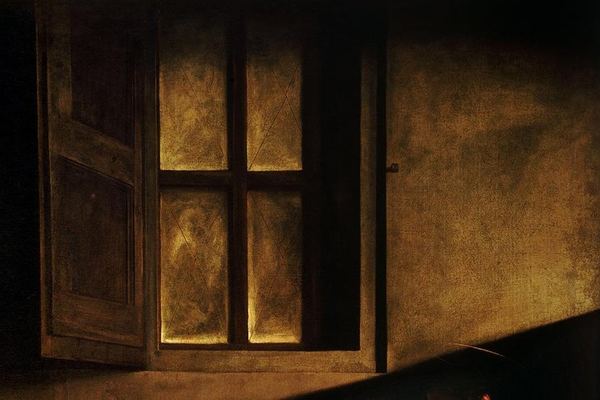
Art and Blood: Caravaggio in Three Churches, No Tickets
No tickets and no timed slot: all three churches are free to enter, and an art historian explains why the horse is bigger than the saint.
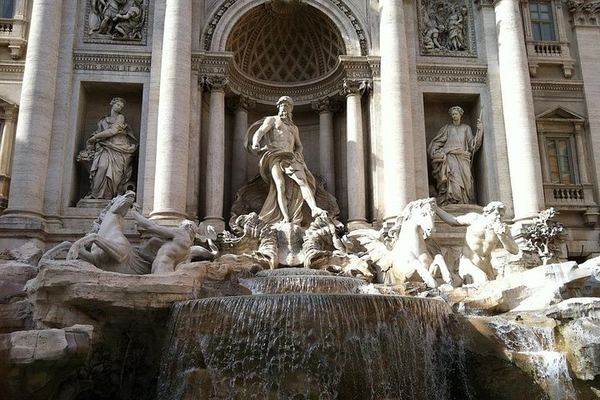
Baroque Rome: Fountains, Squares and a Meal to Finish
Four squares walked in sequence with a private guide, so they read as one scheme rather than a list, and a Mediterranean meal at the end.
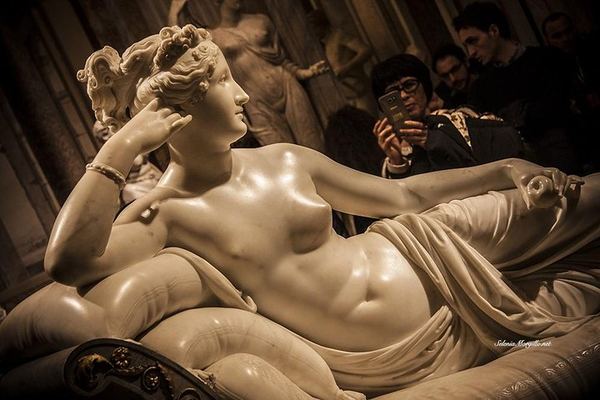
Borghese Gallery Privately, with an Art Historian
Timed entry and a capped room count keep the gallery quiet; a private art historian sets the pace inside the slot. Sales are final, no refunds.
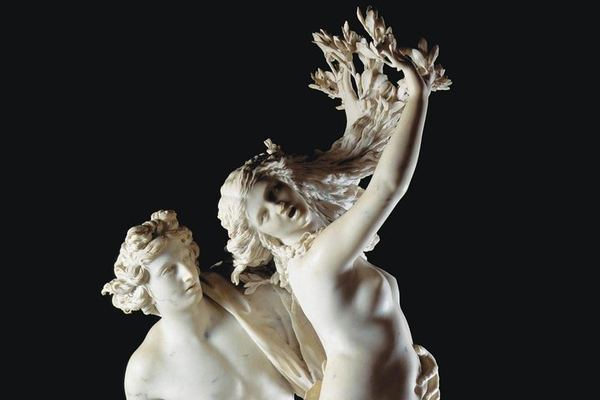
Borghese Gallery Private Tour, Three Hours for One Collection
The extra hour is the product in a museum this dense. One cardinal bought all of it; the Italian State bought the rest in 1902. Sales are final.
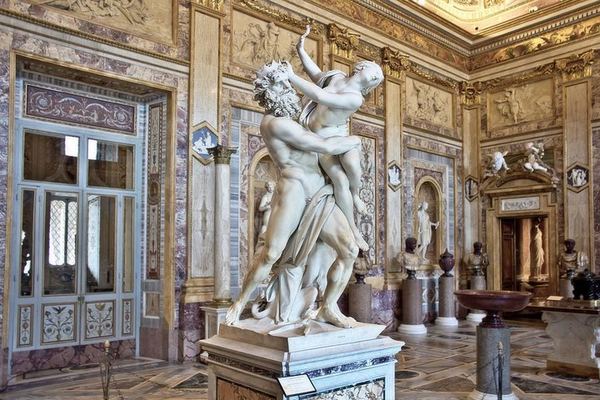
Borghese Gallery with a Guide and Five Other People
Six is the whole point: enough room to walk around Bernini's Apollo and Daphne and see the second angle. Borghese Gardens self-guided afterwards.
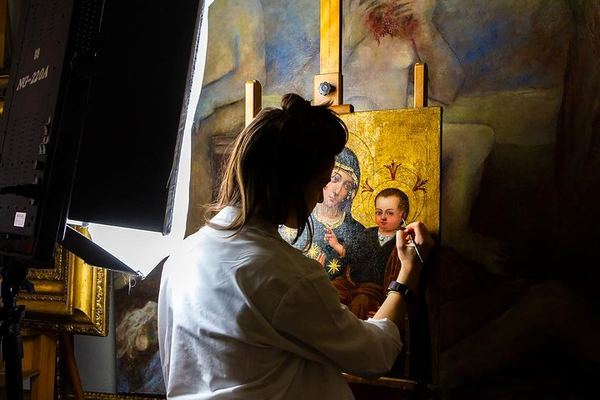
Caravaggio and the Restoration Lab That Cleaned the Madonna
Ends with an aperitif among the restorers themselves, one of two labs worldwide to have worked on three Caravaggios. Sales are final.
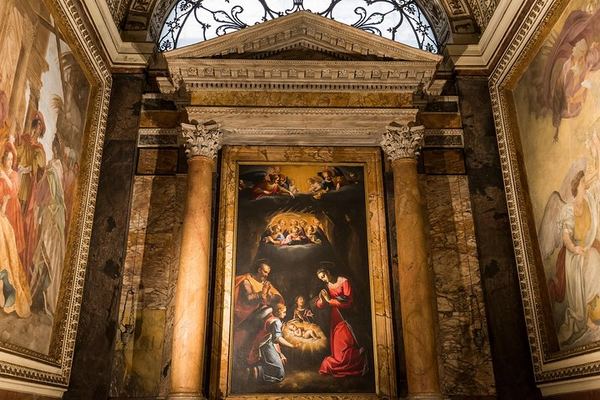
Caravaggio from Piazza del Popolo, Ending Inside the Pantheon
Starts at Santa Maria del Popolo before the crowds move south, takes in four churches and ends inside the Pantheon rather than in a square.
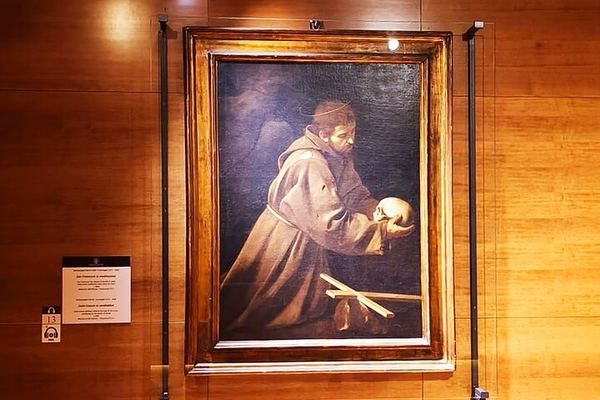
Caravaggio in Rome and the Capuchin Crypt, Ten People Maximum
Three Caravaggios at San Luigi dei Francesi, then a crypt decorated with the bones of the friars who lived there. A small group is what makes it work.
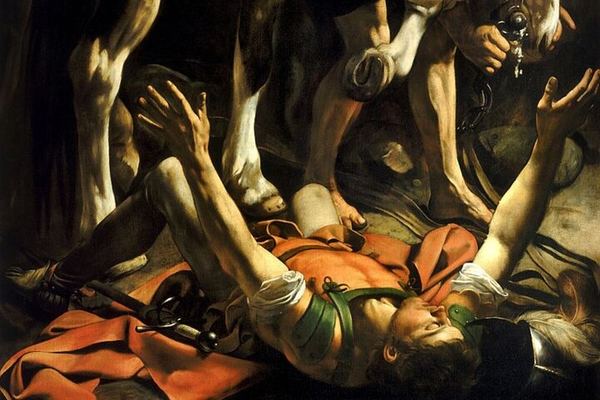
Caravaggio Privately in Three Hours, Popolo to Montecitorio
Walks the Caravaggios in the order the city holds them, ending at the facade Bernini designed for the Chamber of Deputies. Pace set by your group.
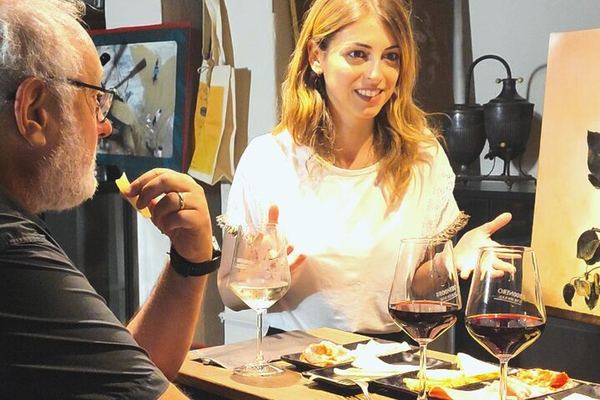
Caravaggio, Wine and Lunch in an Underground Roman Bath
The canvases are reproductions, which is the point: you can study the brushwork from thirty centimetres instead of four metres below an altar.
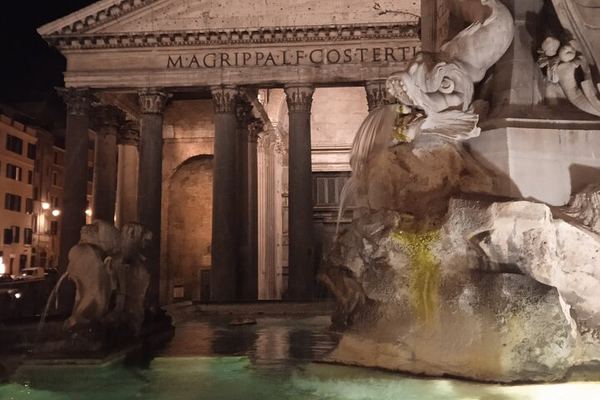
Moonlight Walk from Piazza Navona to the Roman Forum
Meets at the Fountain of the Moor rather than the famous one, and reaches the Forum after the coaches have gone. Run by the host herself.
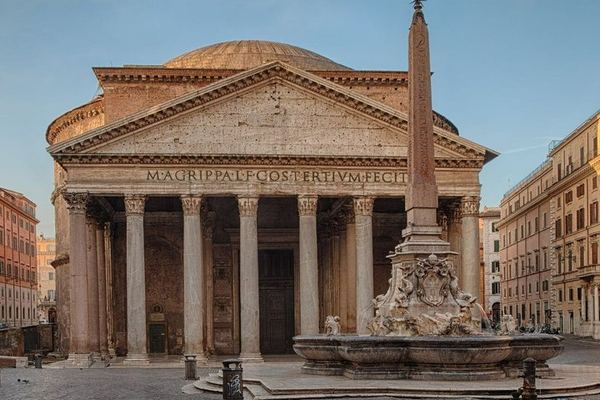
Pantheon with Reserved Access: Audio Guide or Private Guide
The State sells no official audio guide for the Pantheon, so this operator's commentary is one of the few. Check the Navona underground stop first.
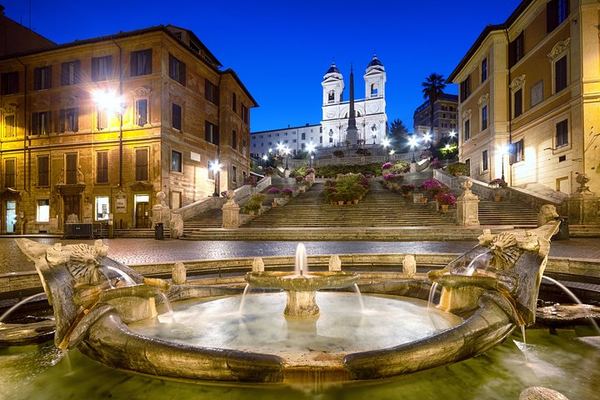
Private Baroque Walk, Spanish Steps to Piazza Navona
Three hours downhill with one guide, from the perspective dome at Sant'Ignazio to the Four Rivers. Cancellation window is three days, not one.
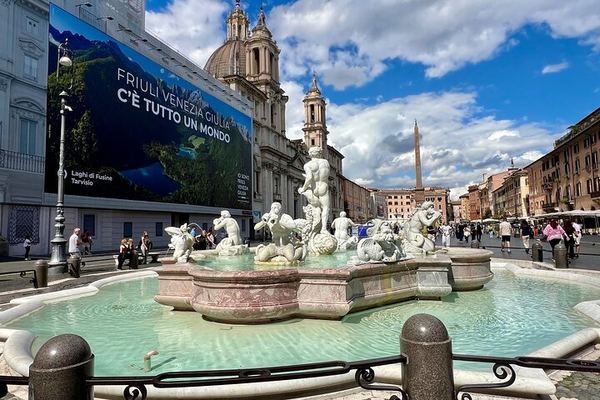
Rome's Squares by Golf Cart with a Licensed Guide
Meets above the Colosseo Metro stop and runs the squares by golf cart, taking in the two balconies on Piazza Venezia: Mussolini's and Letizia Bonaparte's.
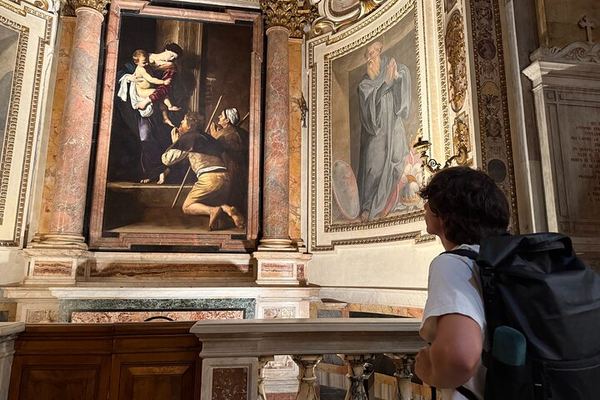
Who Killed Caravaggio: The Murder Scene and the Paintings
Goes past the paintings to the street where Tomassoni died and the lane where Caravaggio and his model Lena both lived. Built to work in any weather.
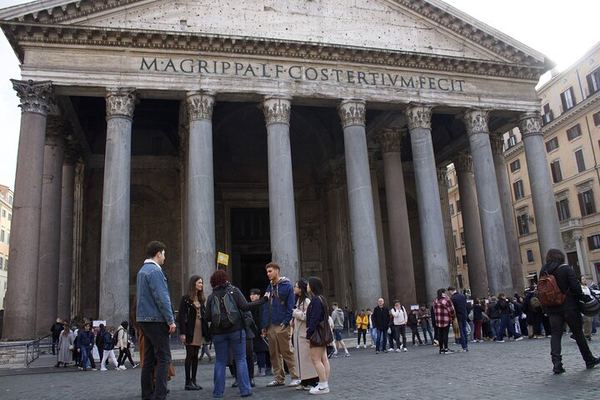
Wonders of Rome Walk, from Aracoeli to Piazza Navona
Includes the Galleria Sciarra, a frescoed 19th-century courtyard a minute from Trevi that almost nobody walks into. Arrive ten minutes early.
Ratings collected by Viator and Tripadvisor
The six paintings, and how to see them
These are working churches. They are free, they have no ticket desk, and their hours are set by the parish rather than by a museum.
| Church | On foot | What is there | Hours to watch |
|---|---|---|---|
| San Luigi dei Francesi — Contarelli Chapel | 3 min | The Calling of Saint Matthew and the Martyrdom, contracted in June 1599 and paid for in 1600; the altarpiece added in 1602. The whole set in place by 1603 | Closed on the morning of the first Wednesday of the month. Weekday afternoons until 18:15, not 18:30 |
| Sant'Agostino — Cavalletti Chapel | 5 min | The Madonna of Loreto, about 1604 to 1606. In the same church, Raphael's Isaiah on a nave pillar and a Sansovino Madonna | Closes over the middle of the day like most parish churches |
| Santa Maria del Popolo — Cerasi Chapel | 23 min | The Crucifixion of Saint Peter and the Conversion of Saint Paul, both 1601, with Annibale Carracci's Assumption on the altar between them | The Chigi Chapel in the same church was designed by Raphael and finished by Bernini a century later |
The altarpiece in the Contarelli Chapel is the second version. The first was refused by the clergy who commissioned it, sold to a private buyer, ended up in Berlin, and was destroyed in 1945. What hangs there now is Caravaggio's answer to a rejection, which is a fair description of most of his career.

The practical detail nobody prints
Bring a one-euro coin
Several of these chapels are lit by a meter. You put a coin in a box on the wall and the paintings come on for a few minutes, and then they go off again.
Without it, a Caravaggio in a side chapel is a dark rectangle. The whole point of these paintings is what a single raking light does to a wall of shadow, and in an unlit chapel on a grey afternoon you are looking at the shadow only.
So: a euro coin, per chapel, and the patience to wait if somebody else has just fed the box and left. San Luigi dei Francesi also has a free audio commentary that runs from a QR code by the door, with nothing to install — which is more than the paid audio guides at most ticketed sites manage.
Six Caravaggios, no ticket, no queue, no booking. And a euro coin, or you will see none of them.
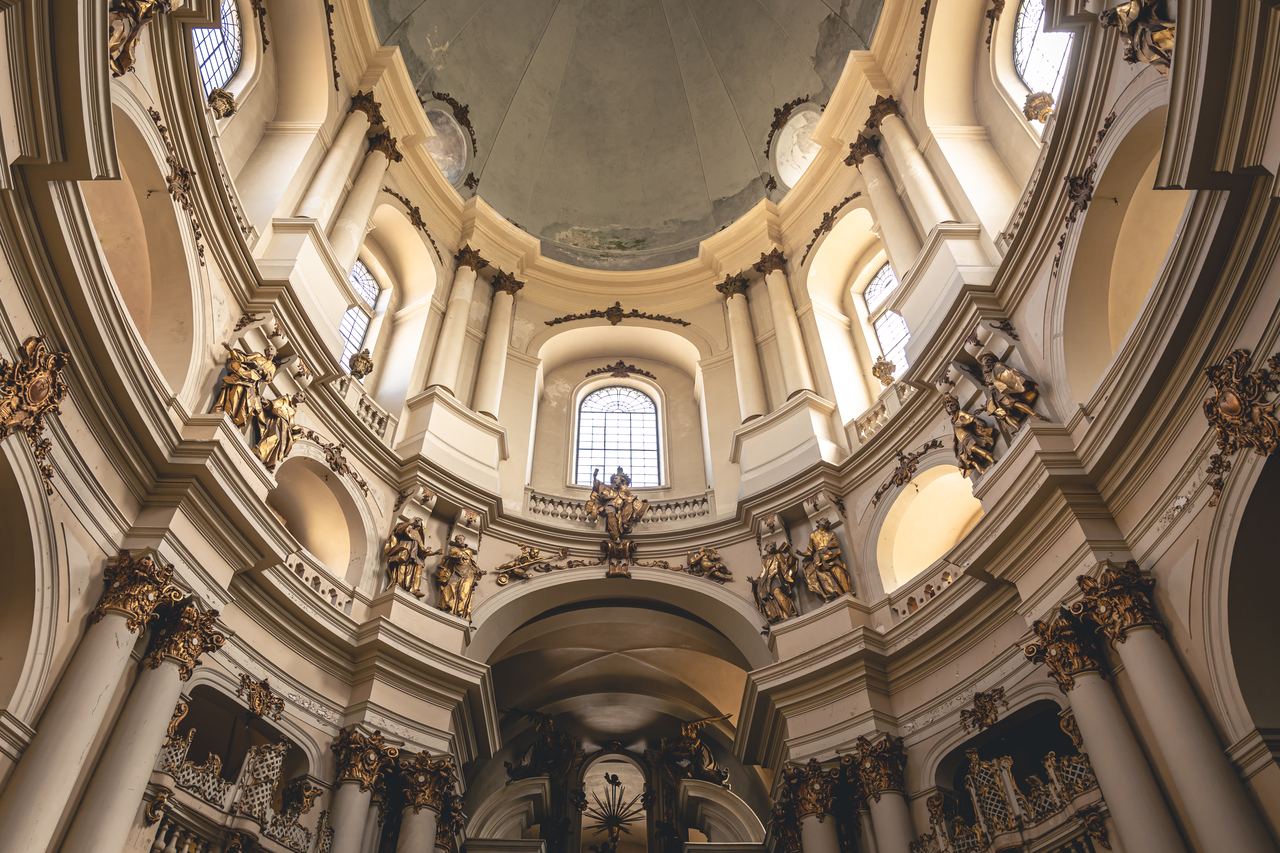
The dome at Sant'Ignazio is a painting
Four minutes from the Pantheon is a church whose dome does not exist. The money ran out, and in 1685 the Jesuits had Andrea Pozzo paint one instead.
He did it in about six weeks, from the beginning of May to the twentieth of June. The canvas is sixteen metres across — not the seventeen that gets repeated — made of twenty-one strips eighty centimetres wide nailed to a wooden frame weighing something like four thousand kilos, and hoisted thirty-three metres up. There is a gold disc set into the floor marking the one spot from which the illusion is perfect. Step off it and the architecture buckles.
It has been damaged once. In April 1891 the blast from an exploding powder magazine at Monteverde tore it, and it stayed patched for the better part of seventy years until a proper restoration in 1962.
Entry is free. There are usually two queues inside: one to get in, and one for the mirror where people photograph the ceiling without breaking their necks.
Seven decades that produced this quarter
Everything on this page was made within a few streets of the Pantheon, mostly in one lifetime.
The origins
June 1599
Caravaggio signs for the Contarelli Chapel
A notarial contract for two canvases in a French church three minutes from the Pantheon. He is twenty-seven and almost unknown. When they are unveiled in 1600 the effect on Roman painting is immediate and permanent.
1601
The Cerasi Chapel
The Crucifixion of Saint Peter and the Conversion of Saint Paul, hung facing each other with Annibale Carracci's altarpiece between them. Two painters with opposite ideas about what a picture is, in the same chapel, on purpose.
1606
Caravaggio kills a man and leaves Rome
The Madonna of Loreto in Sant'Agostino is roughly of this moment. After the killing he flees and never returns. Everything of his in this quarter was painted in seven years.
The growth
12 June 1651
Bernini's Four Rivers is unveiled in Piazza Navona
Five minutes from the portico, and the beginning of the story that the river god is shielding his eyes from Borromini's church facade. The facade did not exist yet.
1667
The elephant
Bernini's design, carved by Ercole Ferrata, set up in Piazza della Minerva two minutes behind the Pantheon with an Egyptian obelisk on its back. Alexander VII, who commissioned it, died a few weeks later.
Today
May to June 1685
Pozzo paints a dome that is not there
Sixteen metres of canvas, six weeks of work, hoisted thirty-three metres up at Sant'Ignazio. Nine years later he finishes the nave vault above it, the Apotheosis of Saint Ignatius, which is the larger work and the less famous one.
Where Bernini actually is in this quarter
Bernini is a Rome-wide phenomenon and a slightly thin one right here. Within ten minutes of the Pantheon you have the Four Rivers fountain in Piazza Navona, the Moor at its southern end, added in 1673 to a basin somebody else had built a century earlier, and the elephant behind the Pantheon.
The great Bernini interiors are elsewhere. The Ecstasy of Saint Teresa is in Santa Maria della Vittoria, about half an hour on foot. The Borghese sculptures — Apollo and Daphne, the David, the Rape of Proserpina — are in the Villa Borghese, thirty-seven minutes north and behind a timed ticket.
This matters when you read the prices on this page. A tour at €25 is walking you round the corner to look at fountains and into churches. A tour at €126 is taking you to the Borghese and paying for your entry. Both are honest; they are simply not the same afternoon, and the titles do not always make that obvious.

How to do it yourself in ninety minutes
If you would rather not book anything, the route is short and it costs a euro or two in coins.
From the portico, two minutes to Santa Maria sopra Minerva for Michelangelo's Christ and Filippino Lippi's chapel. Three more to San Luigi dei Francesi for the three Caravaggios — the chapel is at the far end on the left. Two more to Sant'Agostino for the Madonna of Loreto and the Raphael. Five to Piazza Navona for the fountains and Borromini's facade. Four back via Sant'Ignazio for the painted dome, standing on the gold disc.
Ninety minutes, five buildings, nothing booked, nothing paid. What a guide adds to that is the argument — why Caravaggio's Matthew looks like a tax collector in a tavern, what the clergy objected to, and why the church next door was doing the opposite at the same time. That is worth twenty-five euro. It is not worth a hundred and twenty-six unless the Borghese is in it.
Seeing the paintings
Do I need a ticket to see the Caravaggios?
No. All three churches are free and none of them takes a booking. What you need is a one-euro coin for the light boxes in the chapels, and a sense of the hours — parish churches close over the middle of the day and San Luigi shuts on the morning of the first Wednesday of the month.
How many Caravaggios are there near the Pantheon?
Six, in three churches: three at San Luigi dei Francesi, one at Sant'Agostino and two at Santa Maria del Popolo. The first two churches are three and five minutes away; the third is twenty-three. That is more Caravaggio in one walk than most museums hold.
Is the Borghese Gallery near the Pantheon?
No — about thirty-seven minutes on foot, north of the centre in the Villa Borghese. It needs a timed ticket and it lets you in for a two-hour slot. Several of the highest-priced tours on this page go there, which is why the median here is well above the median for a walking tour of the centre.
Can I photograph them?
Rules vary by parish and are not published consistently. Flash is prohibited everywhere and would be useless anyway. Assume no photography in the chapels and put the phone away: the light box runs for a few minutes and it is a poor use of them.
What is the dome at Sant'Ignazio?
A painting on canvas, sixteen metres across, made by Andrea Pozzo in 1685 because the money for a real dome ran out. Stand on the gold disc in the floor and it works perfectly; walk five metres and it collapses. Entry is free.
Is a Caravaggio tour worth booking?
If you want to understand what you are looking at, yes, and €25 to €55 buys that. If you simply want to see them, no — they are free and the churches are three minutes apart. The one thing you cannot get for free is somebody to argue with about them.
The same century, indoors and behind a door
Doria Pamphilj holds three more Caravaggios and a Velazquez, six minutes from the portico, and closes on Wednesdays.
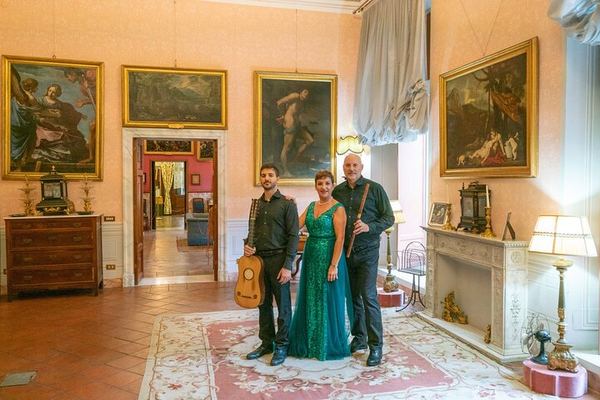
Baroque Instruments in the Princess's Apartment, for Twenty-Five
Theorbo, traverso and soprano, playing music written for these forces in a room this size. Doors close at 7:15 and nobody is let in after.
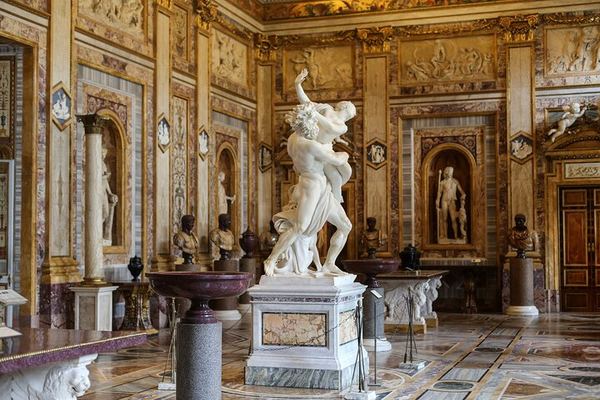
Borghese Gallery and Gardens, Ending on the Pincio
Leaves you at the terrace above Piazza del Popolo rather than back at the villa, with headsets throughout. The exit involves a long staircase.
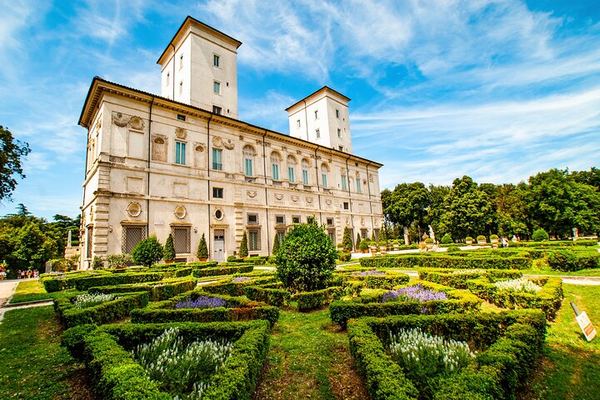
Borghese Gallery, and What to Do in the Park Afterwards
Names the route out: the rowing-boat lake, the Pincio terrace, the Casina Valadier and the smallest cinema in the world. Six, fifteen or ticket only.
Ratings collected by Viator and Tripadvisor
The corners with nobody in them
Borromini's corridor that lies about its length, a painted courtyard by the Trevi Fountain, and the arc of Agrippa's baths standing in a street.
Data verified on. Church hours from the parish of San Luigi dei Francesi. Chapel dates from the churches' own material. Sant'Ignazio's dome measurements from the guide to the church.