
Rome ghost, legend and Angels and Demons tours: what the record says
Which stops on the Path of Illumination are real, which one the Vatican's own website contradicts, and the ghosts that come with names and dates.
These are entertainment, and the good ones say so. That is not a low bar — it is the whole distinction between a tour that tells you Rome has ghost stories and a tour that tells you Rome has ghosts.
Twenty-one products, from free to €382,50, median €28,99, ninety minutes to two hours. They carry 24,355 reviews at a weighted 4.43, and as on several pages here one product dominates: a tip-based free tour with 21,168 of them.
What follows is the part these tours usually skip. Rome's legends are better with the dates attached, and the most-sold story in this category — the trail from a novel of 2000 — contains one claim that the Vatican's own website contradicts and several that the calendar does.
One structural note that explains the prices. The Path of Illumination is not a walk. Its four points sit at the corners of the centre, in directions that diverge, and doing all of them on foot is a long afternoon mostly spent in transit. That is why the complete version costs three hundred and eighty euro and comes with a vehicle, and why the twenty-nine-euro ghost tours cover a much smaller loop.
Angels and Demons Privately: Sorting the Novel from the Record
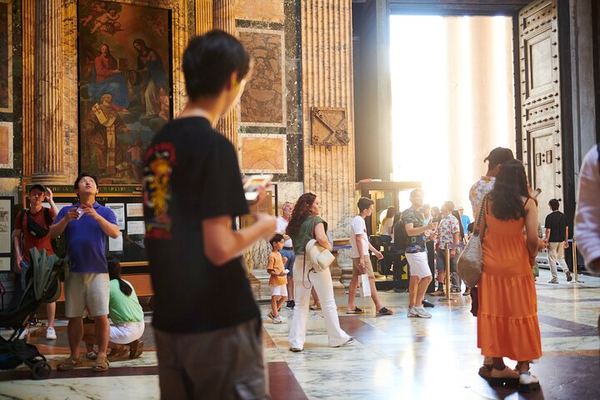
The Bavarian Illuminati postdate Bernini by a century, and what actually happened between the artists and the Church is stranger. Hotel pick-up.
Angels and Demons Tour: the Altars, the Pantheon and the Castle
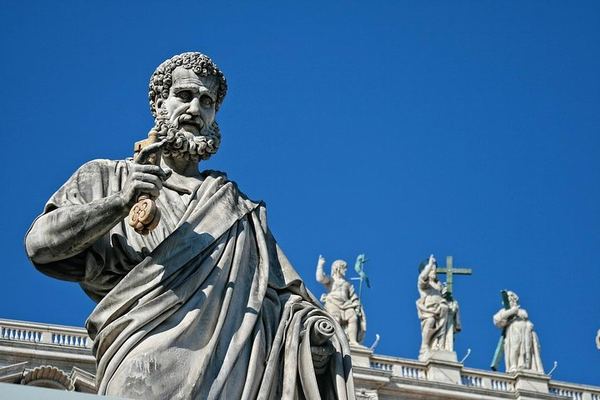
The novel's trail walked with a guide who separates Brown's invention from the record, including which of the four altars is not by Bernini at all.
Combo: The Bone Crypts and the Dark Side, Two Hours Each
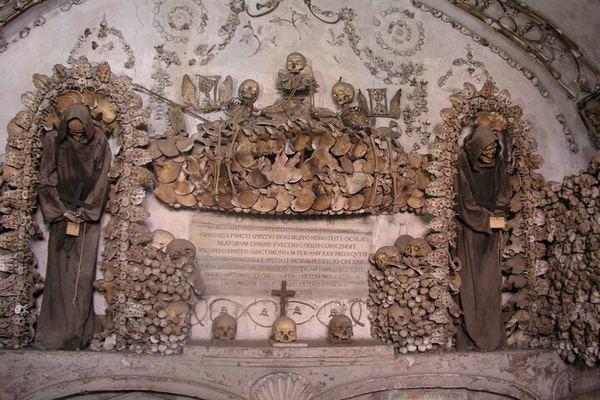
Two walks at a reduced price, taken on one evening with a break or on separate nights. The operator calls you to confirm which.
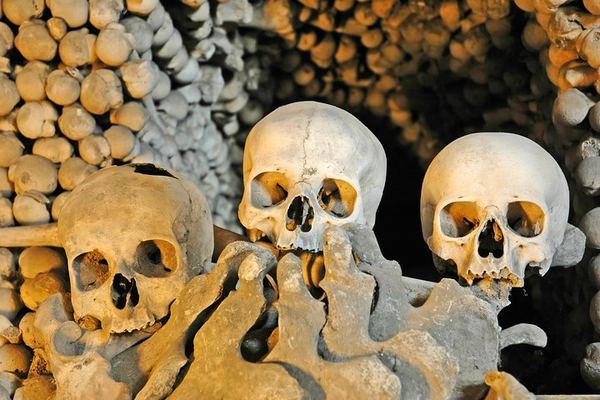
Crypts and Legends, from Piazza Barberini to Via Giulia
Opens with the bone chapels under Via Veneto and closes at the confraternity church that collected unclaimed bodies from the streets.
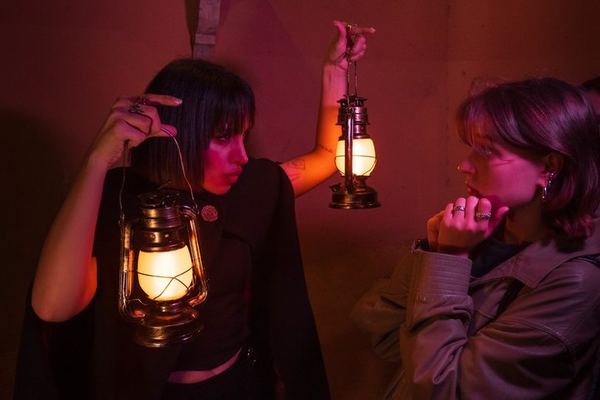
From the Bars to the Bridge: A Ghost Walk in One Direction
The stops get quieter and worse in order, from a square full of tables to the bridge where the executed were displayed. Kit and certificate included.
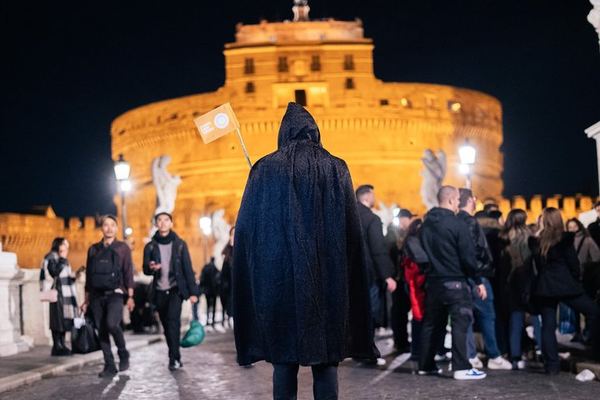
Ghost Hunt Through Rome, with Mastro Titta's House
The papal executioner logged 516 killings in his own hand and lived on this route. Ghost Hunter Kit included, certificate at the end.
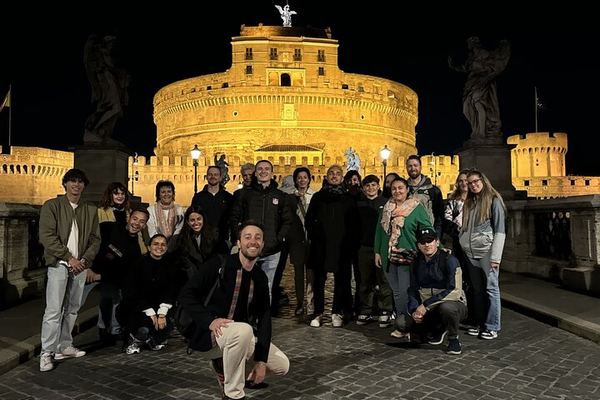
Giulia Tofana and Corte Savella: A Pay-What-You-Want Walk
Names the poisoner, the murderer-goldsmith and the only prison allowed to execute indoors. Guides paid by what you decide it was worth. Age 12+.
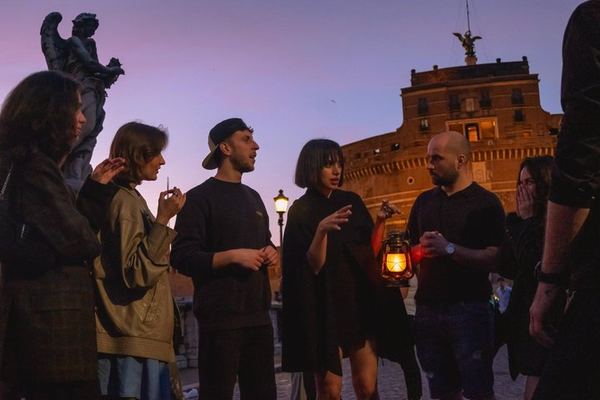
Haunted Rome with a Ghost Hunter Kit and a Certificate
The kit turns the walk into something you do: you are taught what to look for, with video recreations at the stops and a certificate at the end.
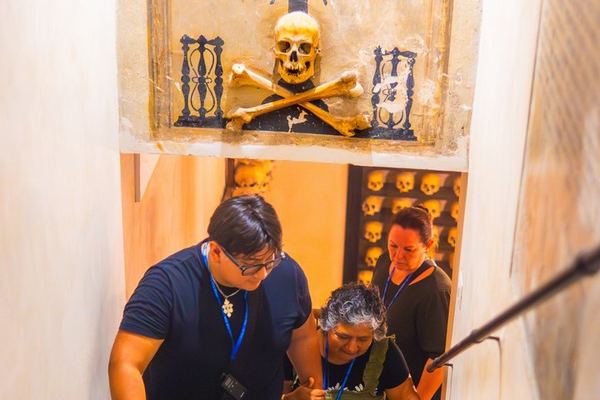
Inside the Confraternity of Death, Opened by Appointment
A church shut for over a decade, unlocked by the confraternity's own nun, with bone chandeliers and named skulls in the crypt below.
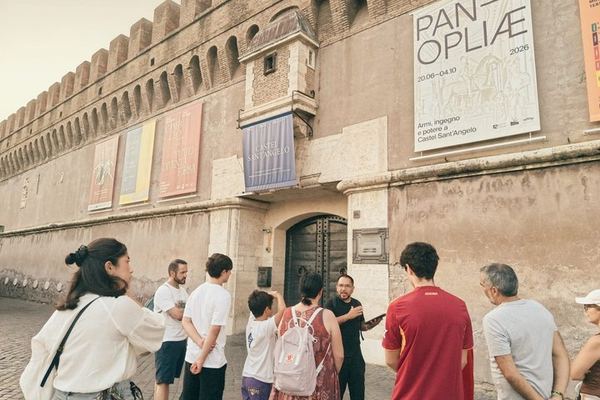
Mastro Titta's House and the Poisoner's Cell
Separates what the records prove from what people keep reporting, at the executioner's door and the prison where Tofana was held.
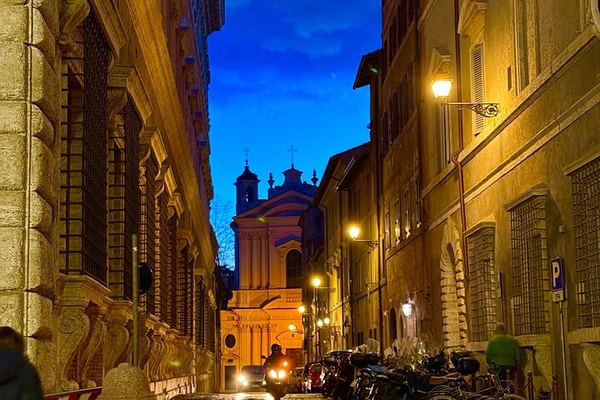
Meet at the Closed Barbershop: Rome's Myths After Dark
Includes the two fountains in Piazza Farnese, which are granite bathtubs lifted from the Baths of Caracalla, and a frescoed passage nobody uses.
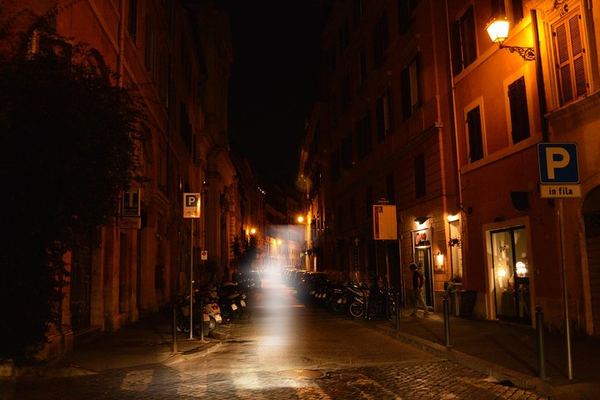
Ninety Minutes with Dowsing Rods, Ponte Sant'Angelo to Campo de' Fiori
You carry the brass rods for the whole walk, past the street a pope built for privacy and the fountain where Getty III was taken.
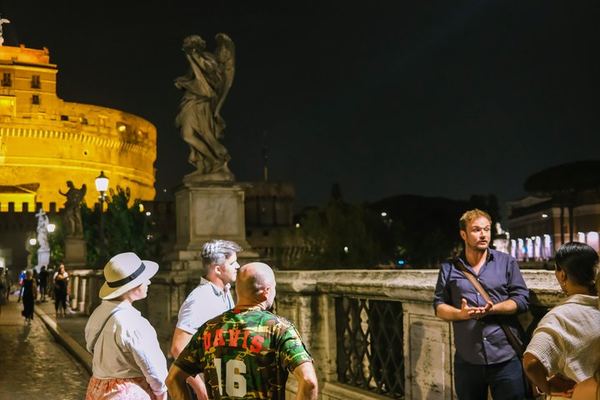
Rome's Dark Side: Poison, Power and Fifteen People
A woman who ran the city through a pope, and another who sold odourless poison to wives. The shop is a gelateria now, and you stand outside it.
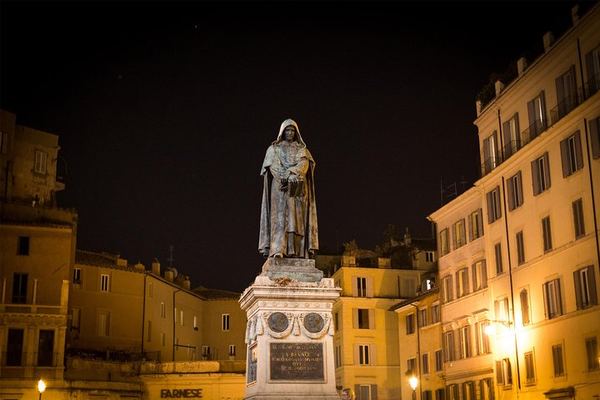
The Centuries Everyone Skips: Medieval Rome After Dark
The thousand years between the empire and the Renaissance, when Romans burned ancient marble for lime and hung Madonnas to deter thieves.
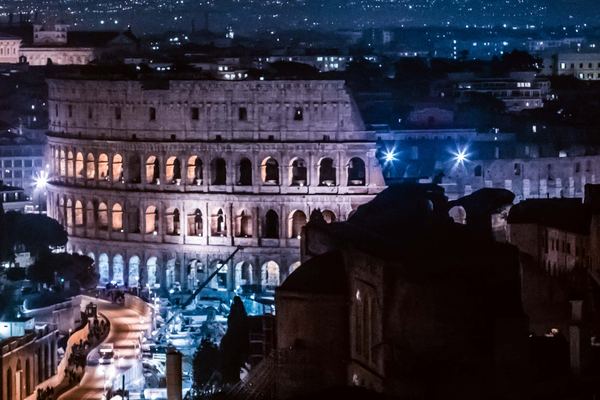
The Cursed Cemetery: A Free Tour Capped at Six People
Starts on the burial ground for people the Church refused, and ends at the altarpiece for which Caravaggio used a prostitute as the Virgin.
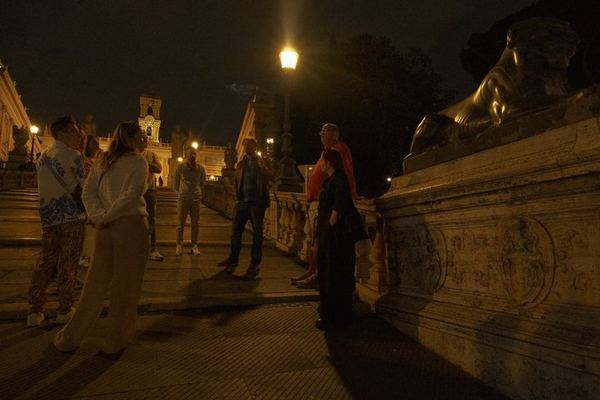
The Cursed Street: Ancient Rome's Murders and Executions
Nothing invented: the Gemonian Steps, the strangling cell under the prison, and a street Romans renamed because of what happened on it.
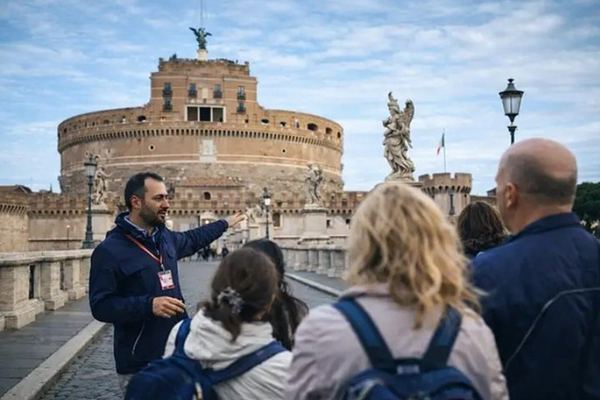
The Four Altars of Science: The Illuminati Path in a Small Group
Follows the fire, air and water churches in order, including the Pantheon stop that exists because Langdon misread the clue. All seen from outside.
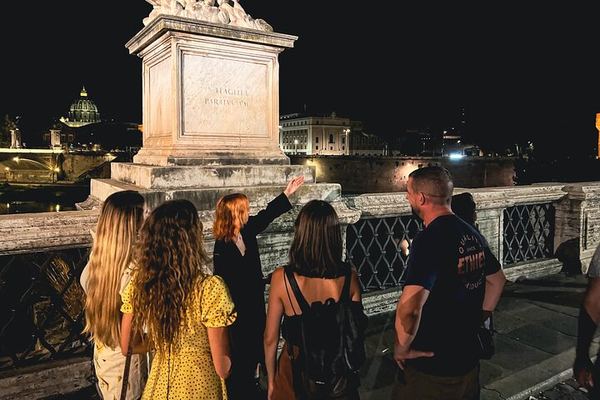
The Ghost Walk, Privately: Your Group and Nobody Else
A private group means the guide can soften it for nervous children or leave nothing out for the rest. Kit included, certificate at the end.
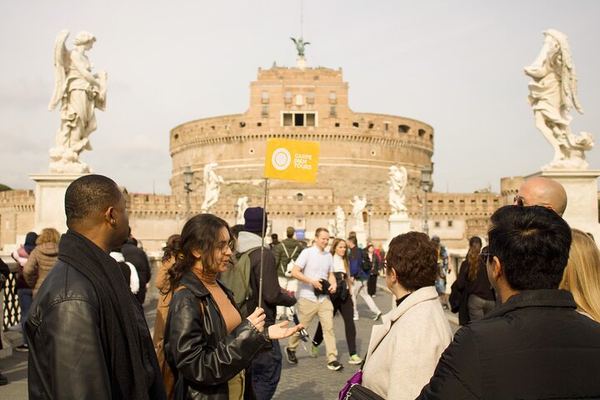
The Pilgrims' Road: Pantheon to St Peter's, on Foot
Follows the route pilgrims actually walked, down the street named for the rosary sellers who worked the last stretch before the bridge.
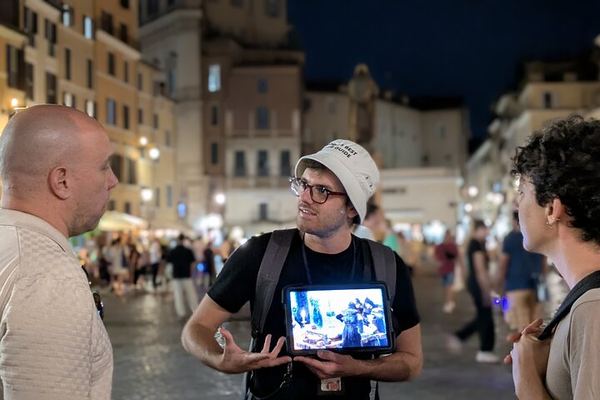
The Pimpaccia, the Golem and a Slice of Pizza
Names its ghosts and stops to eat: Roman pizza mid-walk, wine and biscuits later, and a plaque marking how high the Tiber once came.
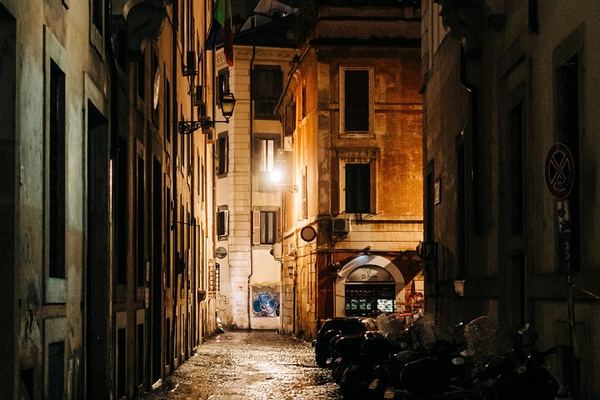
Where the Borgia Are Buried: Two Hours, Fifteen People
Two Borgia popes lie in a Spanish church a few streets from the market, in a city that spent centuries trying to forget them.
Ratings collected by Viator, Tripadvisor and Civitatis
The four altars, checked one at a time
The novel sends its hero to four Bernini works standing for earth, air, fire and water. Three of those attributions hold. One does not.
| Element | Where | On foot | What is actually true |
|---|---|---|---|
| Earth | Santa Maria del Popolo, Chigi Chapel | 23 min | Bernini's Habakkuk and the Angel is real and is there. The chapel itself was designed by Raphael and finished by Bernini a century later. Free to enter |
| Air | St Peter's Square, the West Ponente marker | 35 min | Not by Bernini. The Vatican's own page gives Mons. Filippo Luigi Gilj, papal astronomer, and the date 1817 - Bernini had been dead 137 years |
| Fire | Santa Maria della Vittoria, Cornaro Chapel | 27 min | The Ecstasy of Saint Teresa is Bernini's and is one of the great things in Rome. Free, and the chapel lights on a coin |
| Water | Piazza Navona, Fountain of the Four Rivers | 5 min | Bernini's, unveiled 12 June 1651. The only one of the four inside this quarter |
| The Church of Illumination | Castel Sant'Angelo | 17 min | Invented. The castle is entirely real and has no such association; the secret chamber is the novel's |
The air stop deserves its own paragraph because the correction is unusually complete. West Ponente is not a bas-relief and not an angel. It is an incised marble marker, one of sixteen set around the obelisk in St Peter's Square to make a full wind rose, and the figure on it is the classical personification of a wind, without wings. The Vatican publishes the attribution and the date on its own website.
Even the name is a hybrid produced by an inconsistency in the square itself: the markers on the basilica side are lettered in English, the ones opposite in Italian. A guide who tells you that Langdon found the one Bernini marker among sixteen ordinary ones is telling you the plot, not the square.

The dates that end the argument
The Illuminati were founded ninety-six years after Bernini died
The Bavarian Illuminati were founded by Adam Weishaupt at Ingolstadt on 1 May 1776. That is a documented date.
Galileo died in 1642, a hundred and thirty-four years earlier. Bernini died in 1680, ninety-six years earlier. Neither could have belonged to an organisation founded after their deaths, and the purge the novel dates to 1668 has no existence outside the book.
The pamphlet Galileo supposedly wrote, with its clues, does not exist either — and the giveaway is that in the novel it is in English. Galileo wrote in Italian and in Latin, and had no reason to do otherwise.
As for the ambigram on the cover: it was drawn by the typographer John Langdon in 1999, commissioned and paid for by Dan Brown. Brown said so under oath in the High Court in London. The art form itself is twentieth-century.
The Galileo case constituted a sort of myth, in which the image of the events built up was rather far from reality.
Two more things everybody gets backwards
The Vatican did not condemn the film. L'Osservatore Romano reviewed it on 7 May 2009 and called it a couple of hours of harmless entertainment. What did happen is that permission to film inside Santa Maria del Popolo and Santa Maria della Vittoria was refused, and that refusal came from the Diocese of Rome, which owns those churches, rather than from the Holy See. The spokesman's explanation, when asked whether they had read the screenplay, was that the name on it was enough.
The secret archive is not sealed and has no low-oxygen vault. It has been the Vatican Apostolic Archive since 22 October 2019, which restored the name it had before the seventeenth century rather than inventing a new one. It holds about eighty-five kilometres of shelving. Researchers never go into the stores at all: material is fetched to a reading room, and about sixty people a day are admitted. The dramatic asphyxiation scene has no counterpart in the building.
None of this makes the novel worse. It makes the tours better, because a guide who can tell you what was invented and why is doing something more interesting than repeating a plot you have already read.
The one error that touches this building
The novel's hero stands in the Pantheon and reads a plaque recording that Raphael's remains were transferred here from Urbino in 1758.
There is no such plaque, and there was no such transfer. Raphael has been in the Pantheon since 7 April 1520, the day after he died, without interruption. He bought the tomb himself and paid to restore the niche around it; he was not given it, and he was not the first person buried in the building, which had been a church with relics since the seventh century.
There was one disturbance, and it points the other way. In 1833 the tomb was opened, and the purpose was to settle a dispute: a skull kept at the Accademia di San Luca was claimed to be Raphael's. The exhumation was pushed through by the Congregation of the Virtuosi at the Pantheon, over the Accademia's objections, and it established that the skull was not his. He was reburied where he had always been, in the ancient sarcophagus he still occupies.
It is a small thing to correct, and it is the one invention in the book that concerns the monument this site is about.

The ghosts that come with names and dates
Rome's older stories are better than the imported one, and several of them are documented up to the point where the ghost starts.
Beatrice Cenci. Born 6 February 1577, beheaded on 11 September 1599 in front of Castel Sant'Angelo, at twenty-two, together with her stepmother Lucrezia Petroni and her brother Giacomo, for the murder of her father. Clement VIII refused clemency. She is buried at San Pietro in Montorio, and her family's palace stands in the Ghetto, eleven minutes from the Pantheon. The legend — and it is offered as a legend — has her return to Ponte Sant'Angelo on the night before the anniversary, carrying her head.
Mastro Titta. Giovanni Battista Bugatti, 1779 to 1869, executioner to the Papal State for sixty-eight years and more than five hundred executions. He wore a red cloak, lived across the river in Borgo, and sold umbrellas between engagements. He is the most documented figure in Roman folklore and needs no supernatural component at all.
Donna Olimpia Maidalchini, the Pamphilj sister-in-law who effectively ran Rome under Innocent X, and who is said to have left the Vatican with the treasury on the night of his death, 7 January 1655. She is supposed to cross Ponte Sisto every 7 January in a burning carriage.
Costanza Conti de Cupis, in a palace on the corner of Piazza Navona, five minutes from here, whose hand is said to appear at a window on nights of a full moon.
And the one that belongs to this monument. There is a genuine Roman legend, quite separate from anything in the novel, that the hole in the Pantheon's dome was torn open by the devil escaping the building on the day it was consecrated as a church.
Fact-checking the tours
Can I walk the Angels and Demons trail?
Not comfortably. The four points are 5, 23, 27 and 35 minutes from the Pantheon in diverging directions, so the full circuit is a long afternoon mostly spent in transit. That is why the complete version is sold as a private tour with a vehicle at around €380, and why the cheaper tours cover two of the four at most.
Is the West Ponente marker by Bernini?
No. The Vatican's own page attributes it to Monsignor Filippo Luigi Gilj, a papal astronomer, and dates it to 1817 — well over a century after Bernini's death. It is also one of sixteen markers forming a wind rose around the obelisk, not a unique object.
Did the Vatican try to stop the film?
It did not condemn it — L'Osservatore Romano gave it a mild positive review in May 2009. Filming inside two churches was refused, and that decision belonged to the Diocese of Rome rather than the Holy See. The two things get conflated constantly.
Is any of the antimatter plot possible?
No, by several orders of magnitude. CERN has produced less than ten nanograms in its entire history, and moving a few hundred antiparticles in 2025 required about a tonne of apparatus. A containment failure of that quantity releases roughly the energy of a keystroke.
Which ghost tour should I pick?
The ones that name specific people and dates rather than promising atmosphere. Beatrice Cenci, Mastro Titta and Donna Olimpia are all documented up to the point where the haunting begins, and a guide who knows the records is more unsettling than one who does not. The median price here is €28.99 and the good ones are in that band.
Do these tours go inside anything?
One of twenty-one includes Pantheon admission, and that runs in daylight. The evening ones are outdoor walks, because everything ticketed in this quarter shuts by half past seven — including the Capuchin Crypt, which closes at 18:30 and is not the bone chapel an evening tour will show you.
The bones, in daylight
The Capuchin Crypt and the burial places of the centre. Ten tours, a €10 ticket, and a closing time of 18:30 that rules out every evening itinerary.
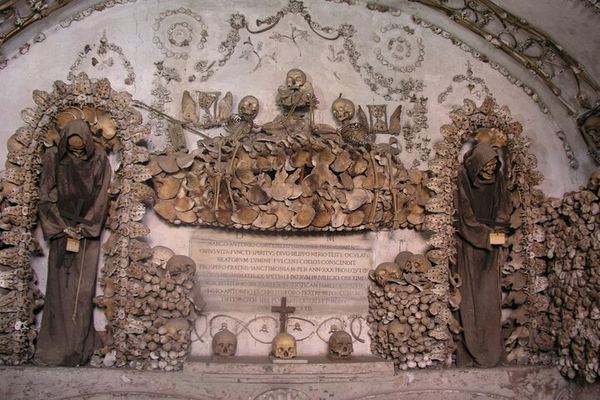
Capuchin Crypts and the Dark Centre, Group of Fifteen
Does not end at the crypt exit: the walk continues through the centre. Shoulders and knees must be covered; cover-ups cost a euro at the door.
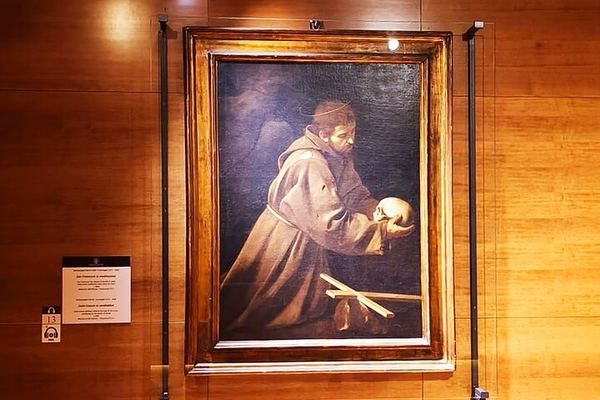
Caravaggio in Rome and the Capuchin Crypt, Ten People Maximum
Three Caravaggios at San Luigi dei Francesi, then a crypt decorated with the bones of the friars who lived there. A small group is what makes it work.
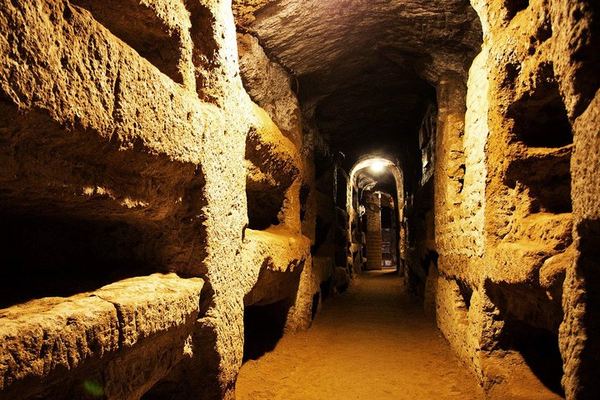
Catacombs and City Highlights, Privately with a Driver
The car earns its place in the afternoon: the catacombs lie well outside the walls, and the site's own guide is included. Lunch built in.
Ratings collected by Viator and Tripadvisor
The castle, without the novel
Hadrian's tomb, the eight-hundred-metre escape corridor, and a Saturday-evening visit through it that no marketplace sells.
Data verified on. The West Ponente attribution is from the Vatican's own page. The Illuminati founding, the ambigram testimony, the archive's name and scale, and the Cenci dates are from primary records.