
Expert-led Pantheon tours in Rome: archaeologists, historians, and the disputed numbers
Fifteen tours led by people who work on this period. Including the six measurements the sources disagree about, and where the noon beam actually lands.
Almost everything you will read about this building is repeated from something else, and a surprising amount of it is wrong. The oculus is given as 8.2 metres on the Basilica's own website and as roughly nine on every piece of scholarship since 1929. A famous study of self-healing Roman concrete is attributed to the Pantheon in dozens of places and was carried out on samples from somewhere else entirely. The bell towers that stood here for two hundred and fifty years are credited to Bernini, who was three years too late.
That is the case for these fifteen tours. Not that a specialist knows more facts — the facts are public — but that a specialist knows which of them are contested, and will say so out loud instead of picking the roundest number.
They run from €12 to €289,50, median €64, ninety minutes at the median, and they carry the highest weighted rating of anything on this site: 4.82 across 1,253 reviews.
One of these fifteen is the cheapest guided visit in the whole catalogue, at €12,00 with 907 reviews, and one of them is a forty-minute visit that includes the optional route behind the rotunda — one of only two products anywhere that offer it. Neither of those facts is visible from the product titles.
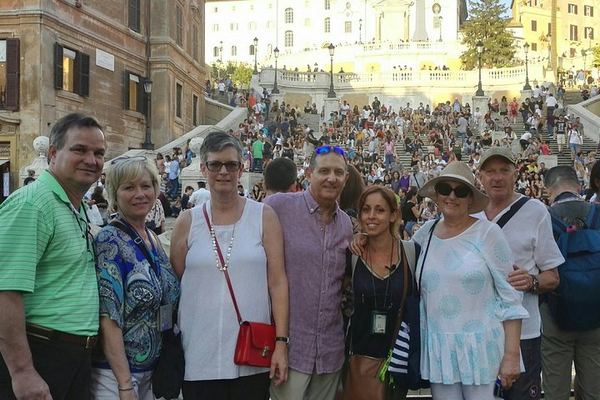
Best of Rome Private Walk with Pantheon and Trevi Tickets
Two booked entries rather than one: inside the Pantheon, and down at the Trevi basin, where access is now controlled and a slot decides where you stand.
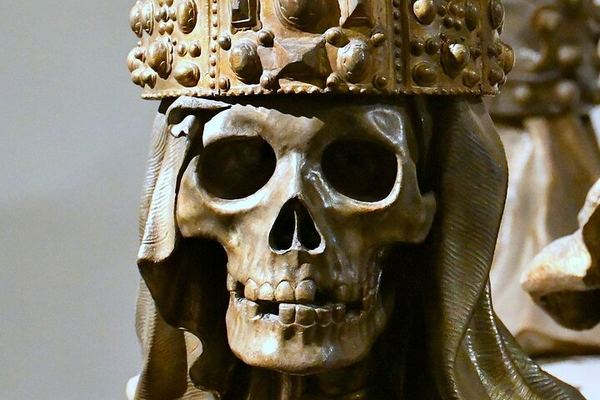
From the Capuchin Crypt to the Pantheon, Ending Inside the Rotunda
From a room of arranged bones to the calmest interior in Rome, in that order on purpose, finishing inside the rotunda rather than in the square.
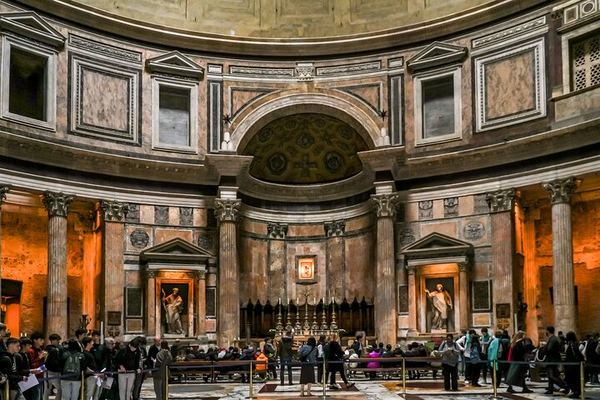
Pantheon Guided Tour in 45 Minutes, with the Chapels and the Tombs
A tour specific about what it shows: two named chapels, the statues of Jupiter, Venus and Mars, and the tombs including Queen Margherita's.
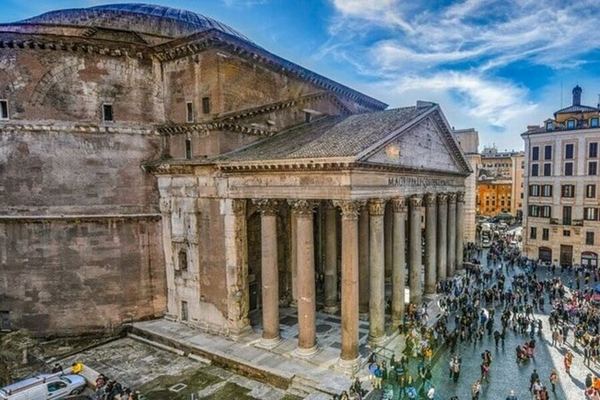
Pantheon Ticket with Audio and an Optional Basilica of Neptune Tour
The upgrade adds an official guide through parts of the complex the standard ticket does not cover. Tickets arrive by WhatsApp, not on the voucher.
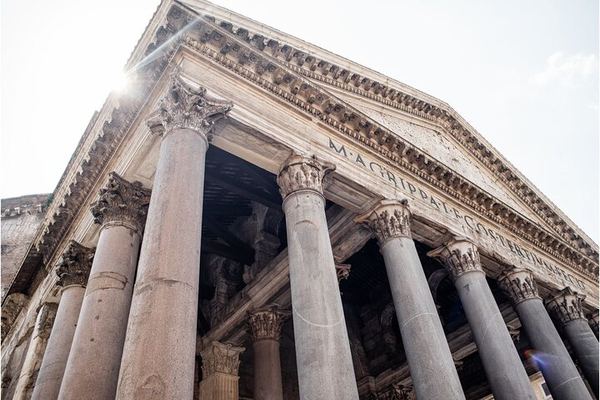
Pantheon Tour with an Archaeologist, Ten People Maximum
A group capped at ten, led by an archaeologist, starting at Bernini's elephant in Piazza della Minerva and going in without the ticket queue.
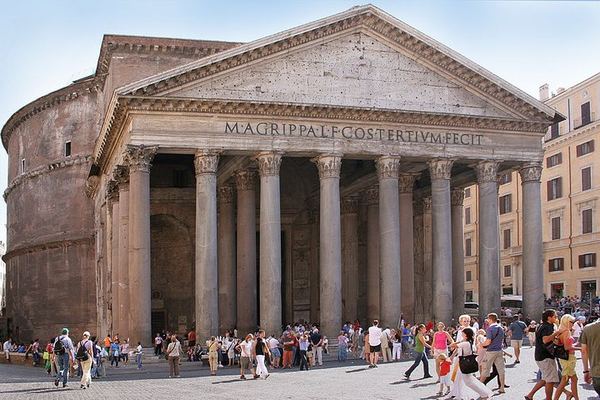
Pantheon Tour with Optional Access to the Basilica of Neptune
The Special Access version goes through the archaeological remains behind the rotunda and enters by a back door, coffee tasting included.
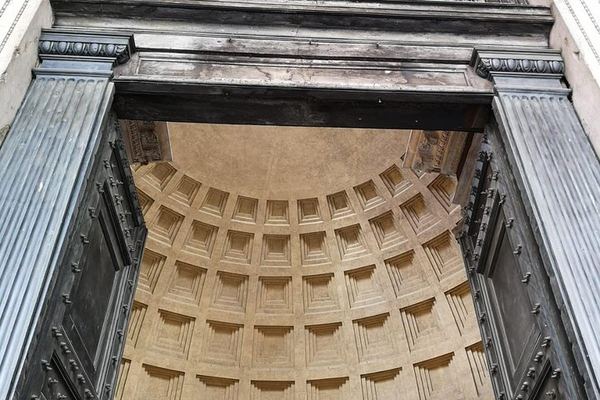
Pantheon with an Archaeologist: How the Wall Actually Carries the Dome
The technical visit: what looks like a solid perimeter wall is piers, voids and relieving arches, and the archaeologist shows where the weight goes.
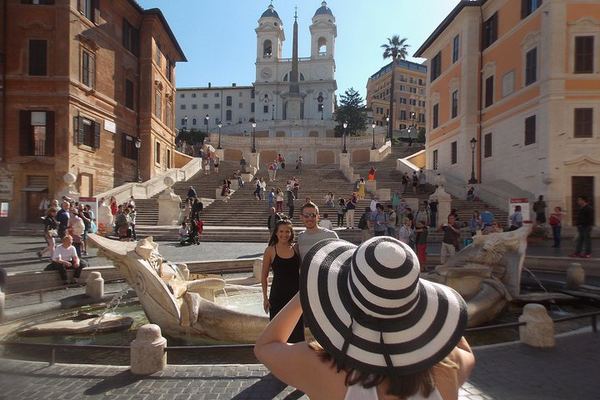
Private Heart of Rome Walk, from the Spanish Steps to Navona
A private guide, the Column of Marcus Aurelius that Romans named for its spiral stair, and the Pantheon entered rather than viewed. Sales are final.
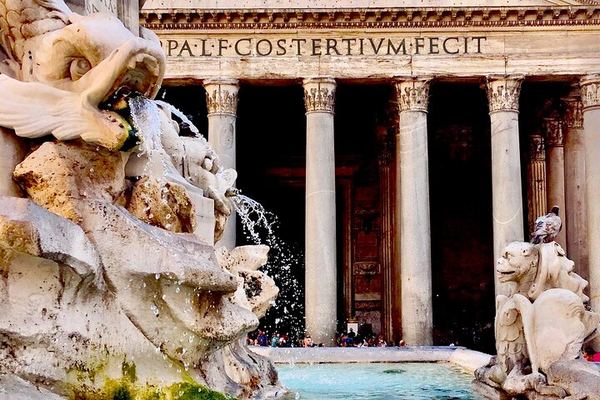
Private Pantheon Tour in 40 Minutes, with an Optional Second Walk
A guide for your party alone, timed to what one room actually takes, with a second forty-minute walk through the nearby squares available at booking.
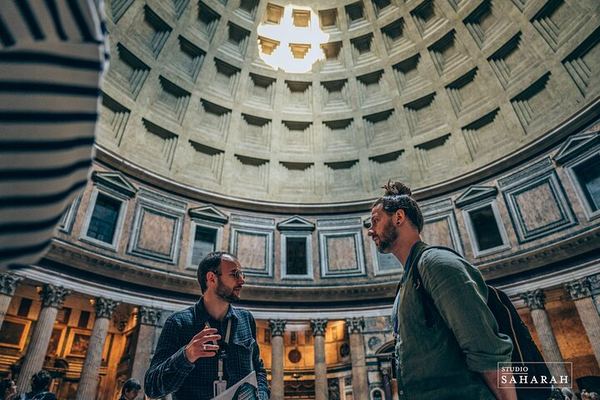
Private Pantheon Tour with an Official Guide, Names Sent in Advance
The guide buys the tickets ahead, so every visitor's name and age goes over after booking, and the church dress code is applied at the door.
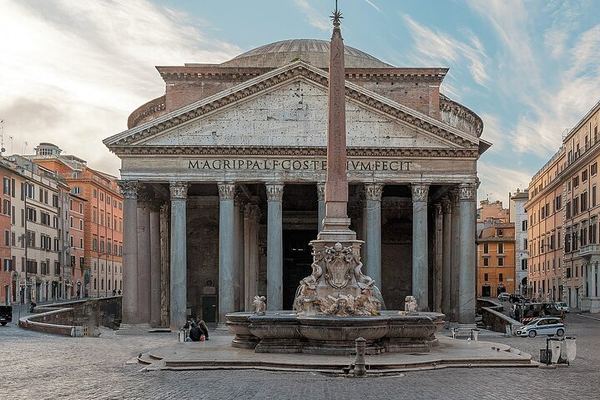
Private Rome Tour from the Capitoline Hill to the Pantheon
The walk runs downhill through time, from the Temple of Jupiter to Caesar's killing place and on to the Baroque, with Pantheon tickets booked ahead.
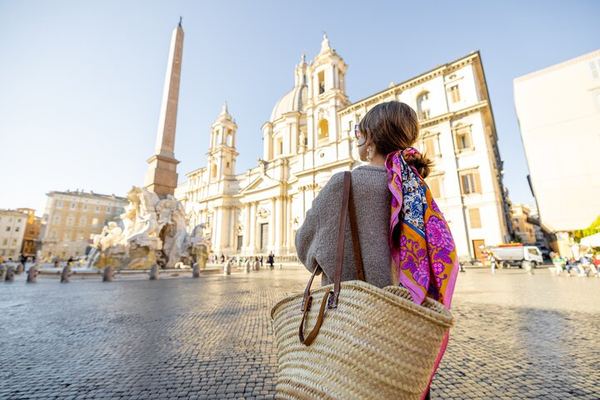
Private Rome Walk with an Archaeologist, Piazza di Spagna to Navona
From Piazza di Spagna to Navona with a guide who reads buildings for a living, taking in Palazzo Chigi and Montecitorio as well as the monuments.
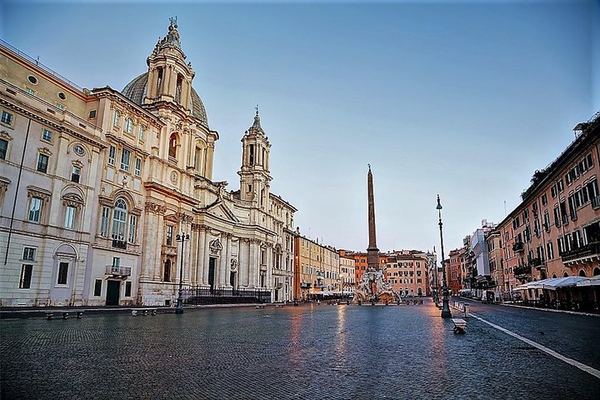
Rome at Sunrise: the Pantheon Before the Crowds, with Breakfast
The centre before the crowds arrive, in a group of six, with cappuccino and a cornetto taken standing at a bar the way Romans have it.
Rome Bucket List Walk from Piazza del Popolo, Gelato Included
Baroque Rome walked downhill from Piazza del Popolo, gelato included, and the Bernini-Borromini feud told with the dates that spoil the best story.
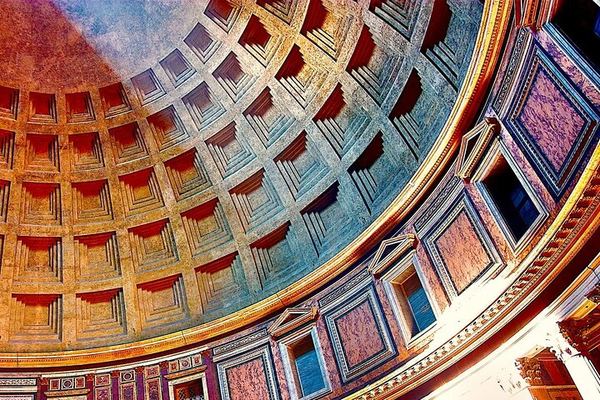
The Pantheon Explained: Dome, Oculus, Niches and Tombs
A guided visit that takes the building apart in four pieces, including what the nine-metre opening is for besides letting the light in.
Ratings collected by Viator and Tripadvisor
Six numbers the sources disagree about
These are not obscure quibbles. They are the figures that get read aloud on every tour of this building, and in each case there is a published disagreement that most guides have never been told about.
| The measurement | What circulates | What the literature supports |
|---|---|---|
| The oculus | 8.2 m, from the Basilica's own website | About 9 m, or 30 Roman feet. Platner and Ashby in 1929, the Cambridge volume in 2015 and the 2025 laser survey all agree. The 8.2 figure looks like 27 feet read for 30 |
| Interior diameter | 43.30 m | 43.30 m in general use; the most recent laser survey gives 43.56 m. A real difference, not a conversion artefact |
| Dome thickness | 6.40 m down to 1.20 m | 5.90 m down to 1.50 m. De Fine Licht's 1968 archaeological survey is the dedicated study and it wins |
| The column shafts | 11.9 m | 11.7 m as measured. Both figures mean forty Roman feet; what changes is the value used for the foot |
| Weight of a shaft | 60 tonnes | About 50 tonnes, from laser survey work. The 60-tonne figure traces back to a commercial website |
| The bronze doors | About 4.90 m wide | 4.45 by 7.53 m, published in 2007. The larger figure appears in official material and is not supported |
A seventh belongs on the list with a warning attached. The twenty-two drainage holes in the floor are cited by the Ministry and by the Basilica, and appear in neither the Cambridge volume, nor Platner and Ashby, nor Lancaster. The provenance is circular. The holes are certainly there; the number rests on institutional repetition rather than a published count.

The thing everybody photographs
The beam is a clock, and it is running slow
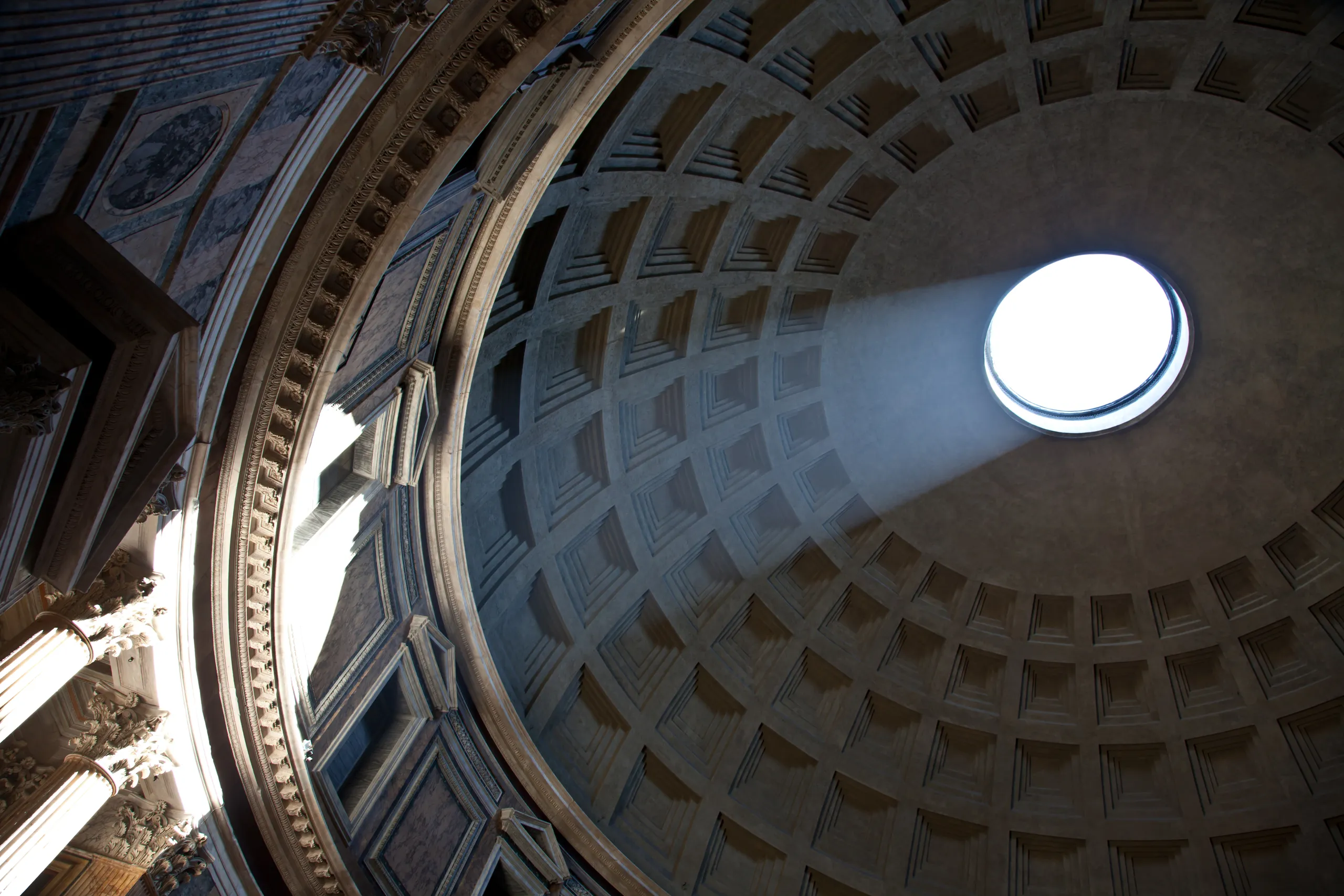
The oculus has never had glass in it. Rain comes through, and so does a shaft of sunlight that moves across the interior in a completely predictable way — predictable enough to calculate, which almost nobody does.
The geometry is simple. The opening is 43.30 metres above the floor and the room's radius is 21.65. So the beam only reaches the floor when the sun is higher than about 63 degrees, which in Rome happens for roughly three months around midsummer. For the other nine months it climbs the wall and then the dome.
Which produces the correction nobody makes. On 21 April, Rome's traditional birthday, the beam is famously said to frame the doorway at midday. It does frame the doorway. But solar noon in Rome that day falls at about 13:09, because the clocks have gone forward — so anyone arriving at twelve is an hour early.
| Date | Solar noon | Sun's altitude | Where the patch of light sits |
|---|---|---|---|
| 21 January | 12:21 | 28° | High on the coffered dome, about 32 m above the floor |
| 21 February | 12:24 | 37° | On the dome, about 27 m up |
| 21 March | 12:18 | 48° | On the drum wall, about 20 m up |
| 21 April | 13:09 | 59° | About 6.8 m up the entrance wall — on the doorway itself, whose doors are 7.53 m high |
| 21 May | 13:07 | 68° | On the floor, 17.5 m from the centre |
| 21 June | 13:12 | 71° | On the floor, 14.5 m from the centre. The closest it gets to the middle all year |
| 21 July | 13:16 | 69° | On the floor, 17 m from the centre |
| 21 August | 13:13 | 60° | Back on the wall, about 6 m up |
| 21 September | 13:02 | 48° | On the drum, about 19 m up |
| 21 October | 12:54 | 37° | On the dome, about 27 m up |
| 21 November | 11:57 | 28° | On the dome, about 32 m up |
| 21 December | 12:09 | 25° | The highest it goes, about 33 m up the dome |
Read the fourth column downwards and the building starts to look like an instrument. For nine months of the year the light is on the ceiling; for three it is on the floor; and on two dates a year it crosses the doorway, which is the only place in the room where a person could stand and be lit by it.
Whether that was designed is exactly the sort of question a specialist will refuse to answer confidently, and a bad guide will answer with a story about emperors.
The building is the best-preserved thing the Romans left us, and we still do not know what colour the inside of the dome was.
A hundred and thirty years of arguing about it
The dates that changed what is known, and one that never happened.
The origins
January 1892
Chedanne digs, and re-dates the building
Georges Chedanne excavates and reads the brick stamps, which put the standing structure in Hadrian's reign rather than Agrippa's. He does not publish. Spiers does, three years later, which is why the wrong name is attached to the discovery about half the time.
1929
Platner and Ashby put the oculus at thirty Roman feet
The topographical dictionary that most later work builds on. Its figure for the opening, about nine metres, has been confirmed by every subsequent survey and contradicted by the building's own official website.
The growth
1968
De Fine Licht measures the shell
The dedicated archaeological survey, and still the source for the numbers that matter: a dome thinning from 5.90 metres at the springing to 1.50 at the crown, with the aggregate getting lighter as it rises. Much of what is known about the concrete rests on this book, which in turn rests on restoration records never published.
1987
Robert Mark does the sums on the coffers
The coffers are always explained as a way of lightening the dome. Mark's analysis puts the saving at under five per cent. The real engineering is the graded aggregate and the thinning shell, which are invisible, which is why the coffers get the credit.
Today
2007
Hetland moves the start date earlier
Dating the Pantheon argues the work began under Trajan, around 114, and was finished under Hadrian between 125 and 128. A commonly cited 2009 German-titled version of this article does not exist - it appears in bibliographies and in no database.
2015
The Cambridge volume
Marder and Wilson Jones assemble the current consensus, and are careful about what is conjecture. The decoration of the coffers, for instance: the bronze rosettes that everyone describes are, in Wilson Jones's phrase, a matter of conjecture. Even this book contradicts itself once, on the year the bell towers came down.
2025
The laser survey
Aung and Bork's measurements give an interior diameter of 43.56 metres against the 43.30 in general use. A quarter of a metre, on a building measured for five hundred years, is a reminder that the numbers on the wall label are not the last word.
Four stories a good guide will not tell you
Each of these is repeated daily in Piazza della Rotonda, and each one is checkable.
The self-healing concrete study is not about this building. The 2023 paper in Science Advances that identified lime clasts repairing cracks in Roman mortar worked on samples from Privernum, sixty miles south. The word Pantheon does not appear in it. There is no modern chemical or mineralogical study of the Pantheon's own mortars at all, which is a more interesting fact than the one it replaces.
The twenty-eight cartloads of bones are an invention of 1586. The story that the temple was consecrated with relics carted from the catacombs first appears with Cardinal Baronio, nearly a thousand years after the event, and the Liber Pontificalis — the source that records the consecration — says nothing of the kind. It is on the Basilica's own site, which is how it reached every script in the square.
The bell towers were not Bernini's. The two pairs of towers that stood on the portico from the 1620s were designed and built by Carlo Maderno with Borromini and Domenico Castelli. Bernini succeeded Maderno at the Fabbrica di San Pietro in 1629, three years later. They were demolished in April 1883 on the decision of Guido Baccelli, minister of public instruction, who had personally swung the first pick two years earlier. It was not a restoration; it was a de-Christianisation, carried out to clear the setting for the tomb of Victor Emmanuel II.
Michelangelo is not buried here. He is in Santa Croce in Florence. The question appears often enough in search results to be worth answering plainly. Raphael is here, and he was not given the tomb: he bought it, and paid to restore the niche himself.
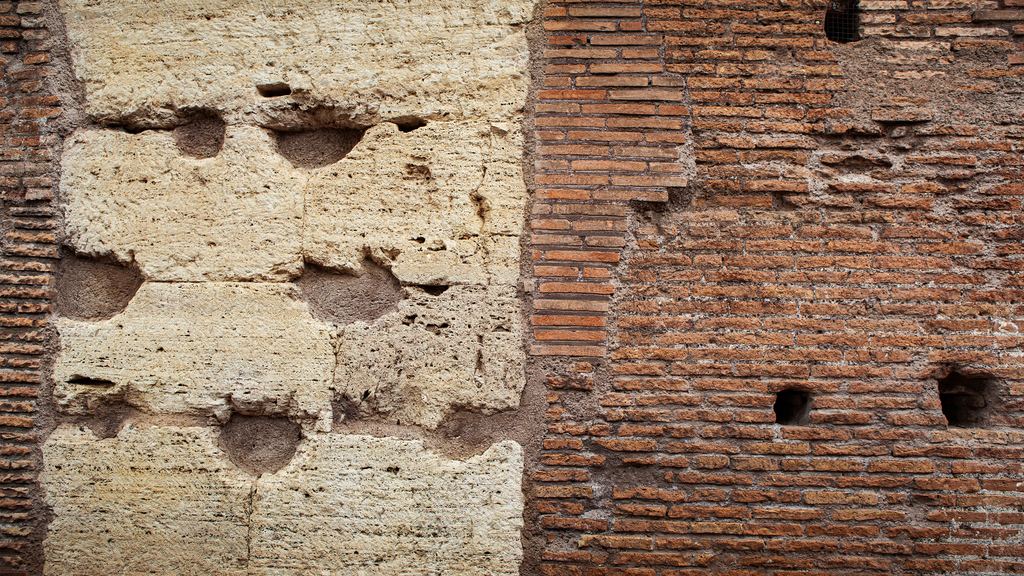
The one tour that goes behind the rotunda
Among these fifteen is a forty-minute visit priced at €45 that offers, as an option, the route through the spaces of the Basilica of Neptune behind the round room. It carries 92 reviews at 4.8.
That option is the state's own Oltre il Pantheon: forty-five minutes, €10 on top of admission, groups of twenty-five, in Italian or English, every day except the first Sunday of the month. Across the entire affiliate catalogue — thousands of Rome products across three marketplaces — there are two listings that include it.
If you want to see something at this monument that most visitors do not, this is the only honest version of that sentence. Everything else sold as special access here is a reserved entry time with better adjectives.
Questions with contested answers
How big is the oculus?
About nine metres, which is thirty Roman feet. The Basilica's own website says 8.2 metres and has done for years; every survey since 1929 disagrees with it, and the likely origin of the error is 27 feet being read where the source said 30. If a guide gives you 8.2, they are reading the official site rather than the literature.
Is the Pantheon's dome the largest in the world?
It is the largest in unreinforced concrete, and that qualifier is the whole claim. Florence's dome spans about 44 metres over an octagon and is built in brick with iron and timber chains. Saying the Pantheon's dome is simply the largest is the kind of shortcut that gets repeated until somebody checks.
Do the coffers hold the dome up?
They help, by under five per cent. Robert Mark ran the numbers in 1987. The dome stands because the shell thins from 5.90 metres to 1.50 as it rises and because the aggregate gets progressively lighter — travertine low down, volcanic scoria at the top. Neither of those is visible, which is why the coffers get the story.
What happens when it rains?
Rain comes in, and the floor drains it. The pavement is very slightly convex and pierced with holes cut through the marble, still working after nineteen centuries. On a heavy day it is one of the better things to see in Rome, and nobody sells a tour for it.
When does the light hit the doorway?
Around 21 April, at solar noon, which in April is about 13:09 rather than 12:00 because of summer time. For three months around midsummer the beam reaches the floor instead; the rest of the year it stays on the wall and the dome. The table above gives the position month by month.
Is an expert-led tour worth the extra?
The median here is €64 against €42.75 for a straightforward guided visit, and this branch has the highest rating on the site at 4.82. Whether twenty euro is worth it depends on one thing: whether you would rather be told what is known, or told what is repeated. Those turn out to be different tours.
The excavated city, two streets away
Vicus Caprarius under the Trevi Fountain and the Stadium of Domitian under Piazza Navona. Both have their own ticket, and one of them has a problem you should know about.
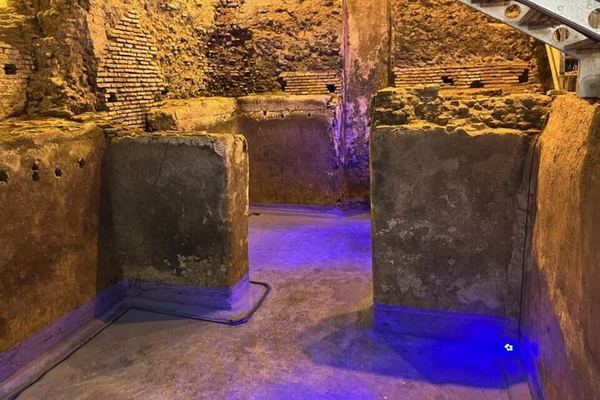
City of Water, Trevi from Above, and the Galleria Sciarra
States plainly that the fountain is seen from street level, not the basin, and ends in a frescoed courtyard most visitors never enter.
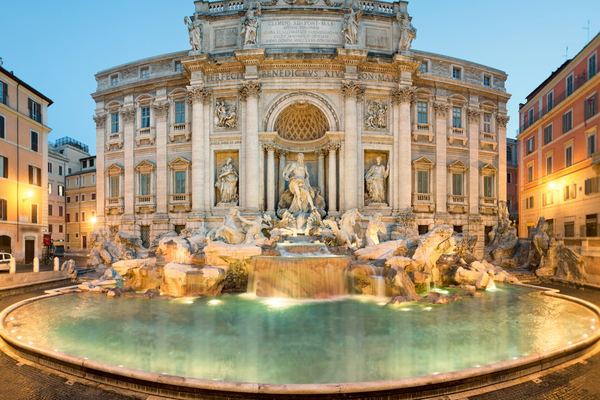
Following the Trevi Water Through the City Below It
All three sections of the site, tracing the aqueduct from the fountain into the pipes and basins of the Roman house built to use it.
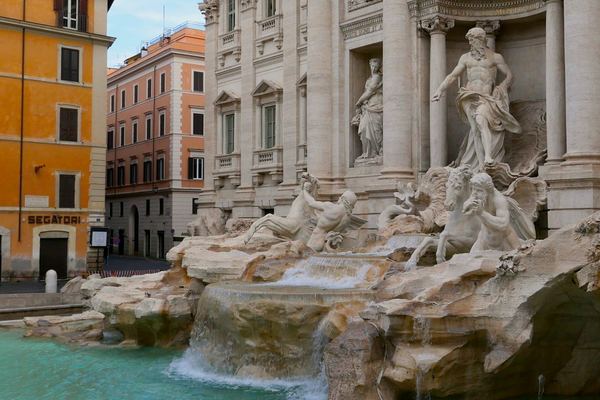
Forty Minutes at the Trevi Fountain and the Domus Below It
A guide reads the facade in the order it was composed, then takes you nine metres down to the aqueduct that has never stopped supplying it.
Ratings collected by Viator, Tripadvisor and Tiqets
The same guide, in a smaller group
Fourteen tours that declare a maximum. Under this dome, whether you are one of six or one of twenty-five decides whether you can ask a second question.
Data verified on. Measurements follow De Fine Licht 1968, Marder & Wilson Jones 2015 and the 2025 laser survey. The light-beam table is geometry from those dimensions and solar position, not an observation.