
Underground Rome by the Pantheon: two excavations, named
Not the catacombs and not the Colosseum. Vicus Caprarius is nine metres down and costs €4. The stadium under Navona is closed, and still being sold.
Two excavated sites sit under the streets between the Pantheon and the Trevi Fountain, and both have their own ticket, their own entrance and their own opening hours. Neither is a catacomb, neither is under the Colosseum, and neither has anything to do with the Pantheon, which has no accessible underground at all.
We are naming them rather than filing them under a category, because underground Rome means something else to almost everybody who searches it: the catacombs on the Appian Way, the levels below the Colosseum, the necropolis under St Peter's. Those are elsewhere and they are somebody else's page. These two are here.
Sixteen products, from €10 to €330, median €45,25. They rate 4.43 across 1,101 reviews, which is the lowest score anywhere under this heading — and one specific, checkable thing is doing most of that.
Start with the thing that will save you money. The entrance to Vicus Caprarius costs four euro. Almost every aggregator publishes eight, because eight is the price of the guided visit. If you can read a plan and a caption, four is the number.
City of Water, Trevi from Above, and the Galleria Sciarra
States plainly that the fountain is seen from street level, not the basin, and ends in a frescoed courtyard most visitors never enter.
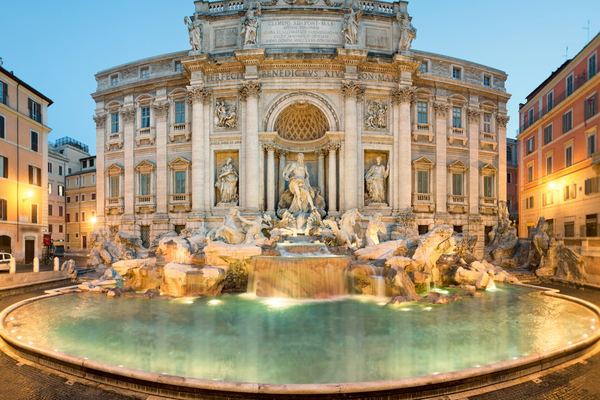
Following the Trevi Water Through the City Below It
All three sections of the site, tracing the aqueduct from the fountain into the pipes and basins of the Roman house built to use it.
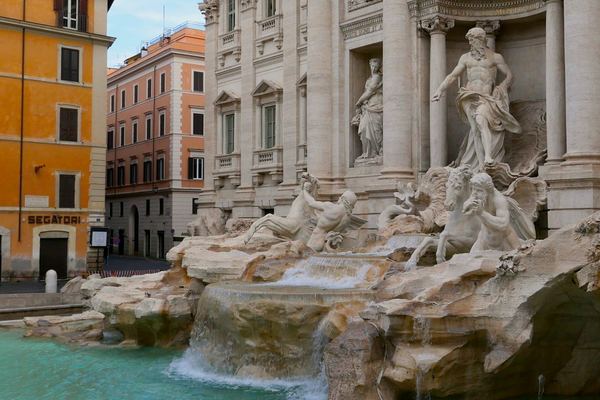
Forty Minutes at the Trevi Fountain and the Domus Below It
A guide reads the facade in the order it was composed, then takes you nine metres down to the aqueduct that has never stopped supplying it.
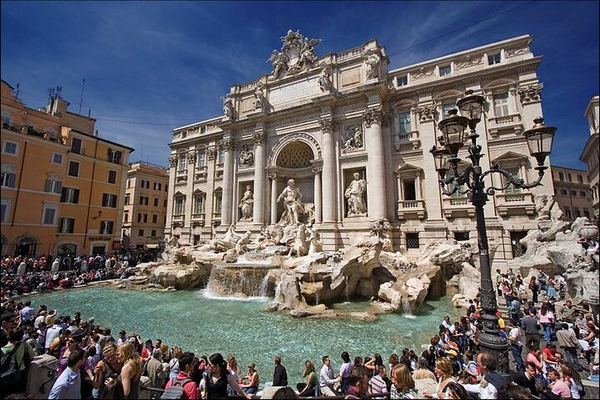
Fountains and Squares, Downhill from Trinità dei Monti
Starts at the top of the Spanish Steps and runs downhill all the way to Piazza Navona, which in a Roman summer is the whole argument.
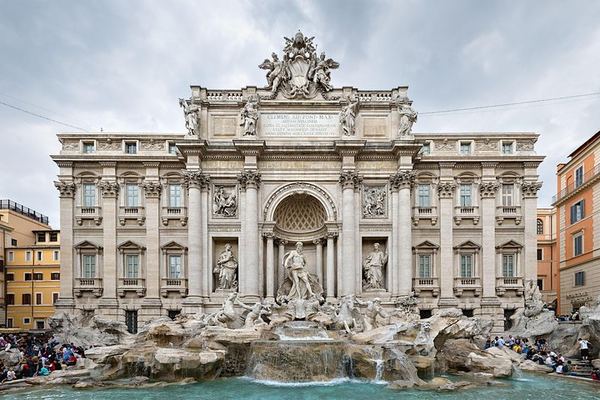
Nine Metres Under Trevi: The Domus and Its 800 Coins
Found in 1999 when a cinema basement was cleared, with African oil amphorae and a marble head of Cleopatra's son among the finds.
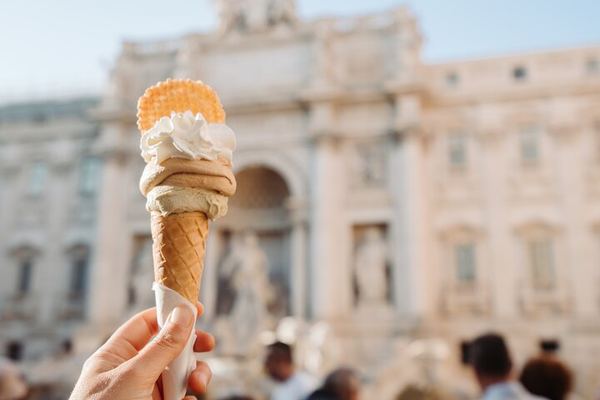
Private Rome Walk with Sant'Ignazio and the City of Water
Capped at six people, with the painted false dome at Sant'Ignazio and the Roman block beneath the Trevi district that most walks never reach.
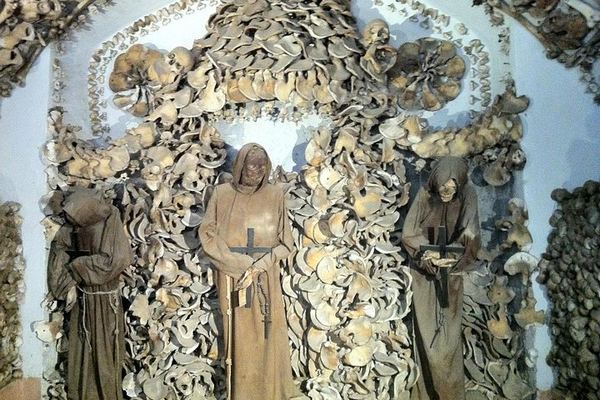
Private Underground Rome: Stadium, Bone Crypt, City of Water
Three sites below street level with one guide, including the chapels built from the bones of some 3,700 friars. Check the Navona site is open.
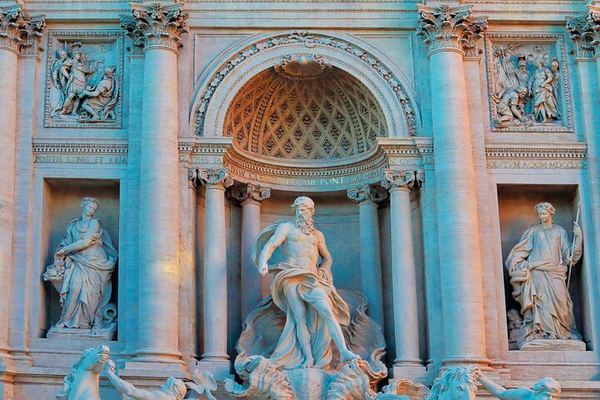
Rome by Water: Trevi, Vicus Caprarius and the Pantheon
A private tour with one argument running through it, including the Roman block nine metres under the Trevi district with the aqueduct still flowing.
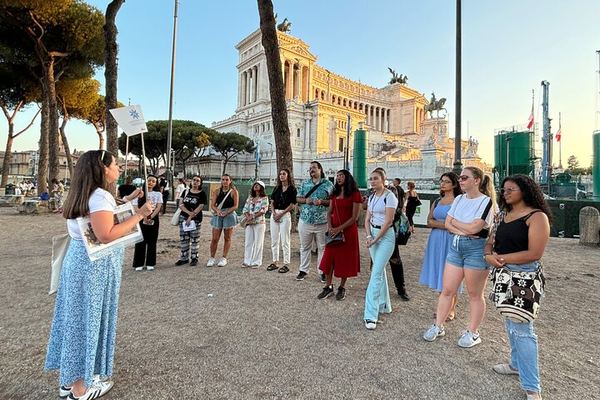
Rome Highlights by Day or by Night, Two Opposite Routes
The night walk is not the day walk in the dark: it runs the other way and adds Vicus Caprarius, the imperial forums and the Colosseum.
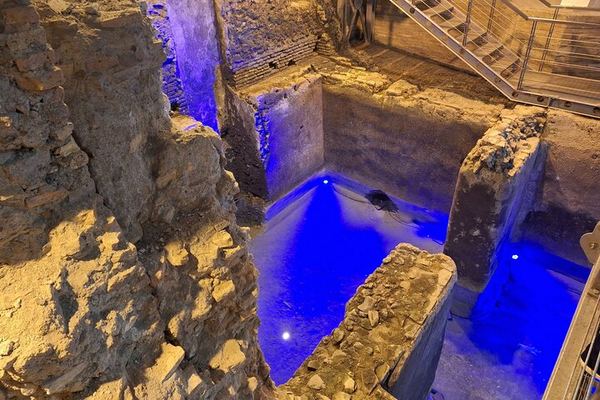
Semi-Private Underground Rome, with a Guaranteed Substitute
The only listing here that states what happens if a site closes: San Clemente or an equivalent replaces it. Small group, all sales final.
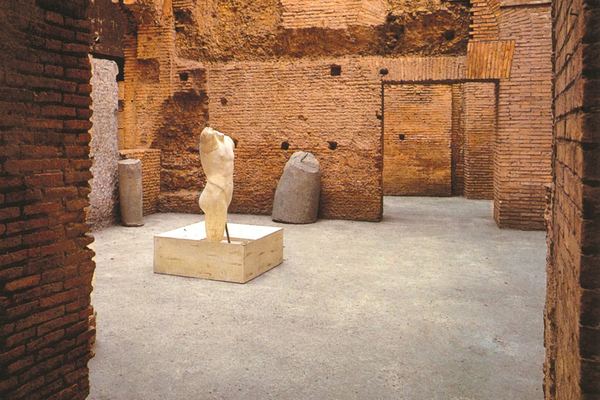
Stadium of Domitian, the Arena Under Piazza Navona
The archaeological area is currently closed to the public with no reopening date, though tickets are still being listed. Confirm before booking.
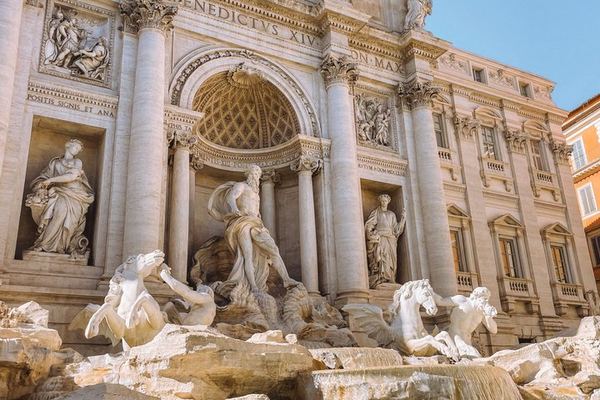
Trevi Fountain and Vicus Caprarius: Audio Guide or Guided Underground Visit
Choose between Trevi Fountain access plus the Vicus Caprarius ruins with an audio guide, or a guided visit of the underground site with an expert guide.
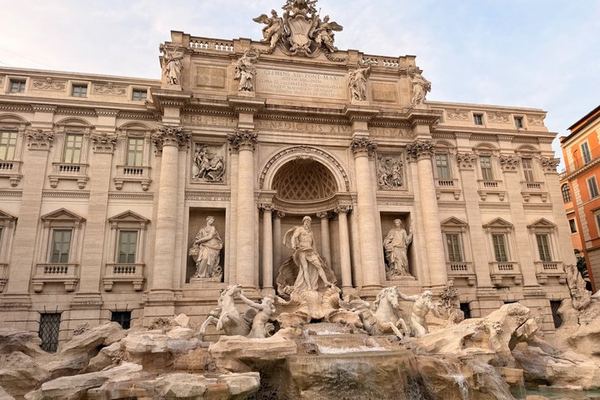
Trevi Fountain Basin Access and the City of Water Below
Includes the restricted terrace at the water's edge, where you stand level with the fountain instead of photographing it over a crowd.
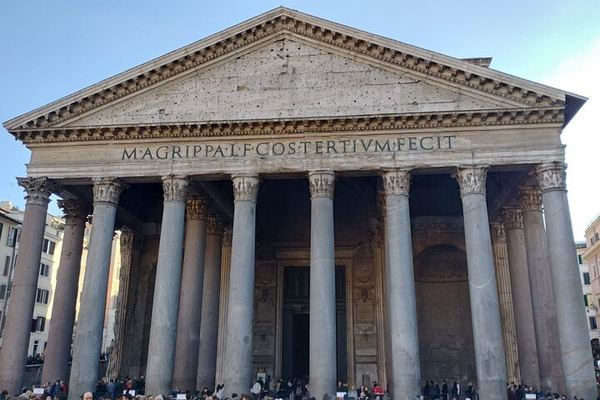
Underground Trevi and the Pantheon, Meeting at Tazza d'Oro
Meeting outside Tazza d'Oro, the tour pairs fast-track Pantheon entry with the Roman level buried beneath the Trevi district. Sales are final.

Under the Trevi District in 45 Minutes, Ending in Gelato
The site was found when the old Cinema Trevi was gutted, and its walls are still wet from the aqueduct that feeds the fountain overhead.
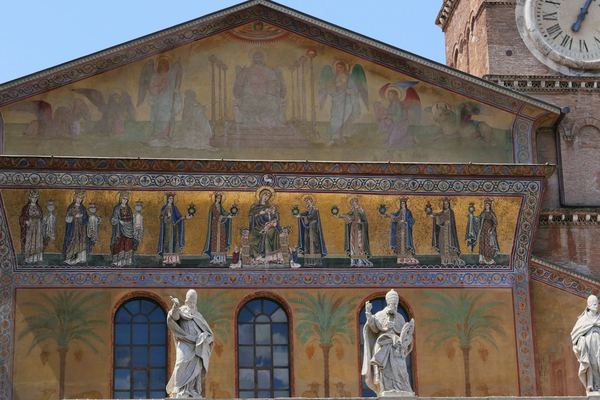
Under Trastevere: A Lost Basilica and a Martyr's House
A 4th-century church under one basilica and a 3rd-century home under the other. The Cavallini Room is on morning departures only.
Ratings collected by Viator, Tripadvisor and Tiqets
The stadium under Piazza Navona is closed
This is the most important sentence on the page and it is not on any competitor's. The archaeological area of the Stadium of Domitian, reached from Via di Tor Sanguigna at the north end of Piazza Navona, is currently closed to the public. The site's own home page carries a notice to that effect in four languages.
It was open as recently as 8 June 2026, which is the last archived version of the site with normal hours on it. The closure happened somewhere between then and the end of August, and no reopening date has been published.
Meanwhile, tickets continue to be sold. At least five marketplaces list it with prices, and one large guide site — with a page dated June 2026 — publishes a full table of its opening hours and admission tiers. One product on this page carries 330 reviews and a €10 price, and those reviews are real: they were left by people who went in when it was open.
What to do about it: if you have a booking, contact the seller. If you are about to make one, do not. And if a walking tour lists the stadium as a stop, ask what happens instead — the answer will be Piazza Navona, which sits directly on top of it, is free, and is a perfectly good place to stand.
A site can close in June and still be selling tickets in August, because nobody in the chain has a reason to check.
Vicus Caprarius, and what is actually down there
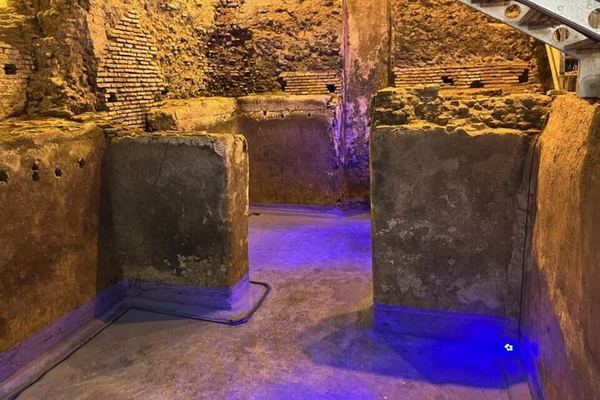
Nine minutes from the Pantheon, in an alley behind the Trevi Fountain, a staircase drops more than nine metres into about three hundred and fifty square metres of Roman city.
It was found in 1999, when the former Cinema Trevi was being rebuilt, and excavated over the following two years. It opened to visitors in 2004. What is exposed is four periods stacked on each other: an insula — an apartment block — put up after the fire of 64 AD; its conversion into a grand domus in the middle of the fourth century; a second-century castellum aquae, a distribution tank for the water supply, still in use into the sixth; and a medieval settlement on top of all of it.
The water is the connection that makes this worth seeing from a Pantheon page. The tank was fed by the Aqua Virgo, the aqueduct Agrippa brought into service in 19 BC — the same man, the same decade, as the first Pantheon. It is the only ancient Roman aqueduct still delivering water, and it is what comes out of the Trevi Fountain a hundred metres above your head while you are standing in the tank that used to distribute it.
Among what came out of the dig: a marble head of Alexander Helios, more than eight hundred coins, African oil amphorae, polychrome marble facing and lead pipes with names stamped on them.
| Vicus Caprarius | Stadium of Domitian | |
|---|---|---|
| Status | Open | Closed to the public, no reopening date |
| Where | Vicolo del Puttarello 25, behind the Trevi Fountain | Via di Tor Sanguigna 3, north end of Piazza Navona |
| On foot from the Pantheon | 9 min | 7 min |
| Depth below the street | over 9 m | about 4.5 m |
| Entry | €4,00 full · €2,50 reduced · €1,00 at 14–17 · free under 14 | — |
| With a guide | €8,00 per person | — |
| Hours | Tuesday to Sunday, 11:00–17:00, last entry 16:30 | — |
| How long | 20 minutes alone, 40 with a guide | — |
| Booking | Required at weekends and on holidays, by phone or WhatsApp only | — |
Two things in that table are worth reading twice. Vicus Caprarius closes at five in the afternoon and all day on Monday, which rules it out of most itineraries built around a late lunch. And its booking runs through a telephone number rather than a website, which is unusual enough that people assume it is closed when it is not.

Why everything is buried
The street has come up, not the city gone down
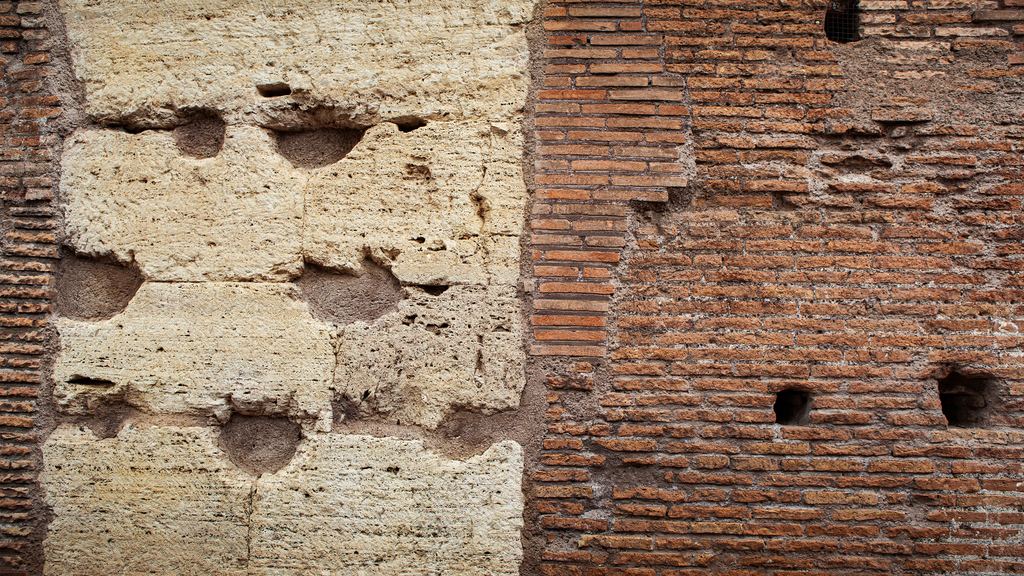
People imagine Roman Rome was built low. It was not. The ground has risen around it, by several metres in most of the centre, over nineteen hundred years of rubble, flood silt from the Tiber, demolition and rebuilding.
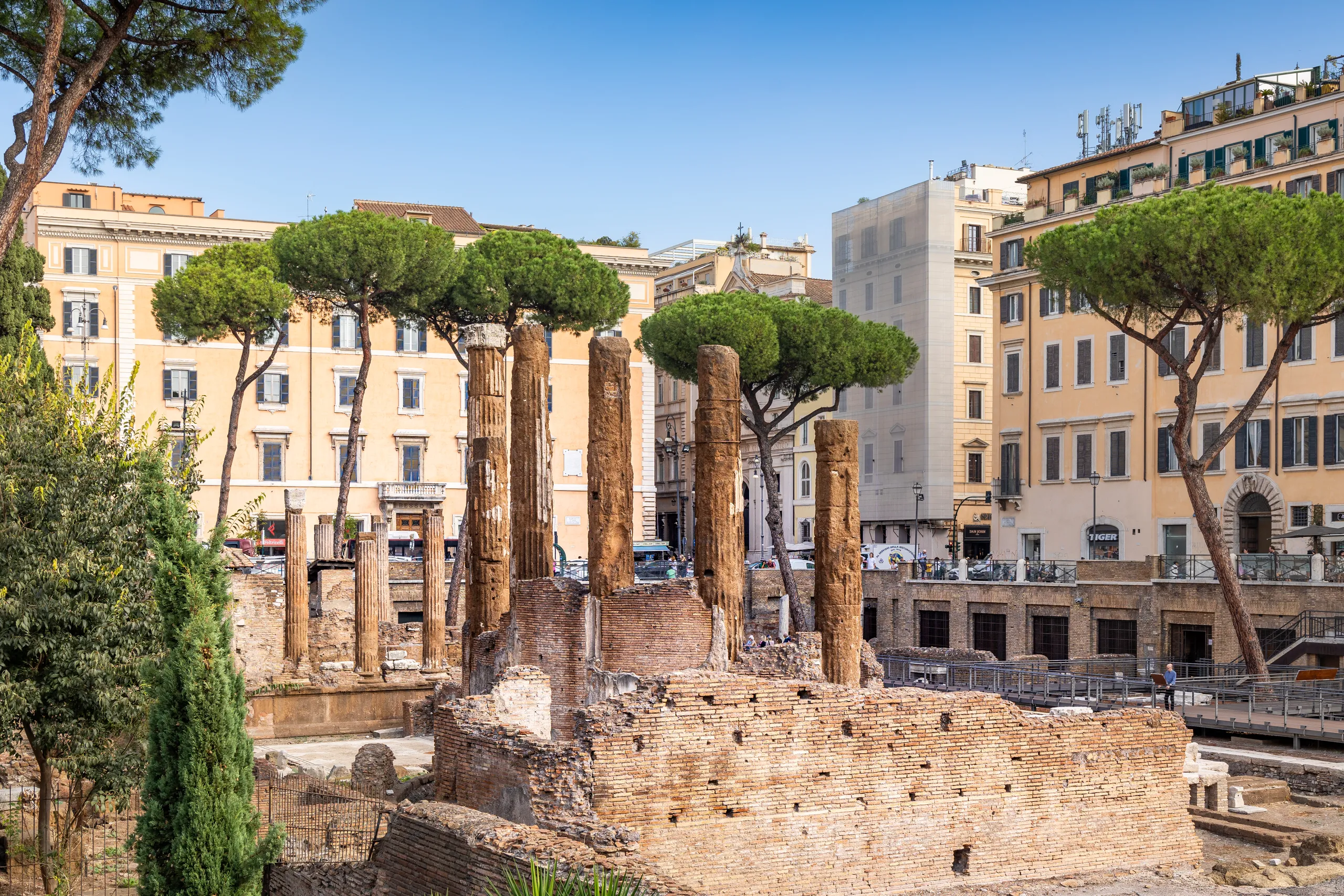
You can see it without paying anything at Largo di Torre Argentina, six minutes from the Pantheon, where four Republican temples sit in a sunken rectangle and the modern pavement runs past at what was once roof height.
The Pantheon is the exception, and that is part of why it feels the way it does. Because it was never abandoned — it has been in continuous use since 609 — its floor is close to the level the Romans walked on. Almost everywhere else in this quarter, you are standing on top of the city you came to see.
Why this page is not called Underground Rome and left at that
Type underground Rome into a search box and what comes back is the catacombs, the lower levels of the Colosseum and the necropolis under the Vatican. All three are real, all three are excellent, and none of them is in this neighbourhood.
Which means a category with that name, on a site about the Pantheon, would be a page competing for a search it cannot answer. So the two sites here are named in the title, in the text and in the products, because the person who will actually be pleased to find this page is the one who has heard of Vicus Caprarius or has looked at Piazza Navona and wondered why it is that shape.
There is a third excavation that gets listed in these round-ups and should not be. Crypta Balbi, part of the National Roman Museum, is temporarily closed to the public. At least two competitor sites still list it among the visitable underground sites of Rome, one of them on a page reviewed in 2024. It is eight minutes from the Pantheon and you cannot go in.
What the low rating is telling you
4.43 is the weakest weighted score of any page in this section, and the two things behind it are worth naming because neither is about the archaeology.
Scale. Vicus Caprarius is three hundred and fifty square metres and takes twenty minutes. People who have booked a forty-euro guided tour of it sometimes expect a subterranean city and find a very good, very small site. The archaeology is not the problem; the framing on the product page is.
Confusion with the closed one. Several products in this branch bundle or reference the stadium, and reviews for those have been drifting downward for months.
Read the two together and there is a straightforward conclusion: buy the €4 ticket, take the plan, and give it twenty minutes. If you want it explained, the site's own guided visit is €8, which is less than half of what a marketplace charges for the same forty minutes.
Under this neighbourhood
Is there anything under the Pantheon?
Nothing you can visit. The Pantheon has no accessible crypt or excavation, and the only extra space that opens to the public is at ground level behind the rotunda — the Oltre il Pantheon route, €10 on top of admission. Everything underground in this quarter belongs to other buildings.
How much is Vicus Caprarius?
€4,00 for entry, €2,50 reduced, €1,00 for 14 to 17 year olds and free below 14. A guided visit is €8,00 and an audio guide €3,50. Most aggregators publish €8 as the ticket price, which is the guided figure.
Can I visit the Stadium of Domitian?
Not at the moment. It is closed to the public and no reopening date has been announced. It was open in early June 2026. Marketplaces are still selling tickets, so check with the seller before booking anything that names it.
Are the catacombs near the Pantheon?
No. The main catacombs are on the Appian Way, several kilometres south, and are a half-day with transport. If a walking tour of the centre offers you catacombs, ask which ones — there are small burial spaces under churches in this quarter, and they are not the same thing.
Do I need to book?
For Vicus Caprarius, yes at weekends and on holidays, and it is worth doing midweek too. Booking is by telephone or WhatsApp rather than through a website, which surprises people. It also closes on Mondays and at five in the afternoon.
Is it suitable for children?
Under 14s go in free, and the site is small enough to hold attention for twenty minutes. It is reached by a staircase, there is no lift, and the space is enclosed and cool. Anyone uncomfortable in confined spaces should know that before descending nine metres.
The other things under this quarter
The Capuchin Crypt and the burial places of the centre. Ten tours, and rules about what you may photograph.
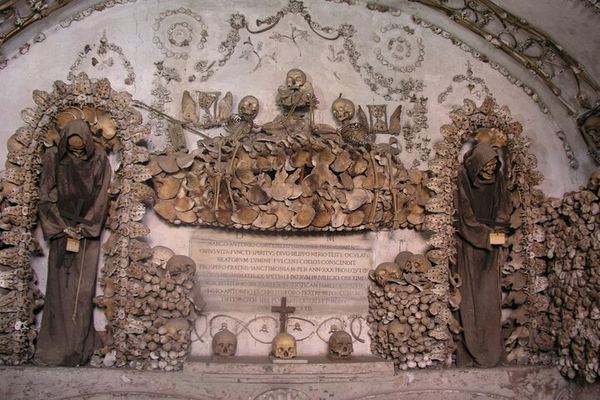
Capuchin Crypts and the Dark Centre, Group of Fifteen
Does not end at the crypt exit: the walk continues through the centre. Shoulders and knees must be covered; cover-ups cost a euro at the door.

Caravaggio in Rome and the Capuchin Crypt, Ten People Maximum
Three Caravaggios at San Luigi dei Francesi, then a crypt decorated with the bones of the friars who lived there. A small group is what makes it work.
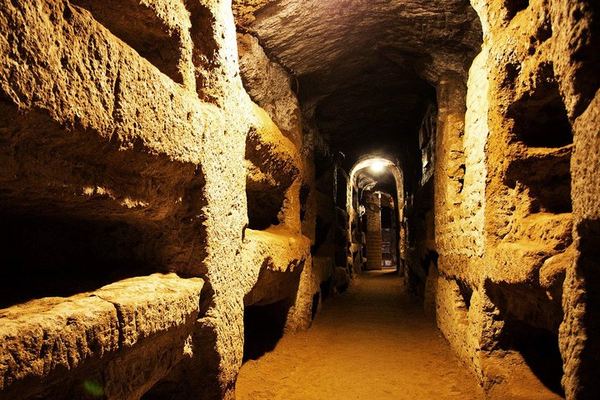
Catacombs and City Highlights, Privately with a Driver
The car earns its place in the afternoon: the catacombs lie well outside the walls, and the site's own guide is included. Lunch built in.
Ratings collected by Viator and Tripadvisor
The city above these two
What each square in the centre is built on, where the water comes from, and the two that will fine you for sitting down.
Data verified on. Vicus Caprarius prices, hours and excavation history from the site's own pages and Turismo Roma. The stadium's closure from its official notice; Crypta Balbi from the National Roman Museum.