
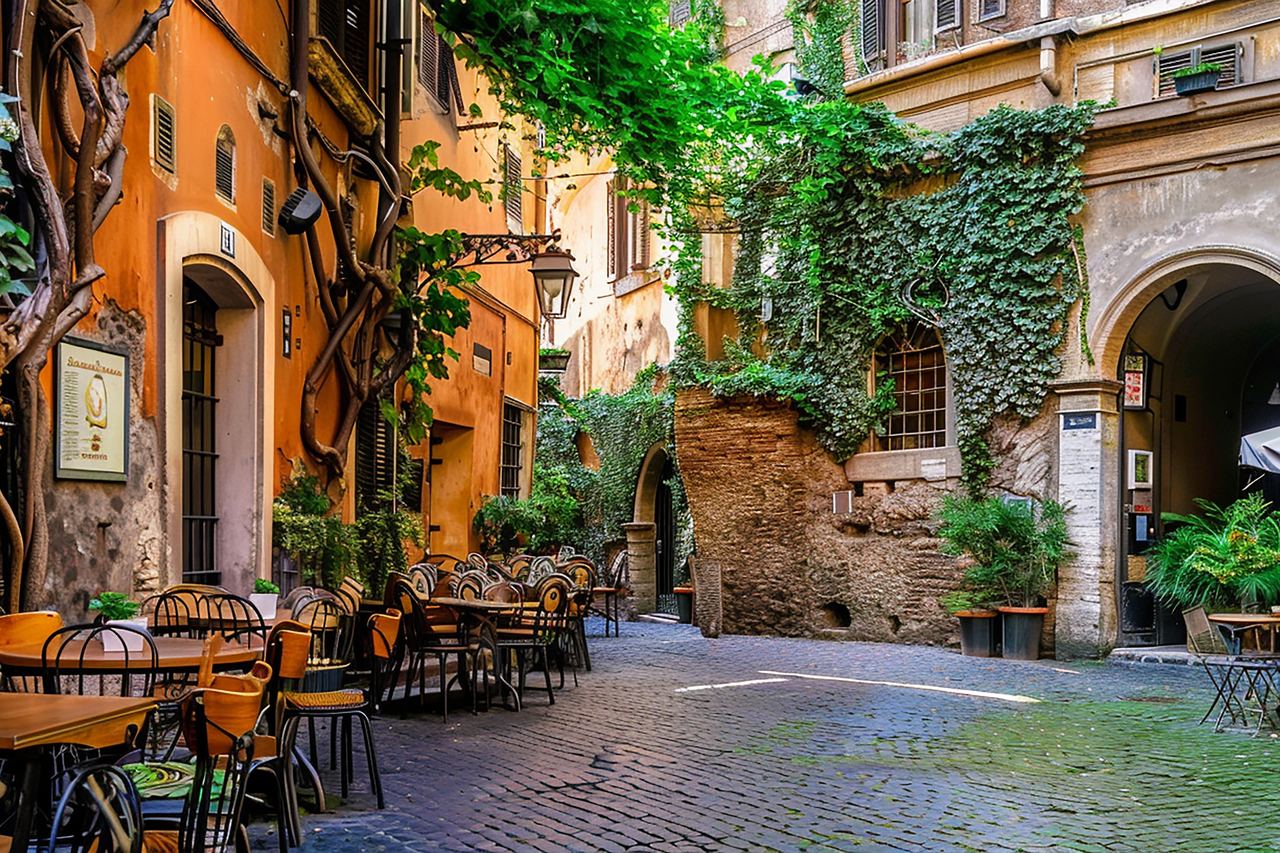
Rome food tours: three neighbourhoods, three different meals
Campo de' Fiori, the Ghetto and Trastevere. 28,060 reviews across twenty-three tours — and most of them cross the river.
This is the most-reviewed page on the site by a long way: 28,060 reviews across twenty-three tours, weighted 4.83. More people book a food tour in Rome than book anything else guided, and it is not close.
It is also the page where being honest costs us something, so here it is. Most of these tours are in Trastevere, which is twenty minutes' walk from the Pantheon, across the river, and is not this neighbourhood. The four best-selling products on this page are all there. They are outstanding and we are not going to pretend they are round the corner.
What is round the corner is different food and a different history: the market at Campo de' Fiori, nine minutes away, and the Jewish Ghetto, eleven, which has a cuisine of its own and a date attached to it.
One rule that will save you an argument over a bill. In Lazio, a coperto — a per-head cover charge — is prohibited by regional law. A service charge is legal if it appears on the menu before you order. Lazio is the only Italian region with a specific ban, and almost no English-language guide mentions it.
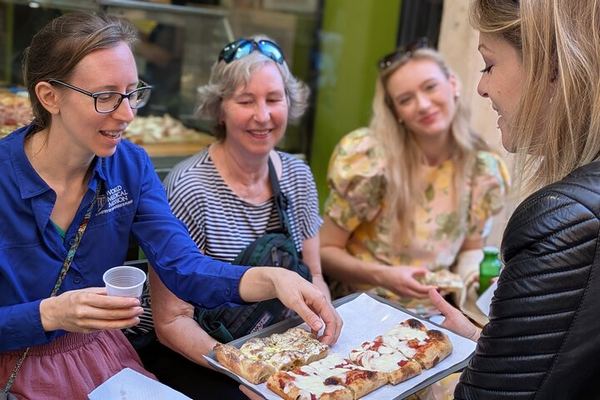
An 1870 Bakery and a Fountain Drawn in 1471: Trastevere on Foot
Pizza from a bakery running since 1870, and a fountain already drawn on a map of Rome in 1471. Two and a half hours, ten people, not for coeliacs.
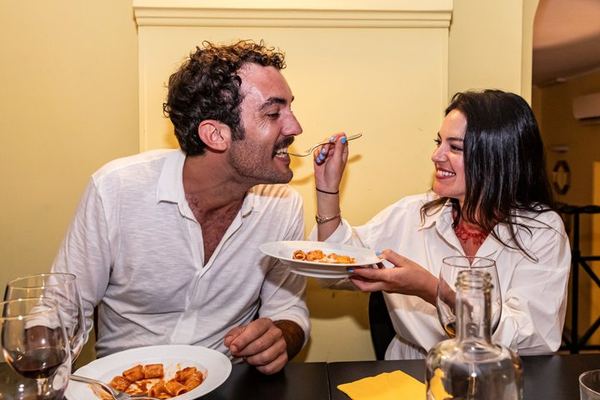
A Wine Cellar Older Than the Colosseum: Ghetto and Trastevere
Ten stops including Da Enzo al 29 and Spirito Divino, both Slow Food. Morning departures taste at the market; evening ones eat fried street food.
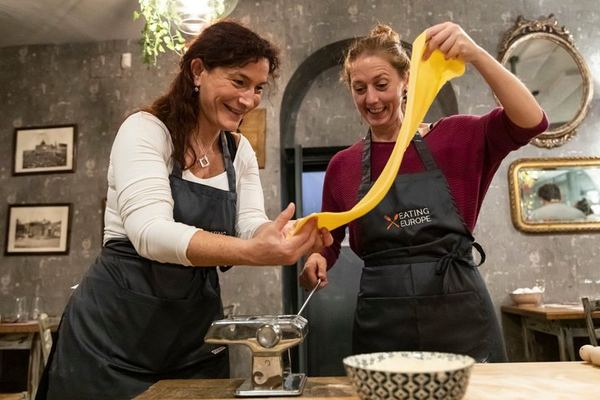
Buy the Eggs, Then Make the Pasta: A Trastevere Class
The shopping comes first, at a neighbourhood butcher, and you eat the ricotta you watched being bought. Porchetta and wine while it happens.
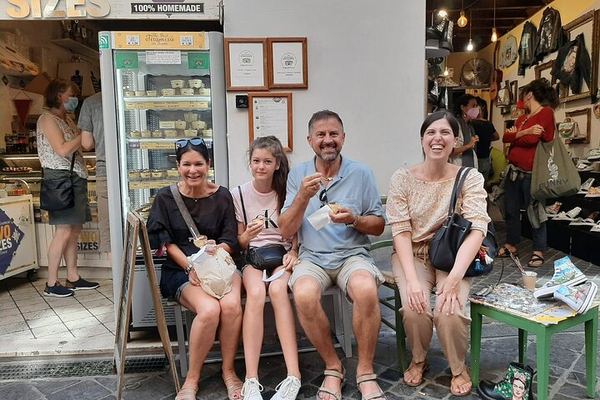
Canestrato, Ricotta and Pecorino: A Trastevere Cheese Walk
A century-old cheese shop where you taste pecorino at several ages, plus carbonara made with guanciale. Runs in English and Italian, small groups.
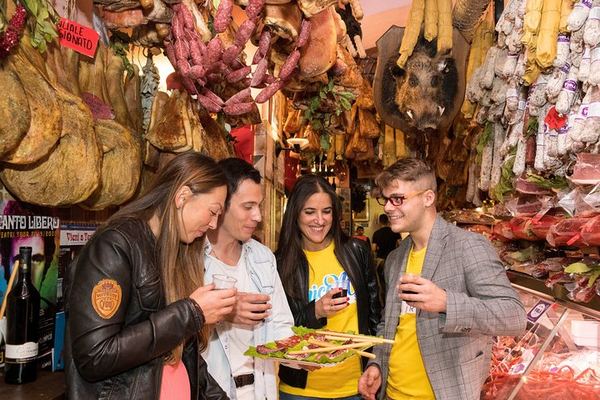
Four Hours of Tastings That End with Dinner in a Trattoria
The last stop is a sit-down supper in a Roman trattoria rather than a gelato on a corner. Sixteen people maximum, Campo de' Fiori to Trastevere.
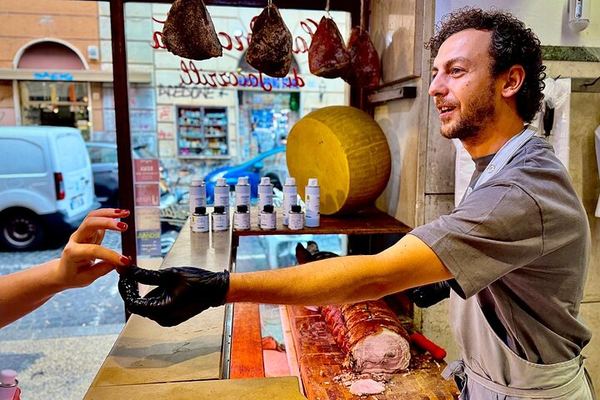
From a Bridge Built in 62 BC: Trastevere with 7+ Tastings
It opens with artichoke, burrata and prosecco on Ponte Fabricio, and takes in the only Roman square that kept the name of its vanished baths.
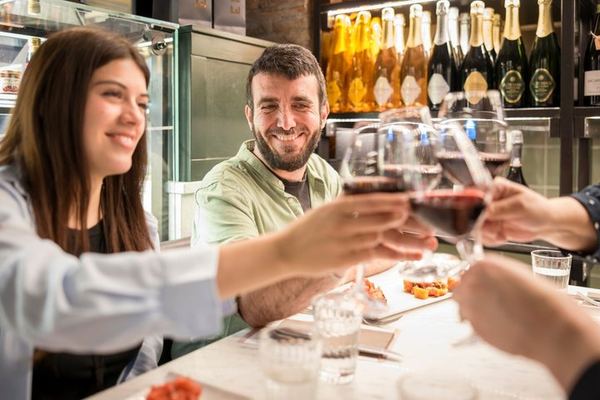
Gelato from the 2020 World Champion: A Private Food Tour
Eugenio Morrone's shop is off the main streets and on this route. Three and a half hours through Campo de' Fiori, the Ghetto and Trastevere.
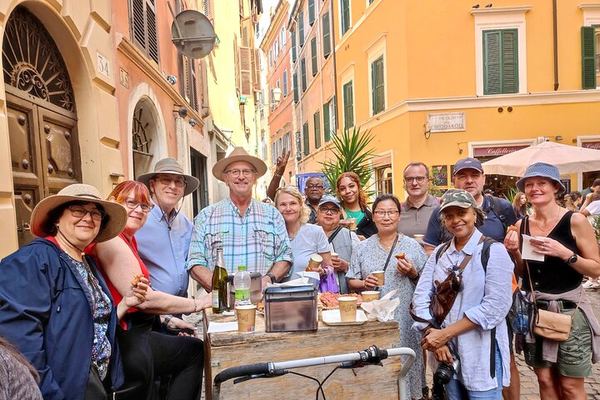
How Romans Actually Eat Lunch: A Street Food Walk
Pizza cut with scissors and sold by weight, and fried courgette flowers that rarely reach tourist menus. Morning departures start inside the market.
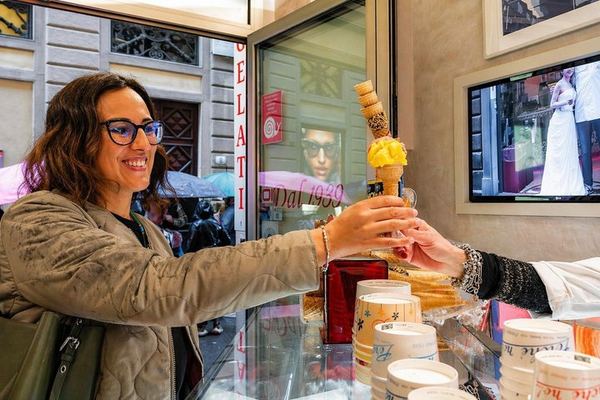
How to Spot a Tourist Trap: Street Food with a Licensed Guide
Licensed guides, fourteen people maximum, and everything included in the price. The Pantheon is seen from outside; the market only on morning slots.
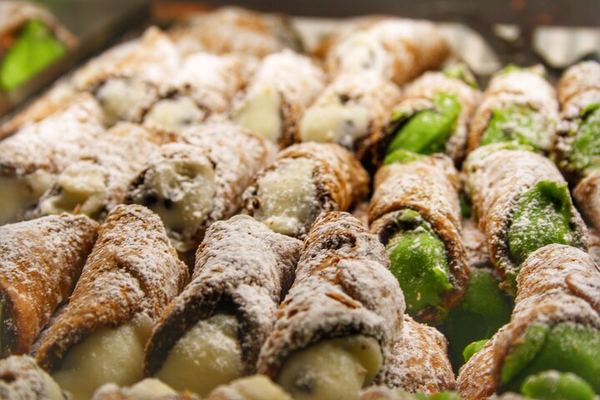
It Starts on an Island: Trastevere Street Food in 2.5 Hours
The meeting point is Tiber Island, where a hospital has stood on the same ground for two thousand years. Pizza from one of the oldest bakeries here.

Marcellus to the Turtles: Trastevere and the Ghetto on Foot
A guided walk, not a tasting tour, from Piazza Trilussa over Tiber Island to the Theatre of Marcellus, where people still live in the upper storeys.
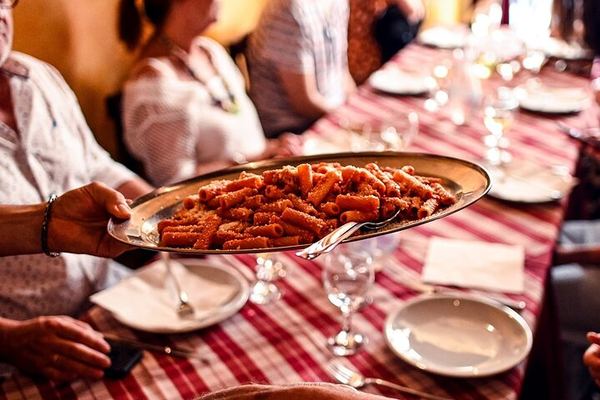
Private Campo de' Fiori Food Tour: You Pick the Start Time
Dates that show full on the group tour can open up for a private party, and the guide answers your questions rather than the group's.
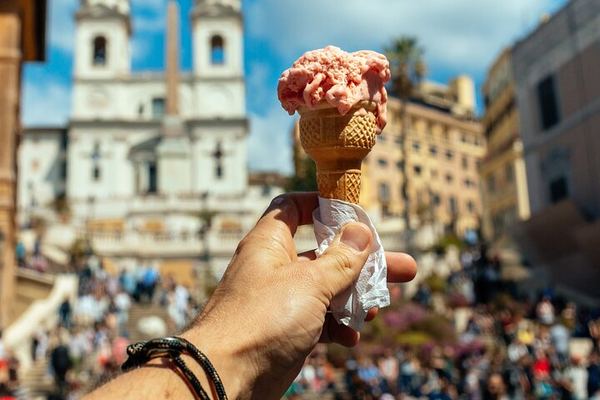
Private Rome Food Tour: Six or Ten Tastings, Two Start Points
The six-tasting version starts in Trastevere, the ten-tasting one at Campo de' Fiori. Private group, stops chosen by the guide, not a fixed list.
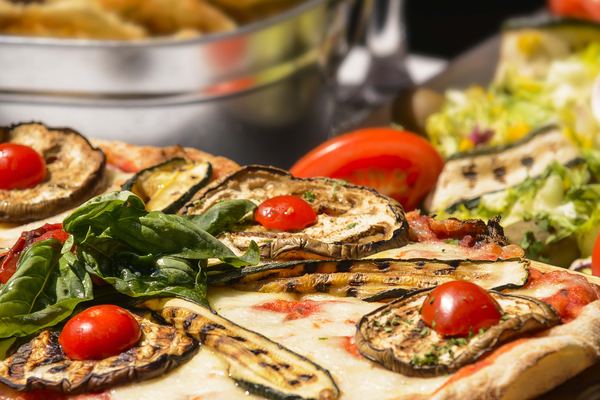
Roman Pizza, Supplì, and the Queen Margherita Story
It ends sitting down with wine, cheese and prosciutto in a tavern. Cancellation here runs to three days out, not twenty-four hours.
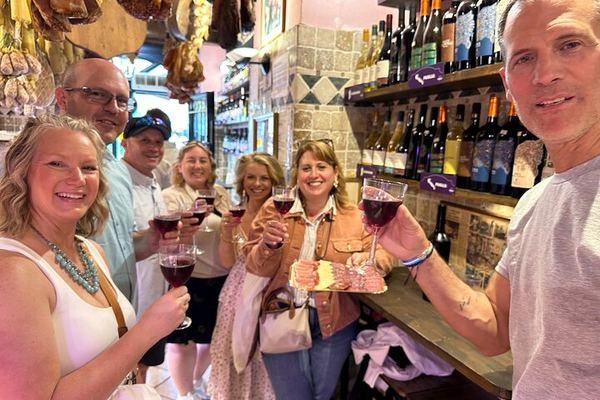
Rome Food and Wine Walk with Lunch over Pompey's Theatre
Tastings from a Norcia shop trading since 1890, a bakery from 1824 and a coffee bar from 1938, with lunch served on the ruins where Caesar was killed.
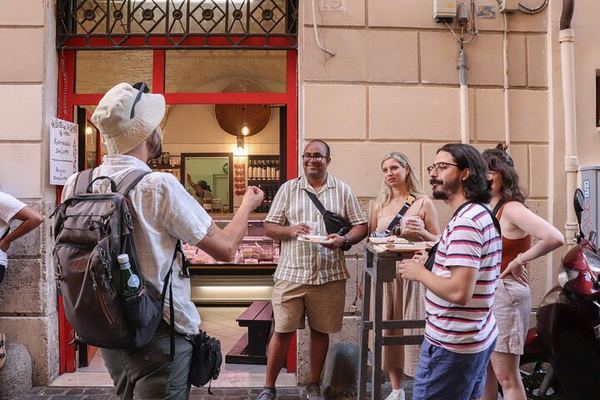
The King of Porchetta, and Two Roman Pastas Sitting Down
Piero carves the roast pork himself, and the amatriciana and cacio e pepe are eaten at a table rather than on the move. Wine with every stop.
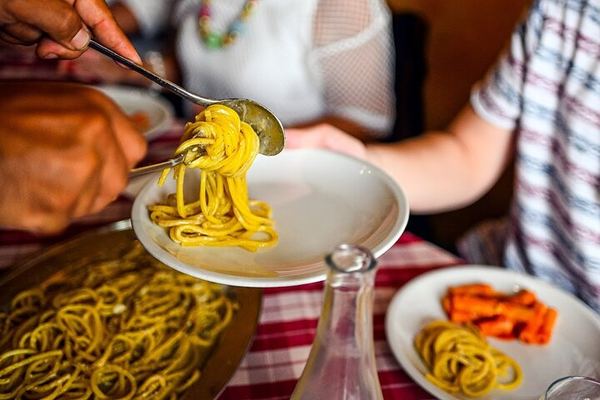
The Secret Dish: A Campo de' Fiori Food Tour, 8+ Tastings
One course is never announced in advance. The route runs from Domitian's stadium under Piazza Navona to the temples of Largo Argentina.
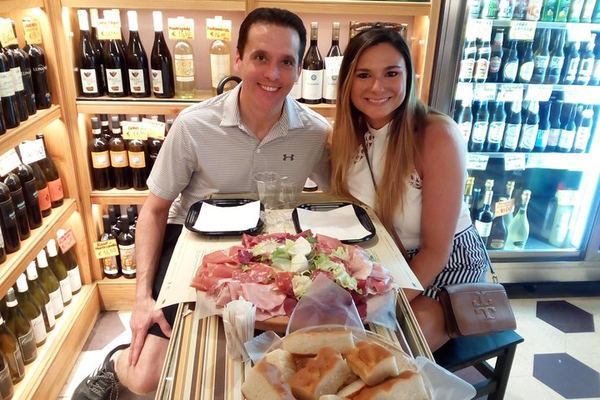
Three Hours Around the Curve of Pompey's Theatre
A first-day walk through the old centre with the two Roman pastas and wine. Morning departures meet the market vendors, evening ones get the pasta.
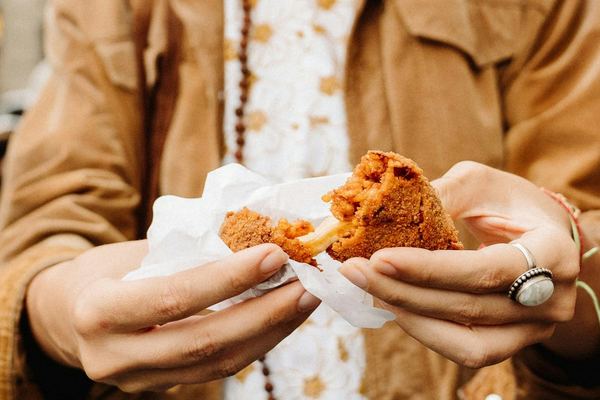
Trastevere at Sunset: Forty Years of Supplì, Then Dinner
Runs from a glass taken standing to pasta served family style, by way of a fry shop that has been doing one thing since the eighties.
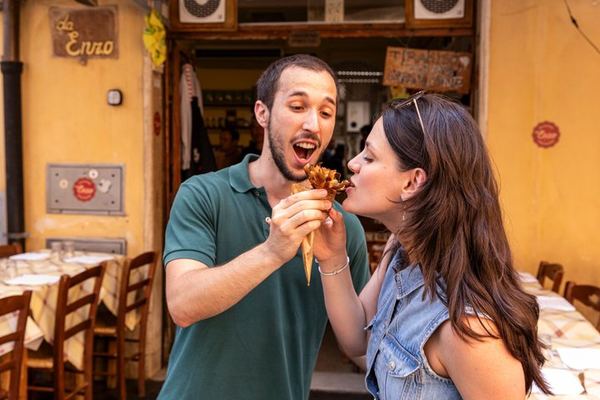
Trastevere at Twilight: What's Guaranteed and What Varies
States in advance which stops are fixed and which depend on availability, which is rarer than a long restaurant list. Twelve guests at most.
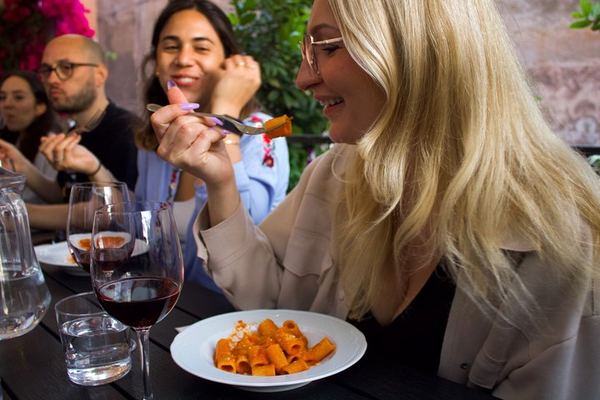
Trastevere Food Tour with Every Table Booked in Advance
Reservations are made before you arrive, so there is no queue at any stop. Gluten intolerant guests are pointed to the private version instead.
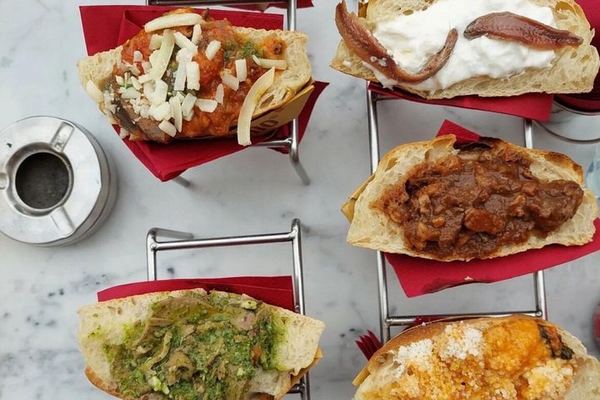
Trastevere Food Tour with Unlimited Refills, Four Hours
Twenty tastings across four venues, and you can keep going if you want to. Do not wait in Piazza Trilussa: the meeting point is off it.
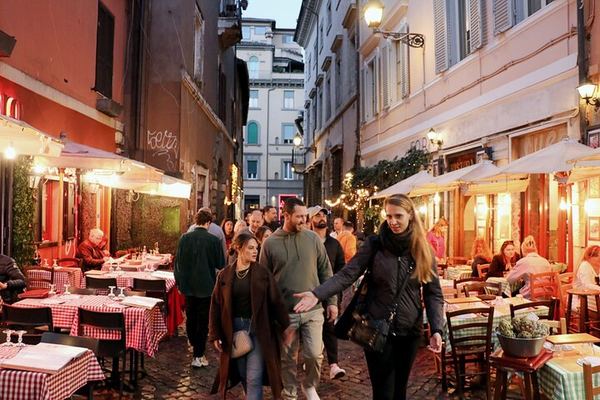
Trastevere Food Walk with a Sit-Down Dinner and Four Stops
Four stops built around a three-course meal at a table rather than a run of snacks, with a century-old deli, a street food stop and organic gelato to close.
Ratings collected by Viator, Tripadvisor, Civitatis and Tiqets
Three neighbourhoods, and they are not interchangeable
Food tours in Rome are sold as a single category and divide cleanly into three, by what is on the plate as much as by geography.
| Where | On foot | What you eat there | When it works |
|---|---|---|---|
| Campo de' Fiori and the streets around it | 9 min | Market produce, cured meat and cheese from the old shops on via dei Giubbonari, pizza bianca | Mornings, Monday to Saturday. The market is over by two |
| The Jewish Ghetto | 11 min | Fried artichokes, cured beef, ricotta and cherry tart. A distinct cuisine with its own history | Lunch. Several places close Friday evening and Saturday; some do not, and that difference matters |
| Trastevere | 20 min | Trattoria cooking, wine bars, the standard Roman pastas. The largest concentration of food tours in the city | Evening. It is a night quarter and it does not really start until eight |
The commercial weight sits in the third row and the interest sits in the second. Trastevere has the volume because it has the density of restaurants and the atmosphere people picture; the Ghetto has a cuisine that exists nowhere else and eleven minutes of walking between you and it.

Nine minutes, and a deadline
The market closes at two, and not on Sundays
Campo de' Fiori has had a market since 1869, when the traders moved down from Piazza Navona after that square was widened. It runs Monday to Saturday, roughly seven until two.
This single fact quietly invalidates a lot of product descriptions. A food tour at four in the afternoon that promises the market of Campo de' Fiori is promising a square with the stalls stacked against the wall; on a Sunday it is promising cafes.
If the market is part of why you are booking, take a morning tour on a weekday. It is also the reason cooking classes that include a market visit cost roughly three times the ones that do not, and run in the morning: they are buying at a market that shuts at lunchtime.
The Ghetto is a cuisine with a date on it
Jews have lived in Rome continuously since 161 BC, which makes this the oldest Jewish community in Europe. The neighbourhood eleven minutes from the Pantheon is not where they chose to live; it is where they were confined.
The bull Cum nimis absurdum, issued by Paul IV on 14 July 1555, enclosed about two thousand people in a walled trapezium of just over three hectares on the flood plain of the Tiber. There were two gates, then three, then five, then eight. They opened at dawn and were locked an hour after sunset from November to Easter and two hours after it the rest of the year. The community was made to pay for the wall: three hundred Roman scudi.
It lasted three hundred and fifteen years, until 20 September 1870. The buildings came down in 1888 and the synagogue that stands there now was finished in 1904.
And on 16 October 1943 the Germans took 1,259 people from these streets. 1,023 were deported. Sixteen came back.
About fifteen thousand people belong to the community today. The food that came out of those three hectares — frugal, fried, built on what was cheap and permitted — is what a Ghetto food tour is for, and a guide who tells you the dates is giving you the reason it tastes the way it does.
Three hectares, two gates, three hundred and fifteen years. The cuisine is what was possible inside that.
What is actually in season
Highlighted means the months when that thing is at its best, or possible at all.
| Month | 1 | 2 | 3 | 4 | 5 | 6 | 7 | 8 | 9 | 10 | 11 | 12 |
|---|---|---|---|---|---|---|---|---|---|---|---|---|
| Carciofo Romanesco, the Roman artichokeProtected as an IGP since 2002, the first Italian agricultural product to get one. The season runs from mid-February to May and the best of it is March and April. A Ghetto tour in August has no artichokes. | 1 | 2 | 3 | 4 | 5 | 6 | 7 | 8 | 9 | 10 | 11 | 12 |
| Puntarelle and winter chicoryThe other Roman vegetable with a season, dressed with anchovy and garlic. It belongs to the cold months and disappears entirely by spring. | 1 | 2 | 3 | 4 | 5 | 6 | 7 | 8 | 9 | 10 | 11 | 12 |
| Eating at a table in the streetThe centre eats outdoors whenever it can. In midsummer that means after nine in the evening; in winter it means the heated boxes on the pavement, which are not the same thing. | 1 | 2 | 3 | 4 | 5 | 6 | 7 | 8 | 9 | 10 | 11 | 12 |
| The old family kitchens all openA good many restaurants in the centre close for two or three weeks in August, including one of the oldest by the Pantheon, which shuts from the ninth to the end of the month. | 1 | 2 | 3 | 4 | 5 | 6 | 7 | 8 | 9 | 10 | 11 | 12 |
Artichoke season from the Carciofo Romanesco del Lazio IGP specification. August closures observed on the restaurants' own published calendars.
Kosher and kosher style are not the same word
Along via del Portico d'Ottavia the signs use both, and they mean different things.
Kosher means under rabbinical supervision, which among other things means the kitchen does not operate on Shabbat. Kosher style means the cooking follows the tradition without the certification. At least one well-known restaurant in the Ghetto describes itself on its own website as kosher style and opens every day but Tuesday, Saturdays included — which is the tell.
Neither is better food. But if you are booking a kosher dinner in the Ghetto for a Friday evening, the distinction is the whole thing, and no marketplace listing we found makes it.
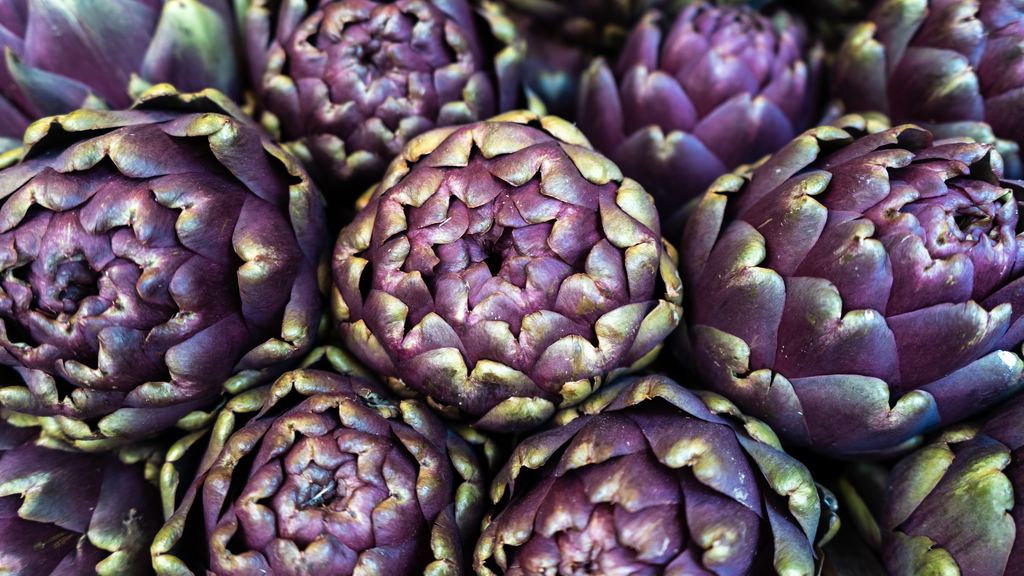
There is a related story worth knowing, because it says something about how living a tradition this is. In 2018 the Chief Rabbinate of Israel declared carciofi alla giudia not kosher, on the grounds that insects could hide in the heart of the artichoke. Rome's community, and its Chief Rabbi, disagreed — publicly and at length. The dish is named for the Jewish community of Rome and had been eaten here for centuries. The argument is not settled.
One story your guide will tell that the family disputes
At the corner of the Ghetto is a bakery that has been in the same family since 1815 and sells, among other things, a ricotta and sour cherry tart with a nearly black crust.
The story attached to it, in almost every food tour and blog post, is that a papal edict once forbade Jews to sell dairy products, so the ricotta was hidden under a deliberately burnt top. It is a wonderful story and it makes the pastry taste better.
It is also disputed by the family that owns the bakery. One of the owners has said publicly that the recipe came from her grandmother in the years after the Second World War, and historians have not found the documentary link between the edict and the crust.
We are not saying the story is false. We are saying it is a story, and that the person best placed to know does not tell it. A guide who mentions that is a better guide than one who does not, and the tart is exactly as good either way.
What €78 buys, and what €28 buys
The spread here is wide and the differences are legible.
At the bottom of the range, around €27 to €35, you get a group of fifteen or more, three or four stops, tastings rather than dishes, and a route through Trastevere. The €28 product on this page has 3,156 reviews at 4.6, so it plainly works.
At the median, around €78, the group drops to about a dozen, the stops go up to five or six, wine is included in a meaningful quantity and one of the stops is a sit-down course rather than a counter.
At €104 to €125, which is where the two most-reviewed products sit, you are getting a small group, four hours, a genuine dinner in instalments, and operators who have been running the same route for a decade and are known in the places they take you.
Above €200, you are buying exclusivity and a private guide, and the number of reviews falls off a cliff. That is not an argument against those products; it is an argument for reading the review count as well as the score.
Before booking a food tour
Are these tours near the Pantheon?
Some. The Campo de' Fiori and Ghetto routes are nine and eleven minutes away. The majority, including the four best-selling ones, are in Trastevere, which is twenty minutes on foot across the river. Check the meeting point before assuming it is round the corner.
When is the Campo de' Fiori market open?
Monday to Saturday, from about seven in the morning until two. Not Sundays. Any tour promising the market in the afternoon is promising the square, which is pleasant and is not a market.
Do I have to pay a cover charge in Rome?
Not a coperto: it is prohibited by Lazio regional law. A service charge is legal if it is printed on the menu before you order. If a bill in this quarter shows a line called coperto, it should not be there, and saying so politely usually settles it.
When can I eat carciofi alla giudia?
Mid-February to May, with March and April the best of it. The Roman artichoke has a protected designation and a real season, and outside it a Ghetto tour will be serving something else. Nobody's listing mentions this.
How much food is on a food tour?
Enough to replace a meal on anything at or above the median price. The three and four hour tours are dinner in five or six instalments and people routinely underestimate them. Arrive hungry and do not book a restaurant afterwards.
Can they handle dietary requirements?
Most can with notice, and the good operators ask at booking. Vegetarian is straightforward in Roman cooking; gluten free is harder on a route built around pizza bianca and pasta; kosher requires the distinction between kosher and kosher style, which is a real one in the Ghetto.
The two bars at the Pantheon's door
Coffee and gelato within four minutes of the portico, including two bars ninety-five metres apart that disagree about how to make an espresso.
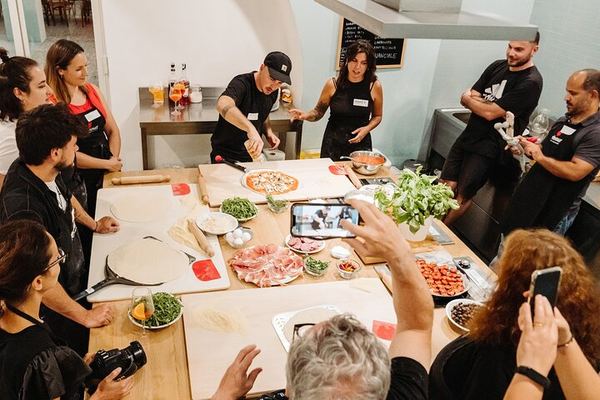
Aperitivo First, Then You Cook: An Evening Class in Trastevere
It opens with a prosecco or spritz before the flour comes out and ends sitting down with unlimited beer and wine. Fifteen guests at most, run by WalksDevour.
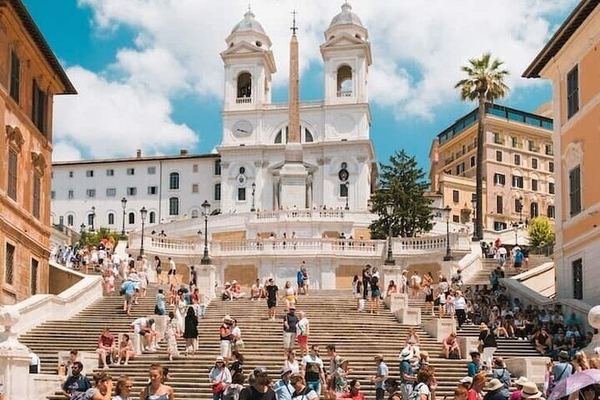
A Private Rome Walk Built Around You, Gelato Included
An official guide, your party only, and a route you help set from the Colosseum to Trevi. Bring photo ID to the meeting point at Colosseo metro.
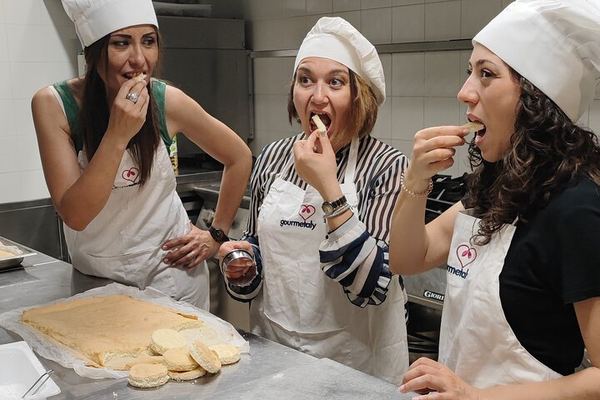
Bake Your Own Savoiardi: A Tiramisu and Gelato Class
You bake the savoiardi yourself instead of opening a packet, which is the step that decides whether it holds. Alcohol free, semi-private.
Ratings collected by Viator and Tripadvisor
Or cook it instead
Twenty classes near Piazza Navona, 10,074 reviews and the best-validated rating on the site. The four Roman pastas are variations on two ingredients.
Data verified on. Market hours from Mercati di Roma. Ghetto dates from the community's own history and the 1555 bull. Artichoke season from the IGP specification. The coperto ban is Lazio law of 2006.