
The packing lists in this corner of the web run to four and seven thousand words, and they are that long because they are shopping catalogues with an article wrapped around them. You do not need a paragraph about compression cubes to visit a building you will be inside for half an hour.
Here is the short list, then the longer one for everything outside the door, then the two things that are actually specific to Rome and that most lists get wrong.
For the Pantheon itself
| Bring | Why | How much it matters |
|---|---|---|
| An identity document | The ticket carries your name and staff check it at the door | Non-negotiable. Without it you may not get in |
| Cash, 7 euro a head | The cash queue is reported to clear in 5 to 15 minutes; the card machines are the slow one | The single most repeated piece of advice from people who have just been |
| A scarf or light layer | Shoulders must be covered and staff can refuse entry | Weighs nothing, solves it in one second |
| Flat shoes with grip | You arrive across basalt setts, and they are slippery wet | More than you would think |
| A refillable bottle | Free drinking water about 87 metres away | Saves a few euro a day and a lot of plastic |
| A bag you can hold for an hour | No cloakroom, nothing can be left | Plan around it rather than discovering it |
That is genuinely the list. No umbrella, because the monument does not close for rain and the interior is where the rain is anyway. No torch, no binoculars, no tripod: professional camera equipment needs authorisation from the management, and a tripod probably counts. Phone photos are explicitly allowed.
Water
The nasoni, and the fountain you must not drink from
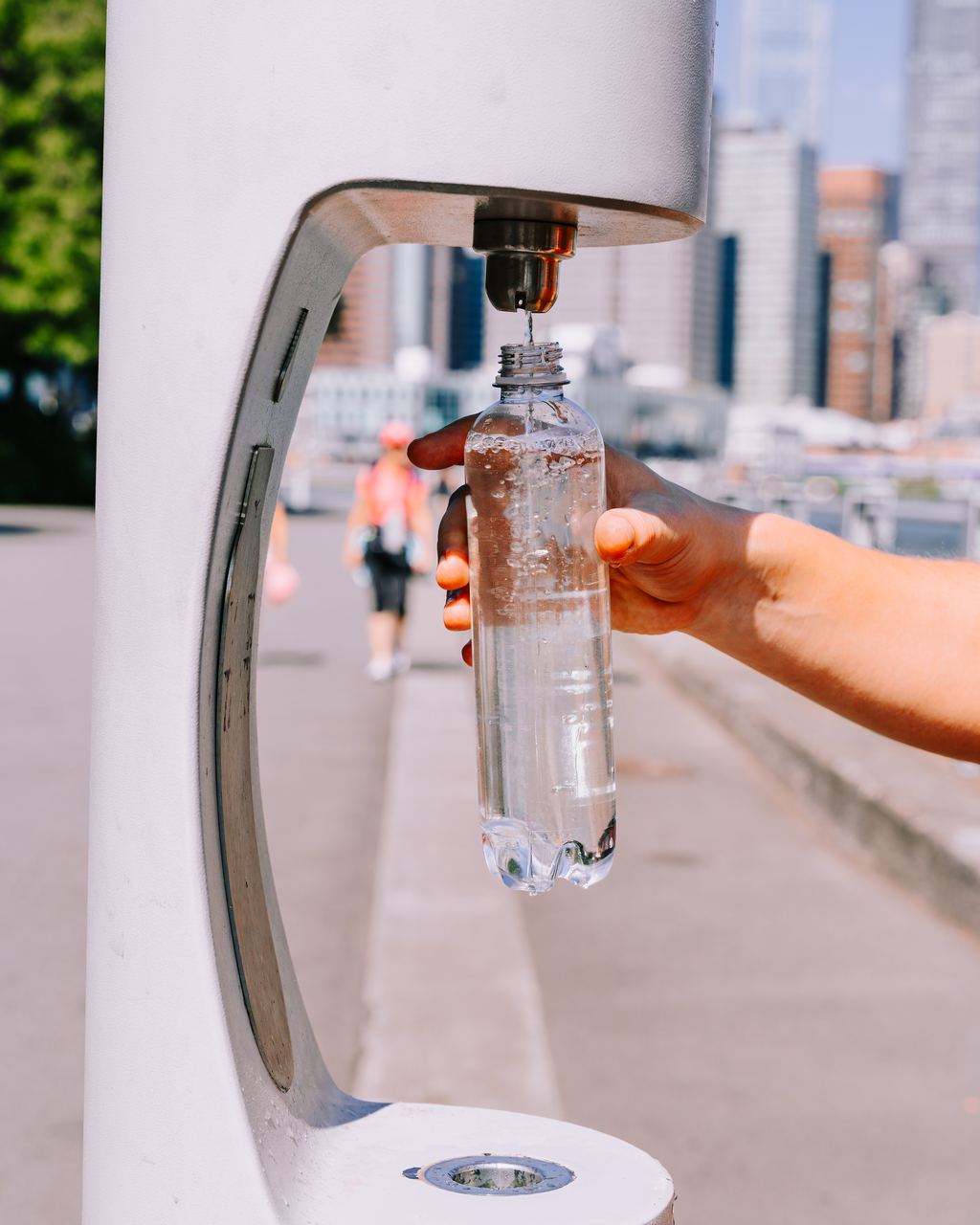
Rome has around two and a half thousand public drinking fountains, cast-iron posts with a curved spout, known as nasoni after the shape of it. The water is mains supply, cold, continuous and free, and Romans fill bottles from them without a second thought.
There is one in Piazza della Rotonda itself, about 87 metres from the portico, and it is one of the rare survivors of the original design with three dragon-head spouts instead of the usual single nose. Most visitors walk past it to buy a bottle of water at four times the price of the coffee.
The one thing not to do: the large fountain in the middle of the square, the one with the obelisk on it, is not a drinking source, and using it as one is a finable offence. Same square, two entirely different objects.
For the streets around it
The Pantheon sits in the middle of a district you will cross on foot, because almost nothing else is possible: this is inside Rome's restricted traffic zone, the streets are narrow, and the sights are close enough together that walking is faster than anything else.
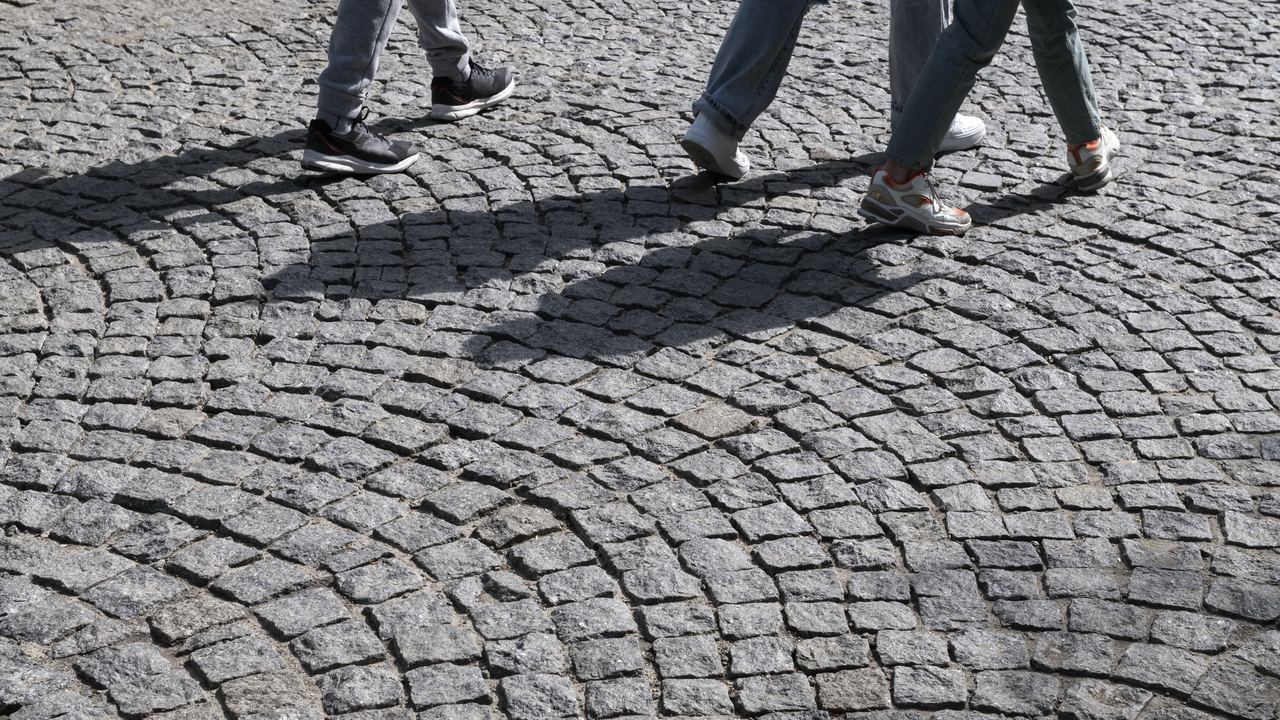
- Shoes you have already broken in. Rome's historic centre is paved in sampietrini, cut basalt setts laid in fans. They are uneven, they are polished by centuries of use, and they are properly slick in the rain. Heels wedge between them. This is the one item where the guidebook consensus is correct and worth repeating.
- A light waterproof layer rather than an umbrella. November brings 112.8 mm of rain across nine or ten days, and the wind funnelling through the squares turns umbrellas inside out.
- Sun protection, from May to September. Ciampino averages 57.8 days a year above 30 C and August tops out at a 31.6 C daily maximum. There is very little shade in a Roman square at two in the afternoon.
- A cross-body bag that closes. Crowded squares and packed buses are where bags get opened. This is not a Rome-specific hazard, it is a tourist-density hazard, and the centre has plenty of density.
- A type C or F plug adapter. Italy runs 230 V at 50 Hz. An adapter changes the shape of the plug and nothing else: if your device needs a different voltage, an adapter will not save it. The two words get used interchangeably online and they are not the same object.

Underfoot
Why everyone tells you about the paving
Sampietrini are roughly cubes of leucitite, a hard volcanic basalt from the Alban Hills, laid by hand in overlapping arcs. The name is usually explained as coming from St Peter's Square, where the technique was used at scale.
They are laid on sand, so they shift. They are worn, so they shine. And they are convex, so a narrow heel finds a gap every few steps.
The realistic figure for a day in central Rome is somewhere around fifteen to twenty thousand steps, most of them on this. It is the surface, not the distance, that ends the day.
What the lists get wrong about the dress code
Packing advice for Rome tends to treat the church dress code as one uniform rule. It is not. It is a rule that different institutions apply with very different strictness, and knowing which is which saves you carrying a cardigan through August.
- St Peter's and the Vatican Museums enforce it rigorously, at a checkpoint, with people turned away daily.
- The Pantheon publishes it and authorises staff to enforce it. Shoulders covered, no very short shorts or skirts, nothing see-through. Reports of actual enforcement vary, which tells you the discretion is real and sits with whoever is on the door.
- Most parish churches in the centre will not stop you, and some keep paper capes by the entrance for those who need them.
A scarf handles all three. It is the single most useful thing in a bag in Rome in summer, and it is also the item most likely to be described in three hundred words on a site that would like to sell you one.
What not to bring
A short list, since there is no cloakroom to rescue you from any of it.
- Wheeled luggage, unless you enjoy the noise it makes over basalt and the attention it draws.
- A tripod, which falls under professional equipment and would need authorisation.
- Food and drink to consume inside: eating and drinking are not permitted in the monument, and neither is smoking, electronic cigarettes included.
- Your dog, unless it is a guide dog or a certified medical support animal.
- Anything you would mind carrying for the length of the visit and the walk either side of it.
Practical questions
Do I need to bring my passport to the Pantheon?
You need some identity document, because the ticket is personal and the name is checked at the door. A national ID card or driving licence works; a photo on a phone is a gamble.
Is there a cloakroom at the Pantheon?
No. The ministry states that no cloakroom service is provided, so whatever you bring you keep with you for the whole visit.
Can I drink the water from Rome's street fountains?
Yes. The nasoni deliver ordinary mains drinking water and there are roughly 2,500 of them. One stands in Piazza della Rotonda, about 87 m from the Pantheon. The ornamental fountain in the middle of that square is not one of them, and drinking from it is finable.
What shoes should I wear in Rome?
Flat, grippy and already broken in. The centre is paved in cut basalt setts that are uneven, polished and slippery when wet. Heels catch between them.
Do I need an adapter or a voltage converter?
Almost certainly just an adapter, type C or F. Italy runs 230 V at 50 Hz, which most modern chargers already handle. A converter is a different device and is rarely needed.
Why the scarf is on the list
Shoulders must be covered, it is published policy, and staff are authorised to turn people away at the door.
What changes with the season
The six items for the monument stay the same all year. The list for the streets does not.
May to September the additions are heat management: a hat, sun cream, and the discipline of refilling the bottle every time you pass a fountain rather than when you are already thirsty. Ciampino averages 57.8 days a year above 30 degrees and August tops out at 31.6 by day. The shoulders rule becomes genuinely inconvenient in that weather, which is the argument for a light scarf over a shirt you will regret by noon.
October to December the addition is water. November brings 112.8 mm across nine or ten rain days, the wettest month of the year, and wet sampietrini are properly slippery. A jacket beats an umbrella, because the wind funnelling through the squares destroys umbrellas and because the interesting thing to do in Roman rain is stand under the oculus and watch it come in.
January and February the addition is layers, for an unexpected reason: the Pantheon is unheated and permanently open to the sky. The room does not warm up during the day. Whatever the street is doing, the rotunda is doing it too, about two hours later.
March and April need both, often on the same day. This is the month the sunbeam crosses the doorway, and also the month with 74.4 mm of rain and eight rain days.
Data verified on. Cloakroom, dress code and conduct rules from the Direzione Musei nazionali di Roma. Fountain location and status from Roma Capitale and the Sovrintendenza. Climate from WMO normals 1991-2020.