
There is one thing at the Pantheon that almost nobody sells you, and it is the only part of the site that is genuinely hard to get into. The state runs it, calls it Oltre il Pantheon even in English, and it takes twenty-five people at a time into the rooms behind the rotunda.
We searched three affiliate catalogues covering more than eight thousand experiences in Rome. Two products touch it. In English, essentially one operator writes about it. And the two public discussions we found from 2026 were both people trying to work out how to buy it and failing.
What it is
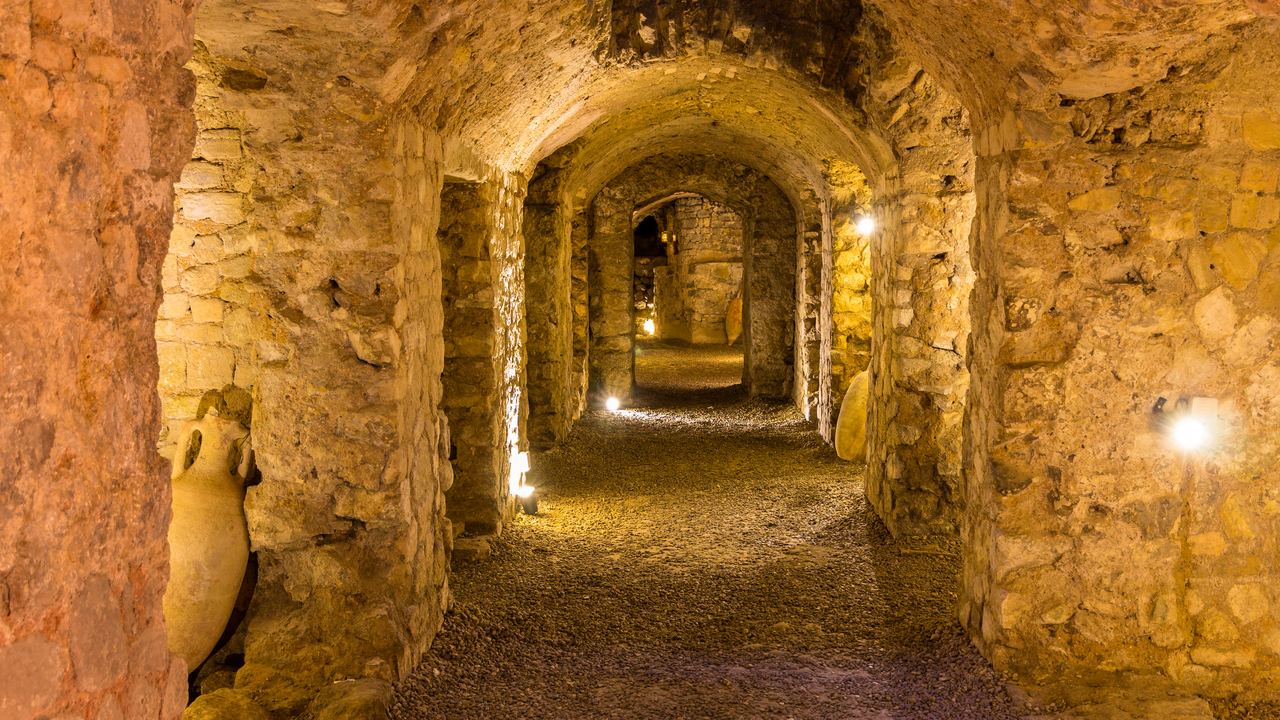
Behind the Pantheon, sharing a wall with it, stood the Basilica of Neptune. It belongs to the same complex as Agrippa's original Pantheon, was rebuilt along with everything else in the Hadrianic reconstruction, and is one of those Roman buildings that survives as fragments embedded in later structures rather than as a standing monument.
The visit goes into those chambers. What the ministry lists is marble fragments, decorative elements, frescoes, liturgical architecture, and archaeological material recovered largely from the isolation excavations of the late nineteenth century, when the buildings that had grown up against the Pantheon were cleared away.
That last detail links it to a date on our history page. The clearances that produced these finds are the same campaign that took down the bell towers in April 1883: a new Italian state stripping the accretions off a Roman monument. What came out of the ground then is a good part of what you now walk past.
| Length | 45 minutes |
| Supplement | 10.00 euro, free for under-18s |
| Plus admission | 7.00 euro, with the usual reductions |
| Group size | 25 maximum per slot |
| Monday to Friday | 08:30, 09:30 and 15:30 |
| Saturday | 08:30 and 09:30 |
| Sunday | 13:30 and 14:30 |
| Not running | First Sunday of the month |
| How to book | Musei Italiani app or portal, or the kiosk on site |
| Guides booking a whole slot | 150.00 euro plus tickets, at least four days ahead, by phone |
Look at the weekday times. 08:30 and 09:30: the first of those is before the Pantheon opens to anybody else, and the second is in the first hour. Saturday is the same. This is the closest thing the monument has to private access, and it costs ten euro.
The Sunday slots at 13:30 and 14:30 sit after the 10:30 Mass, which is the other constraint shaping this timetable.
A warning about the price
Even the ministry has a stale page
When we checked on 28 August 2026, the ministry's dedicated page for this visit still quoted 5 euro for Pantheon admission. The price rose to 7 on 1 July 2026, and the ministry's own main page for the monument says so.
We are not pointing that out to score a point. We are pointing it out because it is the clearest possible illustration of why this site puts a verification date next to every number: the institution that sets the price has a page that is two months behind its own decision.
Budget 17 euro. The supplement is 10 and admission is 7, and if the desk charges you less, enjoy it.
Why almost nobody sells it
Twenty-five places per slot, five slots on a weekday, none of it resellable at a useful margin. A platform that takes eight per cent of a ten euro supplement is earning eighty cents for handling a booking that has to be made on a government system. The economics do not work, so the product does not appear, so nobody writes about it, so nobody knows it exists.
That is the whole mechanism, and it is worth understanding because it applies to a great deal of what you can and cannot find online about any monument. The things that are easy to find are the things that pay a commission. This is a page about one that does not.
Is it worth it
Honestly: it depends what you want from an hour in Rome.
If you have never been inside the Pantheon, go inside the Pantheon. The rotunda is the reason the building is famous and forty-five minutes in a room of fragments will not compete with it.
If you have already stood under the dome, or you are the kind of visitor who wants to see the parts of a monument that are usually shut, this is the best ten euro at the site by some distance. You are going into rooms that most of the four million annual visitors do not know exist, in groups of twenty-five, at half past eight in the morning.
It is also the only product here that cannot be replicated by simply turning up with cash, which makes it the only one where booking ahead genuinely buys you something.
Practical questions
What is Oltre il Pantheon?
A 45-minute guided visit run by the Italian state into the chambers of the Basilica of Neptune, behind the rotunda, containing marble fragments, decorative elements, frescoes and finds from the nineteenth-century clearances.
How much does it cost?
10 euro on top of the 7 euro admission, so 17 in total. The supplement is free for under-18s. Note that the ministry's own page for the visit still shows the old 5 euro admission price.
How do I book it?
Through the Musei Italiani app or portal, or at the kiosk on site. A licensed guide wanting to reserve an entire slot pays 150 euro plus tickets and must book at least four days ahead, by telephone.
When does it run?
08:30, 09:30 and 15:30 Monday to Friday; 08:30 and 09:30 on Saturday; 13:30 and 14:30 on Sunday. Not on the first Sunday of the month, when the monument is free and unbookable.
Can I do it instead of visiting the Pantheon?
No, and you would not want to. It is sold as a supplement to admission, and the two early slots get you into the building before it opens to everyone else.
What the Basilica of Neptune was, as far as anyone knows
This section comes with a warning attached, because the honest answer to the question in its heading is not very much, and the confident paragraphs you will find elsewhere are mostly filling a gap with atmosphere.
What is reasonably established: a large hall stood immediately behind the Pantheon, part of the same building programme that Agrippa laid out across this part of the Campus Martius in the 20s BC, alongside his baths and the water supply that fed them. Like the Pantheon it burned, and like the Pantheon it was rebuilt in the Hadrianic campaign of the early second century. It shares a wall with the rotunda, which is why the visit can reach it from inside.
What is tradition rather than documented fact: the name. The association with Neptune is usually explained by Agrippa's naval victories, which fits the man and the period neatly enough that it has been repeated for centuries. We have not found it settled in the archaeological literature, and a building named by later convention is a different thing from a building whose dedication is recorded. Treat it as a label, not as evidence.
What you can check yourself, for free, before deciding whether to pay: walk round the back of the Pantheon. The rear of the complex is standing there in the street, brick and concrete, unmarked and largely ignored by the crowd in the square on the other side. Most people who photograph the portico never see it.
The excavations that filled these rooms
The material you are shown is not, for the most part, what was found in situ. It comes from the isolation excavations of the late nineteenth century, and those are worth understanding because they explain the square you are standing in as much as the rooms you are paying to enter.
For something like a thousand years the Pantheon had been built into. Houses, shops and workshops had accumulated against its flanks, the square in front was several metres higher than the ancient floor level, and the building sat in a hollow reached by steps. After 1870 the new Italian state set about clearing all of it: pulling down the accretions, digging the ground back towards the Roman level, and turning a building embedded in a medieval quarter into a free-standing monument that could be photographed whole.
It was the same impulse that took the bell towers down in April 1883, and it was not neutral conservation. It was a state deciding which centuries of a building it wanted visible. What came out of the ground during that work — marble fragments, decorative elements, pieces of the liturgical fittings that had been installed and replaced over thirteen centuries of use as a church — is what now sits in the chambers behind the rotunda.
So the visit is really two things at once: a Roman hall you cannot otherwise enter, and a store of everything a nineteenth-century clearance decided the Pantheon should stop being.
Data verified on. Price, duration, group size, slots and booking route from the Direzione Musei nazionali di Roma page for the visit. Product counts from the live Viator, Tiqets and Civitatis catalogues.