
Pantheon Museum · Tour
Rome Walk from Piazza del Popolo Down to Piazza Navona
A walk taken deliberately slowly, from the northern gate of the old city down through the centre. It starts at Piazza del Popolo, at the gate that was the main way into Rome from the north for travellers arriving by road. Pope Pius IV asked Michelangelo to design it in 1562; Michelangelo handed the work to Nanni di Baccio Bigio, who finished it in 1565. Then the Spanish Steps, built in 1723 to climb from the square at the bottom to Trinità dei Monti at the top, and still the place artists and writers sit. The Trevi Fountain is older than it looks in a way that matters. The water arrives by the Aqua Virgo, which was opened in 19 BC and has run ever since; the first Renaissance basin was built under Pope Nicholas V, and the enormous facade you photograph came later, in the eighteenth century. The Pantheon follows: a temple begun in the years around 27 BC, rebuilt and completed under Hadrian by about 126 AD, a church since the seventh century under the name of St Mary and the Martyrs, and still lit by a single hole in the dome. The walk ends in Piazza Navona, which was a stadium, then a market for nearly three hundred years, and is now neither.
What's included
- Tour Guide
- Headsets
Itinerary
The map could not be loaded. Please try again in a moment.
Basilica Parrocchiale Santa Maria del Popolo, Piazza del Popolo, 7, Roma
Meet your guide, who will be holding a red sign reading Tix & Tours.
Piazza del Popolo
The gate was originally the Porta Flaminia and is now the Porta del Popolo. Pope Pius IV commissioned Michelangelo to design it in 1562, but Michelangelo passed the work to the architect Nanni di Baccio Bigio, who finished it in 1565.
Spanish Steps
Built in 1723, the Spanish Steps climb a steep slope from Piazza di Spagna at the bottom to Piazza Trinità dei Monti at the top. Artists, painters and writers still sit on them, as they did then.
Trevi Fountain
The Trevi Fountain is the end point of the Aqua Virgo, the aqueduct opened in 19 BC that still supplies the water you are looking at. A Renaissance basin was built here under Pope Nicholas V; the vast facade behind it came in the eighteenth century, and the scale of it is the reason people stop walking.
Pantheon
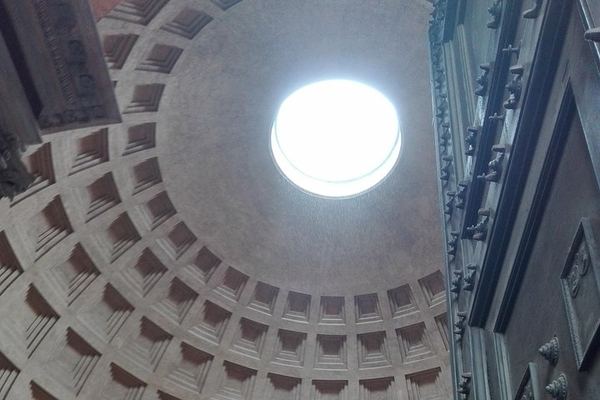
The Pantheon is among the most remarkable ancient buildings in Rome and has come down nearly intact. A temple to the pagan gods was raised on the site in the years around 27 BC; the building standing now was completed under Hadrian by about 126 AD, and since the seventh century it has been a church dedicated to St Mary and the Martyrs. The dome has a single opening at its centre, the oculus, which is the only light the interior gets, and the structure has been copied by architects ever since.
Extra fee
Piazza Navona
Piazza Navona is the elegant showpiece square of Rome, with its fountains and Baroque palaces. It began in the first century as the Stadium of Domitian. By the fifteenth century the site had been paved over and turned into a market, which it remained for nearly three hundred years, and the square still keeps the outline of the racing track underneath it.
Rome
Not included
- Visit inside the Pantheon
Good to know
- Infants and small children can ride in a pram or stroller
- Public transportation options are available nearby
- Suitable for all physical fitness levels
- Not recommended for travelers with back or knee problems due to the walking involved
Show 3 moreShow less
- Up to 15 travelers per booking.
- Mobile or paper ticket accepted
- Guiding available in: en, es.
Reviews
Loading reviews…
Keep exploring
More experiences in Pantheon, Trevi & Navona
-
 Free cancellation
Private Rome Walk from the Spanish Steps to Castel Sant'Angelo
5.0 (57) 5.0 stars out of 5, 57 reviewsA private route that carries on to the Tiber, where the shape of the city finally makes sense, taking in the free Caravaggio chapel on the way.
€ 435.00 -
 Free cancellation
Private Rome Walk with the Drinking Fountains and Sant'Ignazio
5.0 (8) 5.0 stars out of 5, 8 reviewsThree hours through the alleys rather than the main roads, with the cast-iron fontanelle that run drinkable aqueduct water and save you buying any.
€ 229.00 -
 Free cancellation
Rome After Sunset, from Campo de' Fiori to the Trevi Fountain
4.8 (10) 4.8 stars out of 5, 10 reviewsTwo evening hours past the first university of Rome and the Senate House, buildings most walks pass without naming, ending at the lit fountain.
€ 189.00
Ratings collected by Viator and Tripadvisor