
Pantheon Museum · Tour
Private Squares and Fountains Walk, Popolo to the Pantheon
A private walk down the spine of the old city, from the northern gate to the Pantheon, taking the squares and the water in the order they come. It starts at Piazza del Popolo, where three streets meet in the fan the Romans call the Trident: the Babuino, Via di Ripetta and Via del Corso. The square was used for games, public entertainments and executions before Valadier gave it the shape it has now between 1811 and 1822. The two churches at the mouth of the Corso are Santa Maria di Montesanto and Santa Maria dei Miracoli, and the obelisk between them is the oldest in Rome. Then the Spanish Steps, where the numbers are worth having: 135 steps, built in 1723 to 1725 with 20,000 scudi left in the will of a French diplomat, Etienne Gueffier, and designed by Francesco de Sanctis and Alessandro Specchi. A French bequest, a Spanish embassy at the bottom, a French church at the top, and an Italian name that mentions neither. After that the Trevi Fountain, the Pantheon, Piazza Navona and Piazza della Minerva, which takes its name from a temple to Minerva built here by Pompey. The walk ends at the Pantheon. Note that the sale is final.
What's included
- Professional guide
- Private tour
Itinerary
The map could not be loaded. Please try again in a moment.
Piazza del Popolo, Roma
You meet your private guide in Piazza del Popolo, near the lions fountain. The guide holds a board with your surname on it, under the obelisk in the centre of the square, where the fountain is.
Piazza del Popolo
Piazza del Popolo takes its name not from the people but from the poplars that once ringed the oval. The neo-classical square as it stands was laid out between 1811 and 1822, and its job was to receive travellers and pilgrims arriving in Rome from the north along the Via Flaminia.
Via Del Corso
Via del Corso runs about 1.6 kilometres from Piazza Venezia to Piazza del Popolo and is the central arm of the three-street fan known as the Trident.
Spanish Steps
The Spanish Steps climb from Piazza di Spagna at the bottom to Piazza Trinità dei Monti at the top, under the church of the same name. There are 135 steps, built between 1723 and 1725 with 20,000 scudi left for the purpose by the French diplomat Etienne Gueffier, and designed by Francesco de Sanctis and Alessandro Specchi. They connect a church under French royal patronage at the top with the Spanish Embassy to the Holy See at the bottom, which explains the name and the confusion.
Trevi Fountain
The Trevi Fountain, an eighteenth-century work in the Trevi district, designed by the architect Nicola Salvi.
Extra fee
Fontana del Pantheon
The Pantheon, in the Pigna district, was built as a temple to all the gods, past, present and to come. The first one on this site was founded in 27 BC by Marcus Vipsanius Agrippa, son-in-law of Augustus.
Piazza Navona
Piazza Navona is among the best known monumental squares in Rome, given its present form by the Pamphilj family under Pope Innocent X.
Fontana dei Quattro Fiumi
Pope Innocent X commissioned the fountain while the Palazzo Pamphilj was going up on the same square. In 1647 he had Francesco Borromini design a conduit to bring water from the Aqua Virgo to Piazza Navona, and announced a competition for the fountain itself. He also wanted the obelisk, later called the Agonale, recovered from the ruins of the circus of Maxentius on the Via Appia Antica.
Piazza della Minerva
The square is named after a temple that stood here, built by Pompey the Great and dedicated to Minerva Chalcidica, whose cult statue is now in the Vatican. The basilica of Santa Maria sopra Minerva, which anchors the square, appears as early as the eighth century in the itinerary of the Anonymous of Einsiedeln, as Sanctae Mariae in Minervio.
Pantheon
Your guide leaves you at the Pantheon at the end of the walk.
Extra fee
Piazza della Rotonda, Roma
The Pantheon.
Not included
- Food and drinks
- Gratuities
- Transportation between sights
- Transfers by taxi or private transportations
Good to know
- Wheelchair accessible
- Infants and small children can ride in a pram or stroller
- Suitable for all physical fitness levels
- Children must be accompanied by an adult
Show 4 moreShow less
- A maximum of 8 people per booking
- Up to 15 travelers per booking.
- Mobile or paper ticket accepted
- Guiding available in: en.
Reviews
Loading reviews…
Keep exploring
More experiences in Squares & Fountains
-
 Free cancellation
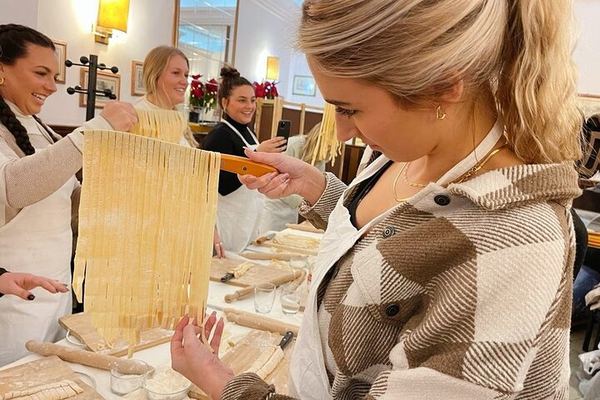
Fettuccine Class on Piazza Navona, at Ristorante Tucci
4.9 (2,460) 4.9 stars out of 5, 2,460 reviewsA pasta workshop held on the square itself rather than off it, with the fountains in the window and a technique that works at home with a rolling pin.
€ 50.00 -
 Selling fast
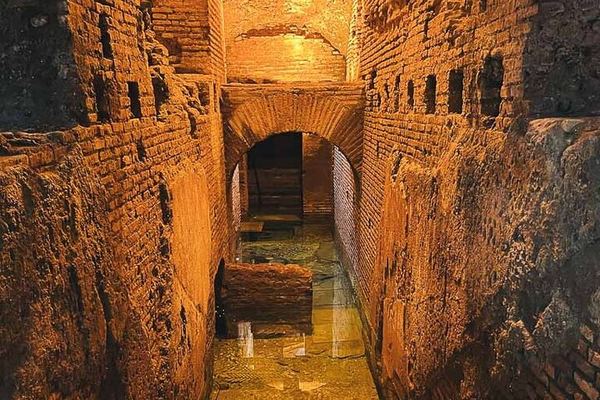
Following the Aqueduct from the Spanish Steps to the Trevi Cistern
4.9 (238) 4.9 stars out of 5, 238 reviewsA walk with one argument, tracing a working Roman aqueduct end to end, including the stretch exposed under a Via del Tritone department store.
€ 52.00 -
 Free cancellation
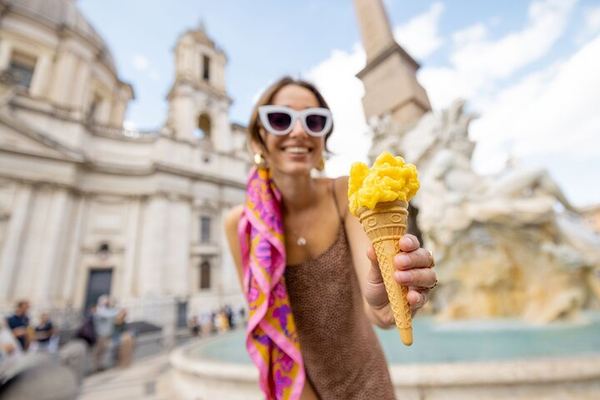
Gelato and Fettuccine Class on Piazza Navona, in Two Parts
5.0 (581) 5.0 stars out of 5, 581 reviewsYou make both by hand, then the restaurant kitchen cooks your pasta and the waiters plate it at your table as they would anything on the menu.
€ 72.00
Ratings collected by Viator and Tripadvisor