
Rome cooking classes near Piazza Navona: what four hours actually teaches
The four Roman pastas are one recipe with three variations. Twenty classes, 10,074 reviews, and the highest weighted rating on this site.
The best-validated thing in this entire catalogue is not a tour of the Pantheon. It is a pasta class near Piazza Navona. Twenty products on this page carry 10,074 reviews at a weighted 4.91, which is the highest score anywhere on the site, and one class alone accounts for more than two thousand of them.
They are also unusually uniform. Median €53,50, median length two and a half hours, and the same shape: fresh egg pasta, a sauce or two, a dessert, and you eat what you made with wine included. Most of them are within a few minutes of Piazza Navona, which is five minutes from the Pantheon.
Which makes this a page about what to look for rather than where to go, because on the surface these products are hard to tell apart. Three things separate them, and only one of them is the price.
A warning about how these are filed, which will save you a surprise. The most-reviewed cooking class in Rome is categorised by its marketplace under pizza making, and contains no pizza. It is fettuccine, ravioli and tiramisù. Read the description rather than the category, on this page and everywhere else.
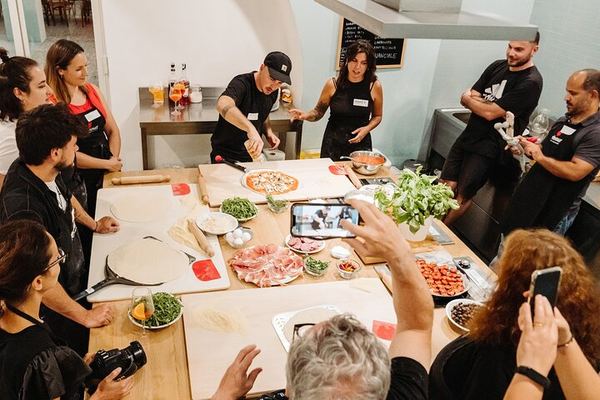
Aperitivo First, Then You Cook: An Evening Class in Trastevere
It opens with a prosecco or spritz before the flour comes out and ends sitting down with unlimited beer and wine. Fifteen guests at most, run by WalksDevour.
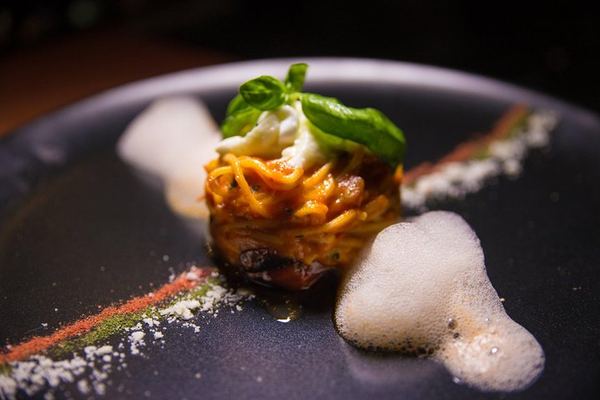
Chef in a Day: Campo de' Fiori Market, Then Cooking in Trastevere
The menu is decided at the Campo de' Fiori stalls rather than in advance, then cooked in a private apartment across the river. Ten people maximum.
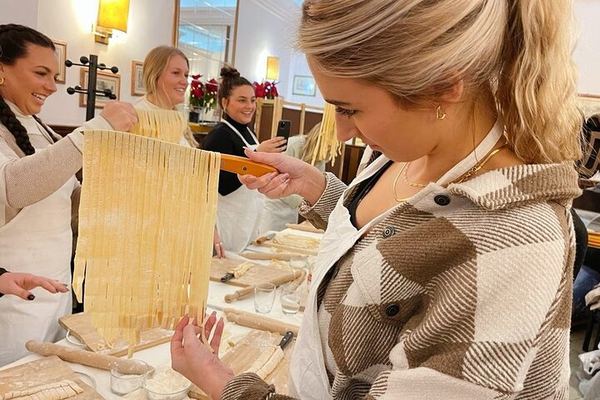
Fettuccine Class on Piazza Navona, at Ristorante Tucci
A pasta workshop held on the square itself rather than off it, with the fountains in the window and a technique that works at home with a rolling pin.
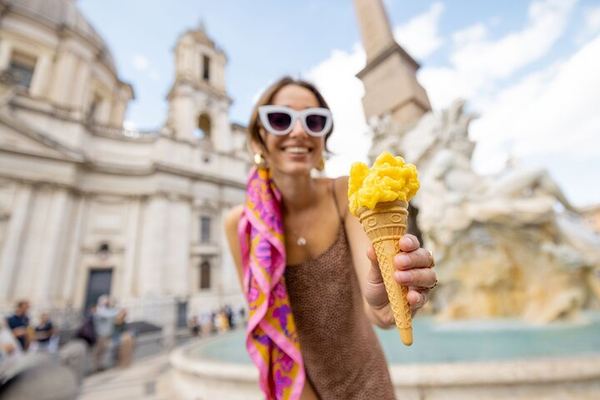
Gelato and Fettuccine Class on Piazza Navona, in Two Parts
You make both by hand, then the restaurant kitchen cooks your pasta and the waiters plate it at your table as they would anything on the menu.
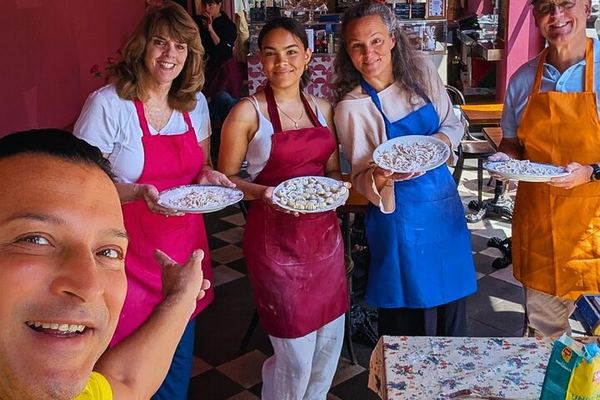
Gluten Free and Still Fried: Chef Christian's Roman Feast
Battered courgette flowers and sage leaves, fresh fettuccine and trofie, all gluten free. Run by a restaurateur who is also a sommelier.
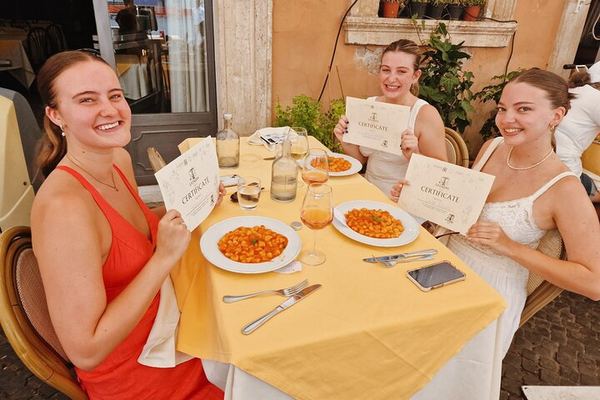
Gnocchi Class at Ristorante Panzirone on Piazza Navona
Gnocchi are won or lost in the shaping, which is why doing it once under supervision beats reading about it. Thursday is the traditional day in Rome.
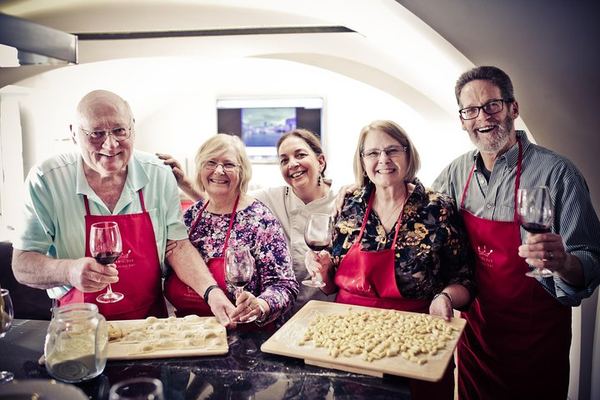
Learn to Judge the Ingredient: Market Shop and Roman Class
Shopping first, then cooking what you chose, with the reasoning behind each pick explained. Note the terms: all sales are final, no refunds.
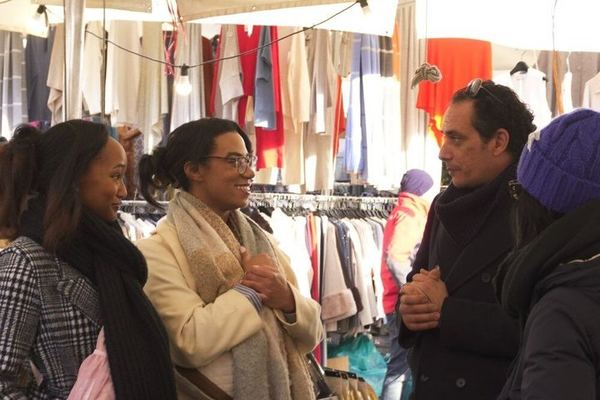
On Sundays You Shop at a Different Market Entirely
Campo de' Fiori on weekdays, the San Teodoro producers' market on Sunday with transfer included. Four courses cooked in a 17th-century kitchen.
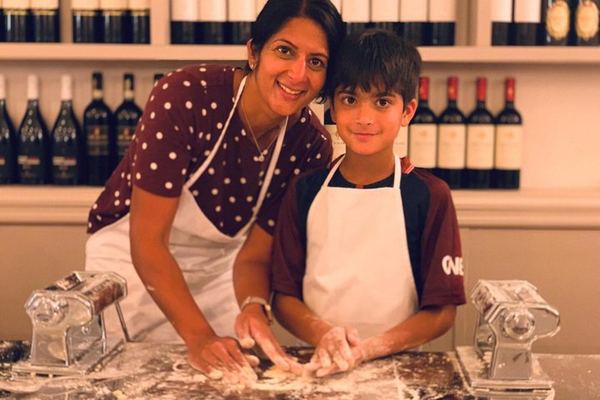
Pasta and Tiramisu at Two O'Clock, a Minute from the Metro
A fixed 14:00 start at La Nicchia Cafe on Via Cipro, one minute from the metro. Wine or prosecco while you work, then both courses sitting down.
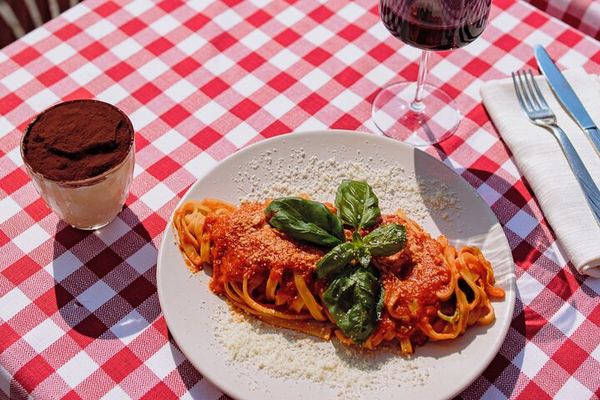
Pasta and Tiramisù Class Overlooking Piazza Navona
Two recipes rather than one, including the dessert most often made badly outside Italy, then a table on the square with drinks and appetisers included.
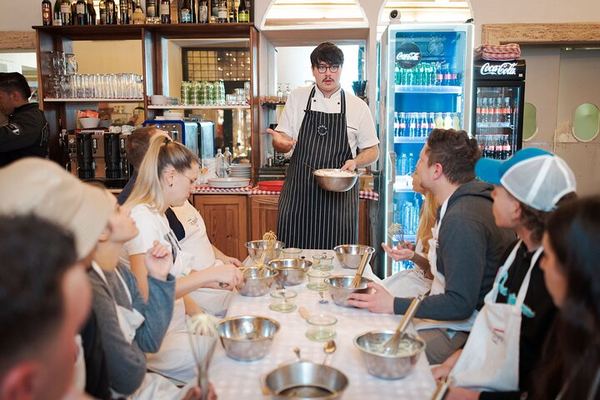
Pizza and Tiramisù Class at Antica Trattoria Agonale
The class sits on Corsia Agonale, a passage whose name preserves the ancient one for the square, and the restaurant stands on the old stadium seating.
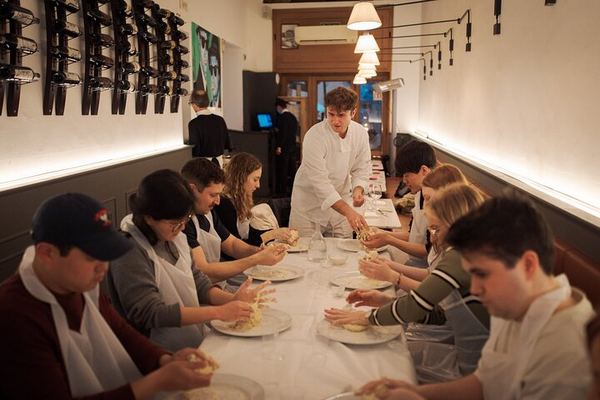
Pizza Class at Osteria Pasquino, by Rome's Talking Statue
The square outside is named after the marble torso Romans have taped anonymous satire to for five centuries, and the operator cooks in its own kitchen.
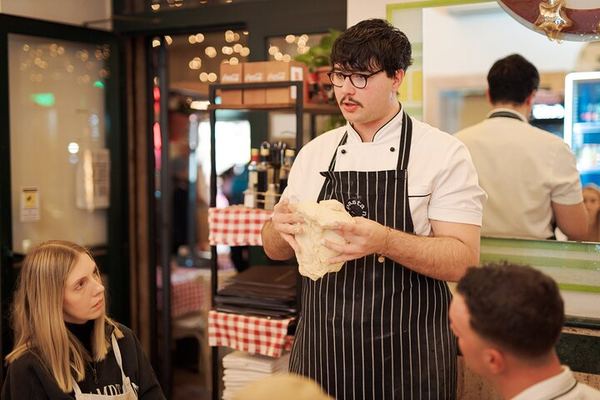
Pizza in a Wood-Fired Oven, Steps from Piazza Navona
A real wood oven rather than the electric one most teaching kitchens use, at a trattoria one street behind the square. Drinks included.
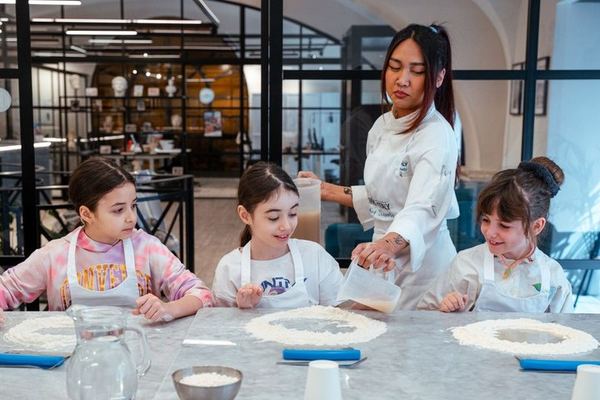
Pizza or Pasta: You Pick One, Not Both
The two classes are alternatives, chosen at booking, with a family version of the pizza one. Seated meal, unlimited wine, recipe booklet to take home.
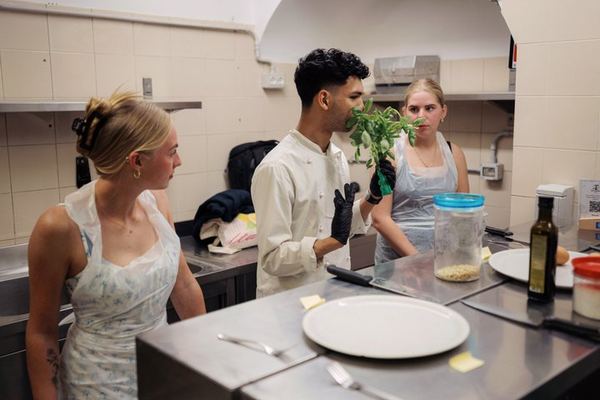
The Sauce, Not Just the Pasta: A Pesto and Fettuccine Class
One of the few classes in Rome that teaches a sauce as well as the pasta. Pesto needs no cooking, so the whole class happens at the table.
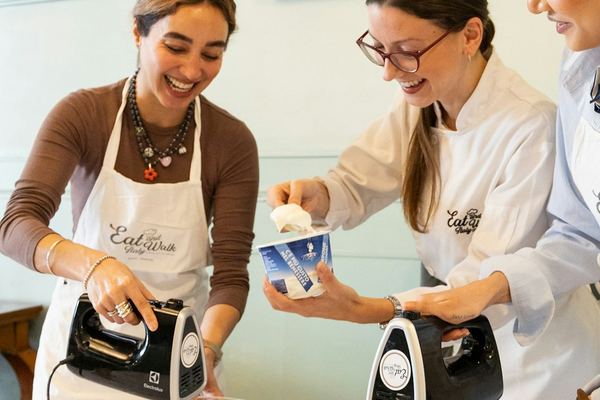
Three Dishes in One Class: Ravioli, Fettuccine and Tiramisu
The same dough rolled for fettuccine and filled for ravioli, worked with a wooden pin rather than a machine. Wine included, at Piazza Navona.
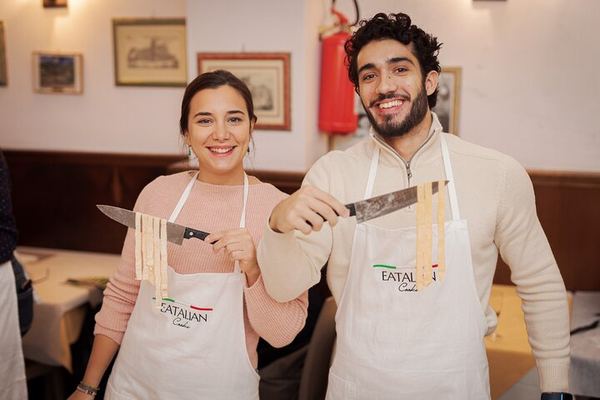
Two Hours of Fettuccine, on Piazza Navona Itself
The kitchen is a working restaurant at Piazza Navona 73. Note the terms: latecomers are rebooked for a fee and no refunds are given.
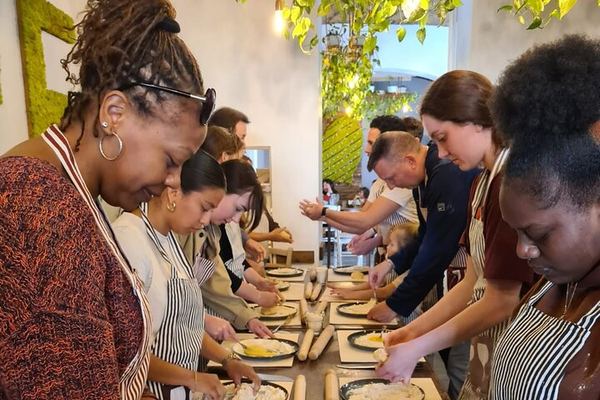
Two Hours with Paolo and Anna: Fettuccine and Tiramisu
A couple teaching a small class at a restaurant on Via della Croce, three minutes from the Spanish Steps. They stay before and after the lesson.
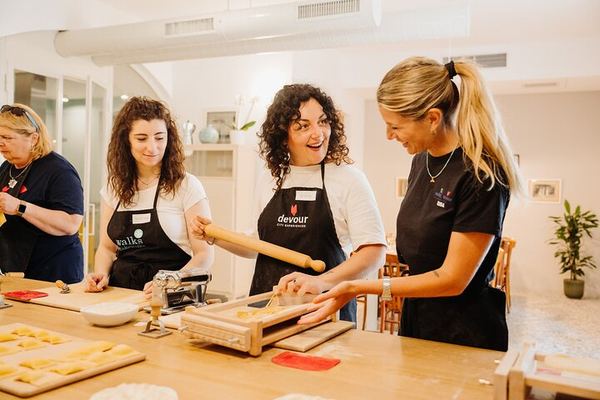
While the Pasta Dries, You Learn Gelato
Three hours in a Trastevere kitchen that opens with prosecco and cured meats. A pizza version can be chosen instead at booking.
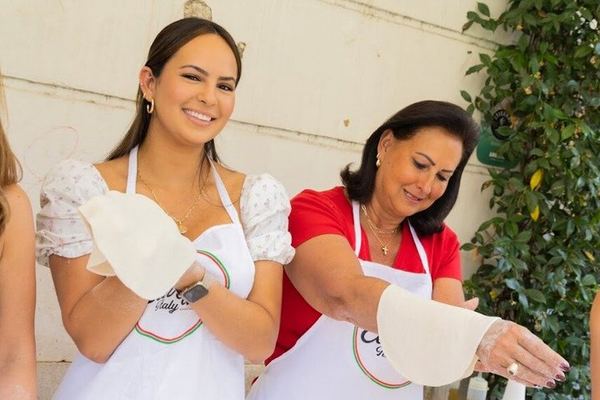
You Make the Gelato Too, Not Just Watch It Being Made
Both recipes are hands-on, which matters because gelato is the one you cannot improvise at home. The kitchen is minutes from Piazza Navona.
Ratings collected by Viator, Tripadvisor and Tiqets
The four Roman pastas are one recipe with three variations
This is the single most useful thing a class can teach you, and a surprising number do not say it out loud. Rome's four famous pasta dishes are not four traditions. They are a family, and you can walk from one to the next by adding a single ingredient.
| Dish | What is in it | What it adds to the one above |
|---|---|---|
| Cacio e pepe | Pecorino romano, black pepper, pasta water | The base. No meat at all, and the hardest of the four to get right |
| Gricia | Pecorino, pepper, guanciale | Cured pork jowl. The one nobody outside Italy has heard of, and the parent of the next two |
| Amatriciana | Pecorino, pepper, guanciale, tomato | Tomato. Nothing else: no garlic, no onion, which is written into its protected specification |
| Carbonara | Pecorino, pepper, guanciale, egg yolk | Egg instead of tomato. No cream, ever, and the cream version is a foreign invention rather than an old one |
Once you have that, a two-hour class stops being a recipe you copy and becomes a technique you can vary. The technique in all four is the same: emulsify sheep's cheese with starchy water without letting it seize, and render guanciale without burning it. Everything else is which of two things you add.
Two footnotes worth having. Amatriciana has an official recipe, registered as a Traditional Speciality Guaranteed since 2019: guanciale, pecorino, white wine, San Marzano tomatoes, black pepper and chilli. Amatrice, which it is named after, is in Lazio — but was in Abruzzo until 1927. And Romans eat it on bucatini while Amatrice eats it on spaghetti, which is the kind of argument this country conducts in public.
And carbonara is younger than it looks. It is absent from Ada Boni's La cucina romana of 1930. Its earliest printed recipe appears in Chicago in 1952; the first Italian one, in 1954, contained garlic, pancetta and Gruyere. The most widely supported explanation puts it after 1944, out of Allied ration bacon and powdered egg. Nobody in a Roman kitchen will thank you for saying so.

The two hours in a two-hour class
You will spend most of it on the dough
The advertised content of these classes is a list of dishes. The actual content is about seventy per cent one skill: making and rolling fresh egg pasta.
That is the right allocation. Flour and egg, worked to the point where it stops being sticky and starts being elastic, rested, then thinned in stages — by hand or through a crank roller — until you can see the shape of your fingers through it. It cannot be learnt from a video and it takes a while to feel.
The sauces, by comparison, are quick. A carbonara is four minutes of actual cooking once the pasta is on. If a class promises four dishes in two hours, most of the time is still going on the dough, and the sauces are demonstrations rather than things you make.
Two ingredients, four dishes. Learn the emulsion and you have all of them; learn the recipes and you have four things you can copy.
The tiramisu you make will not be Roman
Roughly half the classes here finish with tiramisù, and it comes from about five hundred kilometres north.
The most widely accepted origin is Le Beccherie in Treviso, on 24 December 1969, with the dish appearing on the menu from 1972. But in 2017 the Italian agriculture ministry registered it as a traditional product of Friuli Venezia Giulia, on the strength of a tiremesù served at Pieris from 1938. Two regions, two claims, one ministry that has come down on the second.
Its first documented appearance in the press outside Italy was in an Australian newspaper in 1978, which gives you a sense of how recent it is. Rome had nothing to do with any of it.
None of this makes a Roman tiramisù class a bad thing to book. It is straightforward, it is the dessert people want to learn, and the argument makes better conversation than the recipe. It is simply not local, and a class that tells you it is a Roman tradition is telling you something a ministry has ruled on.
The market visit triples the price, and it has to be a morning
The clearest split on this page is between classes that shop first and classes that do not, and it is not a small difference.
| Format | Typical price | Length | What happens |
|---|---|---|---|
| Kitchen only | €42 – €59 | 2 to 3 hours | Ingredients are on the bench when you arrive. Pasta, a sauce or two, a dessert, and you eat it with wine |
| With a market visit | around €180 | 4 to 4.5 hours | You shop first, at a real market, with the chef choosing in front of you — then cook. It is a different afternoon |
| In a private home | €70 – €120 | 3 to 4 hours | Smaller, slower, usually one family teaching. The reviews on these are exceptional and the numbers are small |
| Private, on request | €150 – €195 | 3 hours | Your party, your date, your dishes. Worth it above four people, as with everything else on this site |
The scheduling consequence of the second row is absolute and nobody prints it. The market at Campo de' Fiori runs Monday to Saturday and finishes at about two in the afternoon. So a class with a genuine market visit is necessarily a weekday or Saturday morning. If you are offered one at five in the evening, or on a Sunday, ask what you are shopping at — the answer will be a shop, which is fine, and is not what tripled the price.

How to choose between twenty near-identical classes
Three questions, in order of how much they change the afternoon.
How many people? This is the one that matters. A class of six is teaching; a class of twenty is a demonstration with a plate at the end. Very few listings publish the number, and the ones that do are worth preferring for that alone.
Do you cook, or watch? Some classes are hands-on throughout, some are a chef cooking while you drink wine and try the folding at the end. Both are pleasant evenings. Only one of them teaches you anything, and the descriptions are often vague on purpose.
Is the meal a meal? At the higher end you sit down properly, with wine that keeps coming and a real table. At the lower end you eat what you made, standing near where you made it. Both are legitimate; the price difference is mostly this.
What barely matters: the exact dish list. Fettuccine and ravioli and tiramisù is the standard combination and it is standard because it works. If a class offers something unusual, that is a reason to book it rather than a reason to worry.
Booking a cooking class in Rome
How much should a cooking class cost?
The median here is €53,50 for about two and a half hours, including what you cook and wine. Anything around €180 should include a market visit, which is a genuinely different product lasting four hours or more. Private classes run €150 to €195 and are worth it above four people.
Do I actually eat what I make?
On nearly all of these, yes, and it is dinner. People book a restaurant for afterwards and regret it. Wine is included on most, in quantities that are not symbolic.
Which pasta will I learn?
Fresh egg pasta, in almost every case: fettuccine or tagliatelle, often ravioli as well. The sauces vary but the four Roman ones share two ingredients and one technique, so a class that teaches you the emulsion has taught you all four whichever it names.
Is the market visit worth three times the price?
If you cook at home, probably: choosing produce with someone who does it professionally is the part you cannot get from a recipe. If you want a good evening and a plate of pasta, no. And it commits you to a weekday or Saturday morning, because the market closes at two and does not open on Sundays.
Are these suitable for children?
Very. Pasta making is the rare cooking task that a seven-year-old can genuinely do rather than watch, and several operators price children separately. Check whether wine is a large part of what you are paying for, because on some of these it is.
Is tiramisu Roman?
No. The strongest claims are Treviso, from 1969, and Friuli Venezia Giulia, which the agriculture ministry recognised in 2017 on the basis of a 1938 version. Rome makes it well and did not invent it, and a class that says otherwise is repeating marketing.
What to drink with it
Nineteen tastings and dinners near the Pantheon. Lazio has three protected appellations and exactly one red among them.
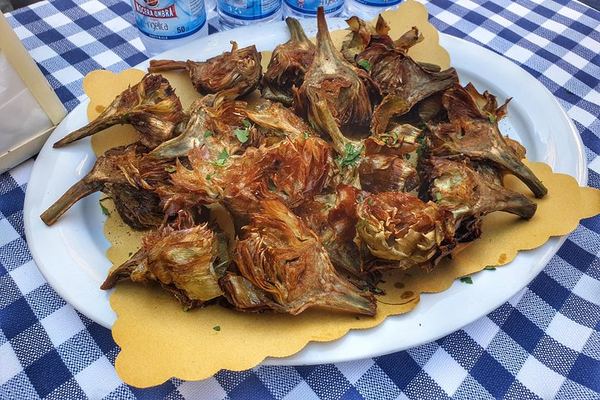
A Bakery from 1824, and Cured Meats from Norcia
More than ten tastings across six family-run places, from the Ghetto artichokes to a full Roman dinner. Ends with coffee, tiramisu and gelato.
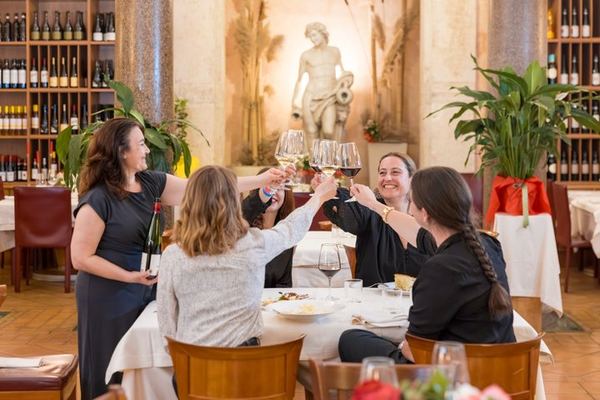
A Table Already Booked at Casa Bleve, with a Sommelier
Three courses in a Renaissance palace, each with a wine from a different Italian region, explained as it is poured. Ten people maximum.
A Trastevere Tasting Walk, Timed for Sunset
The ochre walls of the quarter take the light for about twenty minutes before the lamps come on, and the route is walked then.
Ratings collected by Viator and Tripadvisor
Or let somebody else cook
Twenty-three food tours through Campo de' Fiori, the Ghetto and Trastevere, with the market hours and the artichoke season that decide when to book.
Data verified on. The amatriciana specification is the 2019 TSG registration. The tiramisu claims are Le Beccherie's and the 2017 ministry listing. Market hours from Mercati di Roma.