
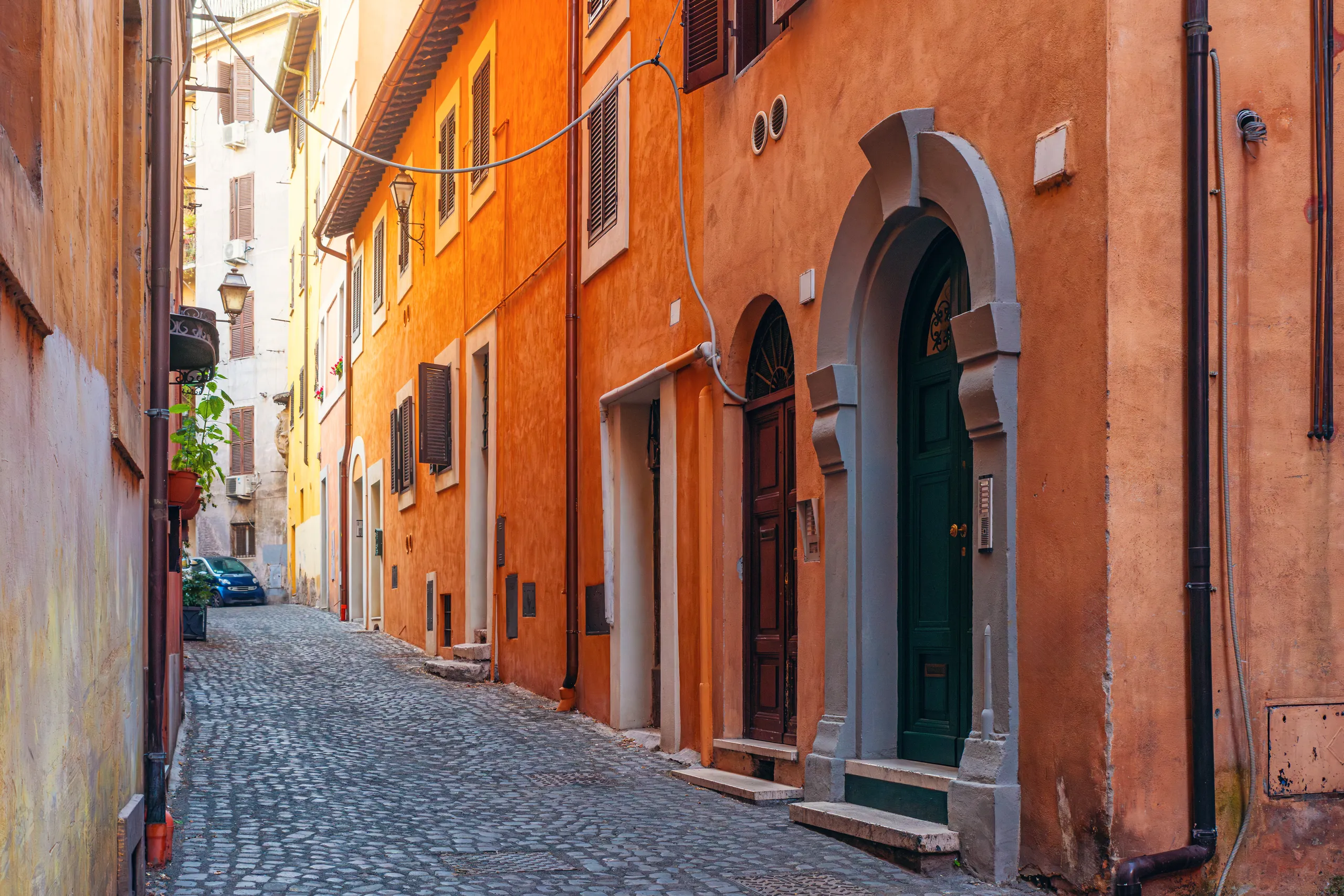
Hidden corners near the Pantheon: Rome on a second visit
A corridor eight metres long that looks thirty-seven, a stairwell nobody photographs, and a piece of Agrippa's baths standing in a street three minutes away.
Hidden gem is the most abused phrase in this business, and there is a simple test for it. The most-reviewed product on this page is a Trastevere food walk with 1,580 reviews. It is excellent. It is not hidden.
So this page does two things. It lists twenty tours — from €1,95 to €370, median €61,86, rating 4.91 across 2,901 reviews — and it names the places near the Pantheon that genuinely are overlooked, with their opening hours, because several of them keep hours apparently designed to defeat you.
The honest framing: this is Rome for a second visit. If it is your first, the squares and the churches are unmissable for a reason and you should go and be unoriginal about them. Come back to this page when you have done that and want the version with nobody in it.
One warning about the cheapest listing here. At €1,95 it is a self-guided app with three reviews, and three reviews is not a rating. Several products on this page carry perfect scores on single-figure samples, which is an absence of information rather than praise.
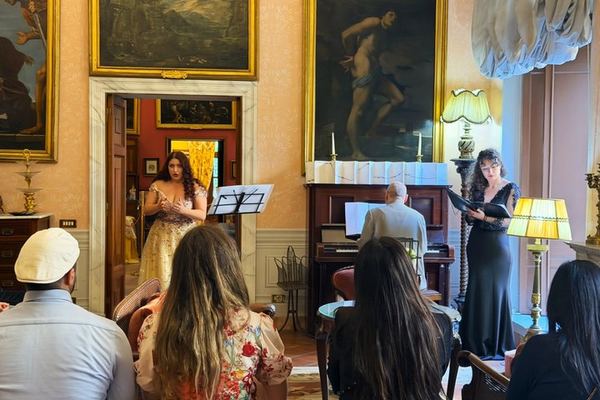
Concert in the Secret Apartments of Palazzo Doria Pamphilj
Soloists of the Romaeterna Cantores Female Ensemble under Aurelio Porfiri, in rooms built for conversation and never for amplification.
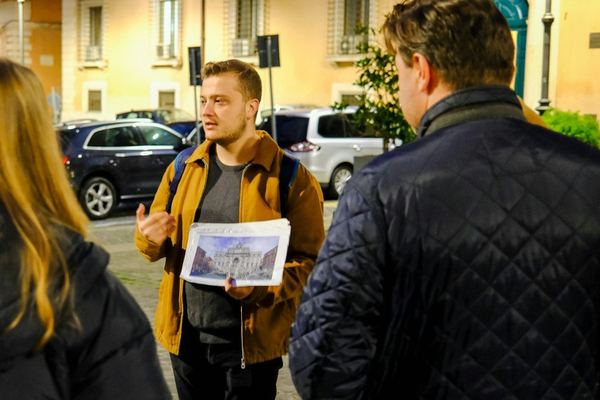
Guided Walk from Piazza d'Aracoeli to Piazza Navona
Covers Piazza Venezia, the Trevi Fountain and the outside of the Pantheon on foot. Entry to the Pantheon is not included in this walk.
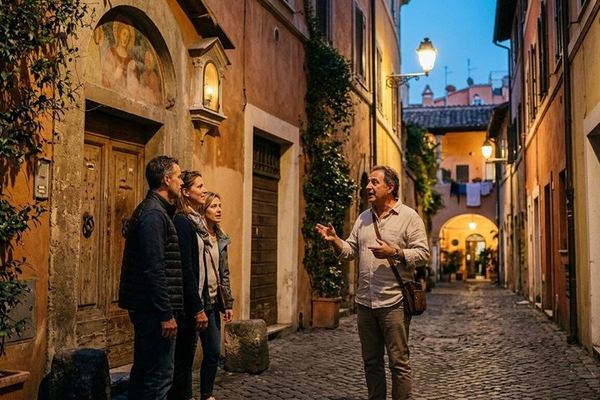
Hidden Rome by Car: the Appian Way, Catacombs and Aqueducts
Everything on this route sits outside the walls and off any walking tour, including the quarries that gave the word catacomb to the language.
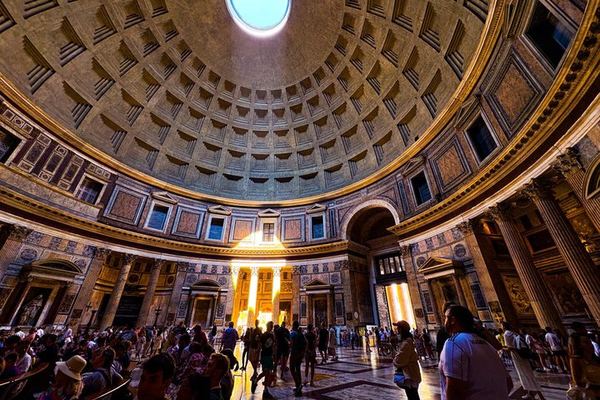
Pantheon, Sant'Ignazio and the Corners the Guidebooks Skip
Twelve people maximum, and a route past the painted false dome, the Caravaggios that cost nothing, and Domitian's stadium seen from the street.
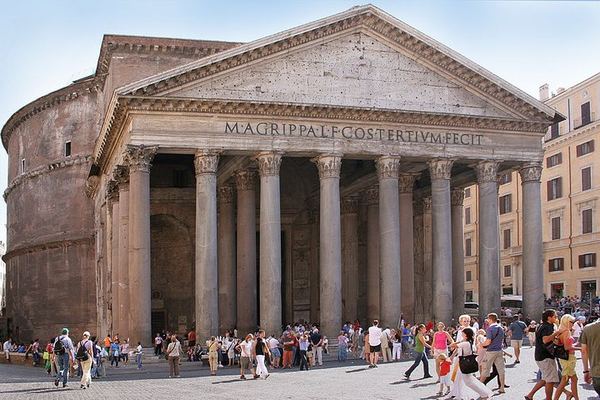
Pantheon Tour with Optional Access to the Basilica of Neptune
The Special Access version goes through the archaeological remains behind the rotunda and enters by a back door, coffee tasting included.
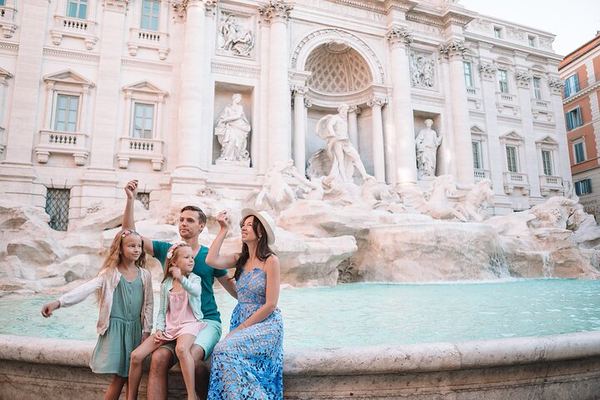
Private Rome Walk with a Supplì and Fourteen Stops
From the painted ceiling at Sant'Ignazio to the ship-shaped island, taking in the oldest marble building still standing in the city.

Private Trastevere Food Walk: Innocenti, Caciara, Otaleg
Three and a half hours from the Tiber Island through named shops: biscuits since 1940, a cheese counter since 1900, gelato churned by Marco Radicioni.
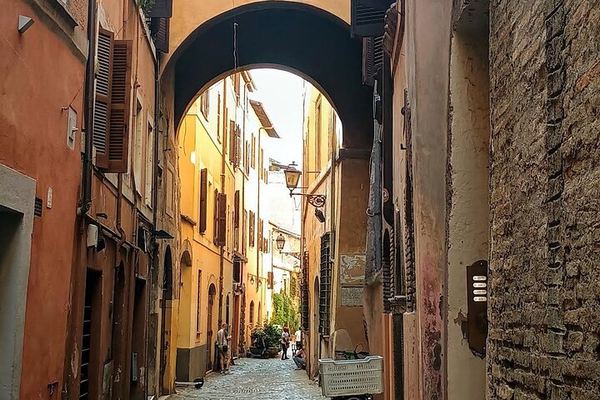
Private Walk of the Rione Ponte with a Roman Storyteller
The first part of Rome pilgrims reached after the bridge, with a piece of Domitian's stadium standing in a restaurant basement.
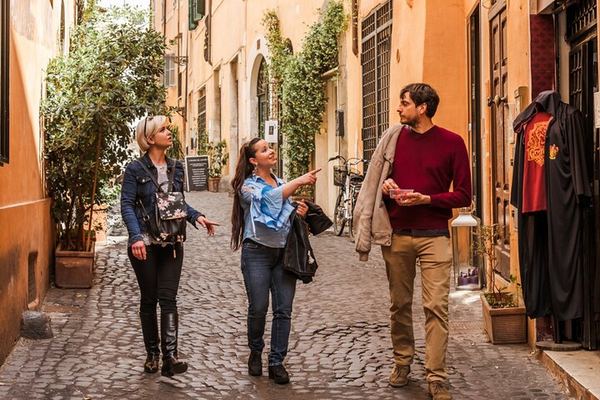
Rome Custom Walk Built Around a Questionnaire You Fill In
A licensed local guide builds the walk around a form you fill in after booking. Monti, the Jewish Ghetto and Trastevere across the river are all possible.
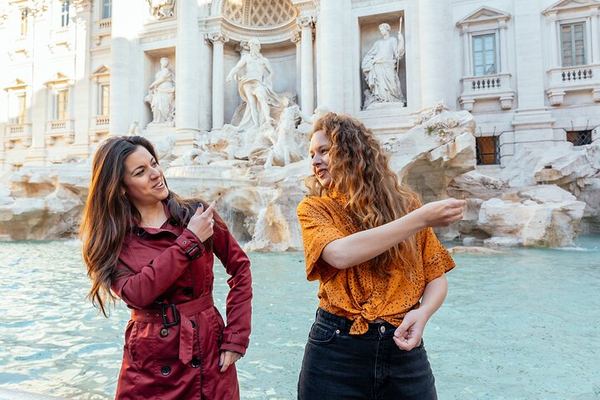
Rome Private Tour with a Local: Highlights and Hidden Corners
A guide paid a fair fee, a carbon-neutral route off the standard lines, and the working quarter across the river that the centre stopped being.
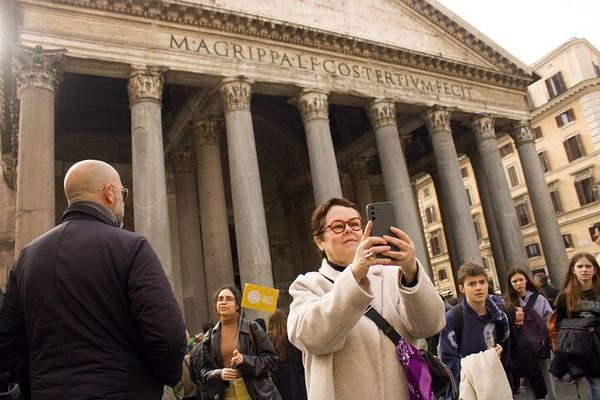
Rome Walk for Fifteen: the Pantheon and Two Hidden Interiors
Morning or afternoon departures, and a route that pairs the famous squares with a frescoed courtyard and a painted dome, both free and both usually empty.
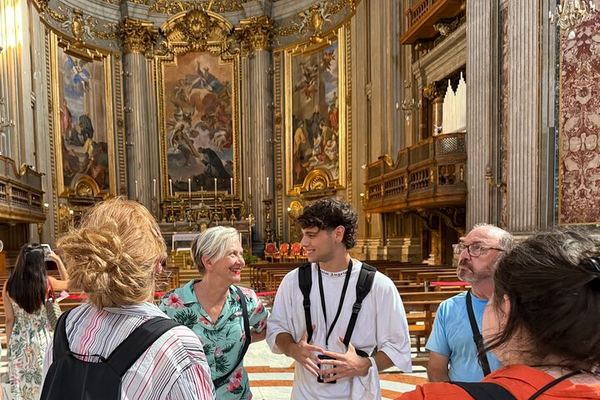
Rome Walk on the Families Who Fought Over the City, Tips Only
Organised around who paid for the buildings and what they were proving, including the woman Romans called the female pope. Guides work for tips alone.
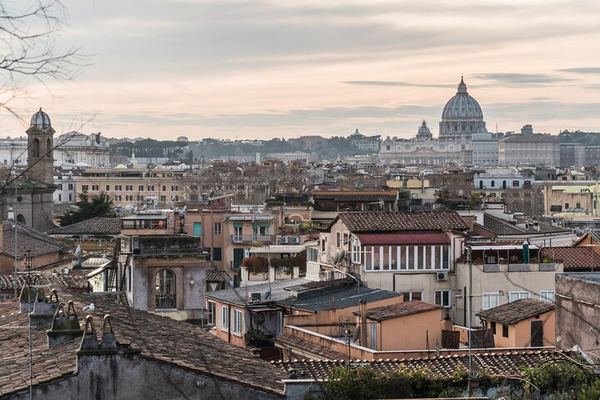
Self-Guided Audio Walk of Rome, Started Wherever You Like
An app rather than a guide, with no fixed departure: you choose the starting point and the sequence, from San Clemente to the Pincio terrace.
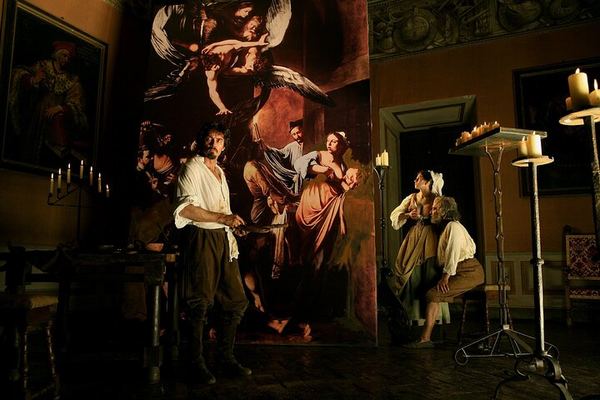
The Secret Lives of Bernini, Borromini and Caravaggio
Follows the Baroque rivalries through the squares and the back streets, ending at Pasquino and the House of Fiammetta rather than at a monument.
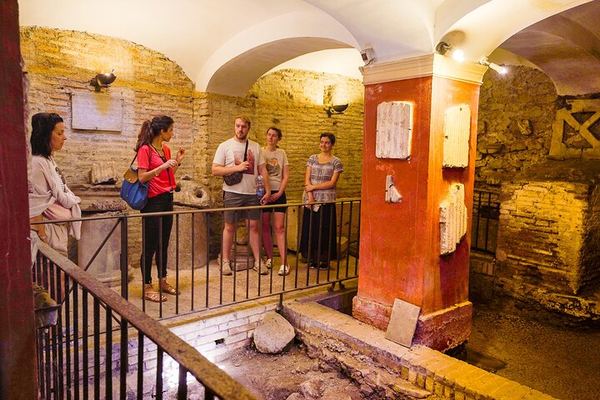
Trastevere and the Ghetto, with a Crypt Five Metres Down
The nuns of Santa Cecilia open the level five metres below the street, and a Bernini in an empty side chapel has no queue in front of it.
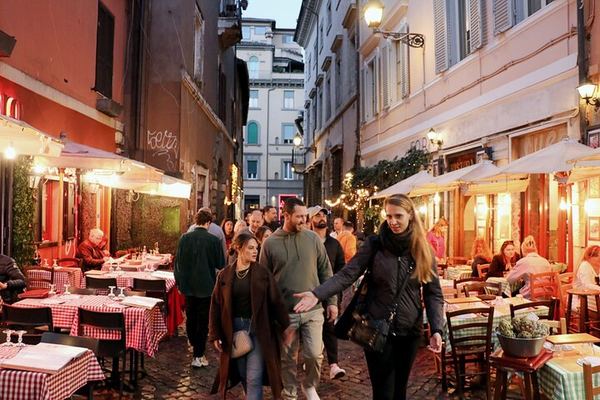
Trastevere Food Walk with a Sit-Down Dinner and Four Stops
Four stops built around a three-course meal at a table rather than a run of snacks, with a century-old deli, a street food stop and organic gelato to close.
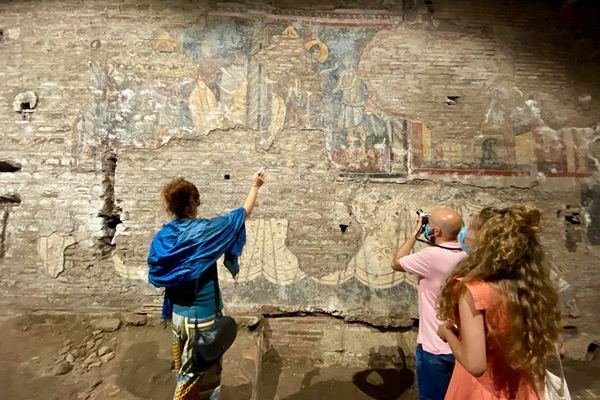
Trastevere's Two Underground Churches, in a Group of Ten
Two church undergrounds in Trastevere, walked in a group of ten, with the Cavallini Last Judgement on the morning departure only, so the time slot matters.
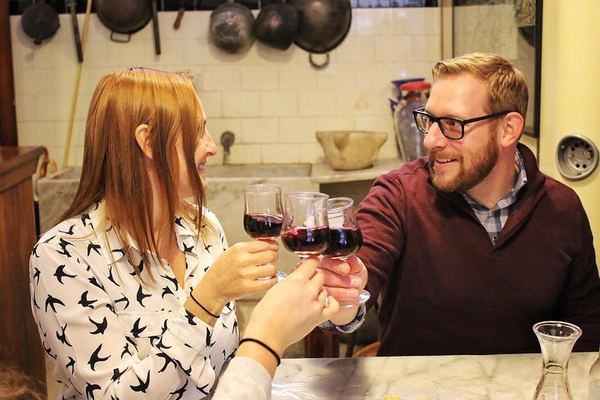
Twilight Aperitivo Walk with an Archaeologist and 15 Tastings
Fifteen tastings across an evening, including a bakery open since 1880 and one of the last family friggitorie, frying since 1860.
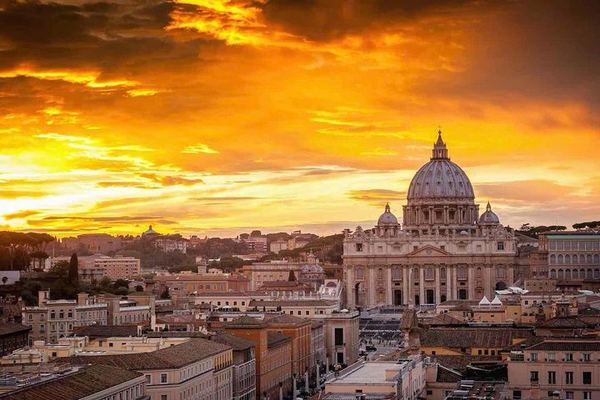
Unusual Rome by Private Car, for a Third or Fourth Visit
Built for people who have already done the Colosseum and the Vatican, covering the fourth-day sites that are only unvisited because they are far apart.
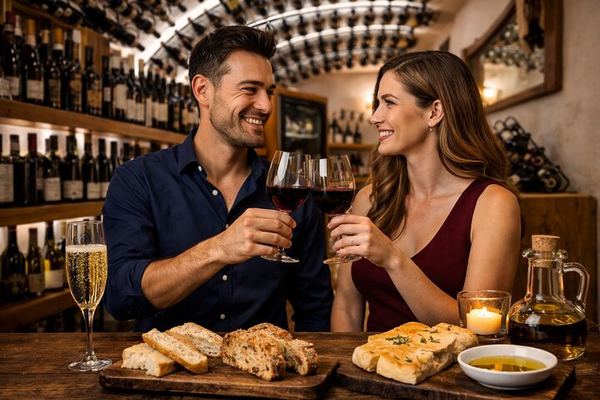
Wine Tasting in a 1st-Century Roman Cistern Under Trastevere
Cantina Fabullus sits in a recovered Roman cistern under an 18th-century building, with an hour of protected-origin Italian cheeses and cured meats.
Ratings collected by Viator, Tripadvisor and Tiqets
Six places that genuinely are overlooked
All within eleven minutes of the Pantheon's portico. Five of the six cost nothing. Most tours on this page will show you one or two of them; you can do the rest yourself in an afternoon.
| What | On foot | Cost | The catch |
|---|---|---|---|
| Arco della Ciambella — the surviving curve of Agrippa's baths, a brick semicircle about 25 m across standing in the street | 3 min | free | There is no sign. Look for the curve in the building line between via di Santa Chiara and via dei Cestari |
| Sant'Ivo alla Sapienza — Borromini's spiral lantern over a courtyard | 4 min | free | Opening hours are erratic and not reliably published. Sunday mornings are the usual answer and not a guarantee |
| Pasquino — the battered Hellenistic torso Romans have been posting anonymous satire on since the early 1500s | 6 min | free | Posting on the statue itself is now forbidden. The notices go on a board beside it, and they are still current |
| Fontana delle Tartarughe — della Porta and Landini, 1580 to 1588, with turtles added eighty years later | 9 min | free | The turtles are copies. One was stolen in 1979 and the others were taken indoors |
| Galleria Sciarra — an 1880s iron-and-glass courtyard painted floor to ceiling | 10 min | free | It is an office building. Open in office hours, closed at weekends, and there is no ticket desk to ask at |
| Galleria Spada — Borromini's forced-perspective colonnade, plus a seventeenth-century picture gallery | 11 min | €6 | Closed on Tuesdays, not Mondays. It is open on Sunday and Monday, which catches out everyone who assumes the Italian default |
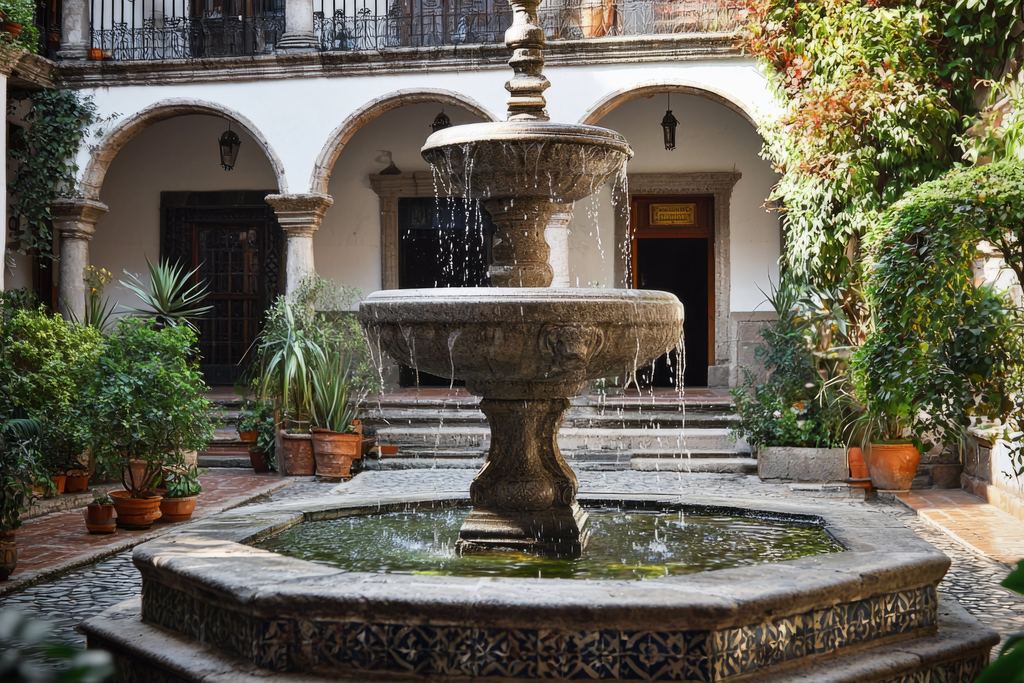
Eleven minutes, six euro
Eight metres that look like thirty-seven
In the courtyard of Palazzo Spada, Borromini built a colonnade in 1653 for Cardinal Bernardino Spada, working out the geometry with a mathematically minded friar. The columns shorten, the floor rises, the ceiling drops and the walls converge.
The corridor is eight metres long and reads as about thirty-seven. The warrior statue at the far end, which looks life-sized, is sixty centimetres tall.
Two things almost every account gets wrong. The statue is not Borromini's: it was put there by Prince Clemente Spada around the middle of the nineteenth century, and the original backdrop was a painted wood. And the gallery closes on Tuesdays — not the Monday that every other Italian museum takes.
A cardinal paid for a corridor that lies about its own length, and hung a caption on it: the greatness of the things of this world is only an appearance.
The Art Nouveau one is not the one you have heard of
Search for Art Nouveau in Rome and everything points you at the Coppedè quarter. It is remarkable, and it is roughly three kilometres from the Pantheon in the Trieste district, which puts it outside anything on this site and outside a walking day in the centre.
The one in the centre is the Galleria Sciarra, a hundred and fifty metres from the Trevi Fountain, built between 1886 and 1888 by Giulio De Angelis for the Barberini Colonna di Sciarra family. It is a small iron and glass courtyard, and every wall of it is painted — Giuseppe Cellini's cycle on the virtues of women, with scenes of ordinary bourgeois life around them.
It is now offices. You walk in off the street during working hours, look up, and walk out. Nobody takes a ticket and nobody stops you. It is very close to the busiest tourist spot in Rome and it is usually empty, which is as close to the literal meaning of the phrase as this city gets.
The opening hours that catch everybody
Half the disappointment in this part of Rome comes from an assumption: that museums close on Mondays and churches are open all day. Neither holds here, and the exceptions are not published anywhere together.
| Place | When it is shut | So |
|---|---|---|
| Galleria Spada | Tuesdays | Open Monday and Sunday. The reverse of what you expect |
| Palazzo Doria Pamphilj | Wednesdays | And entry is timed every thirty minutes: without a booking, arrival is not access |
| Palazzo Colonna | Every day but Friday and Saturday morning | Two mornings a week. Plan the week around it or miss it |
| San Luigi dei Francesi | The morning of the first Wednesday of the month | The Caravaggios are shut on a morning nobody thinks to check |
| Vicus Caprarius | Mondays, and every day after 17:00 | It is an afternoon site with an early close |
| Campo de' Fiori market | Sundays, and after about 14:00 | A morning, on a weekday, or it is just a square |
| Galleria Sciarra | Weekends | The one on this page that is open when the museums are shut, and shut when they are open |
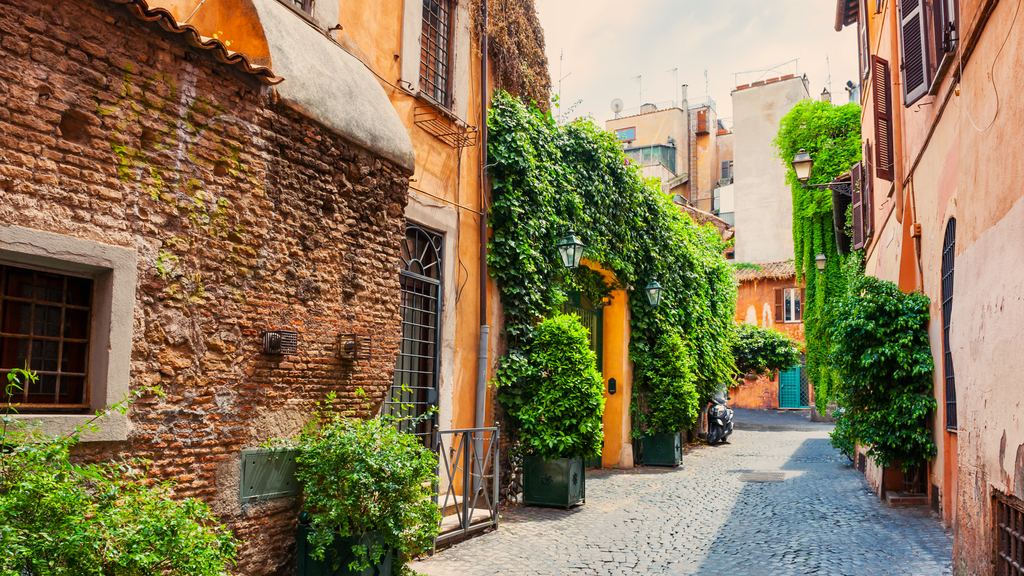
What a tour adds, and what it does not
Everything named above is either free or six euro, and most of it is a five-minute walk. So it is fair to ask what a sixty-euro tour is for.
The answer is the doorways. Rome's centre is a wall of shuttered fronts, and the difference between a courtyard you can walk into and one you cannot is not marked on anything. A guide who works this quarter knows which portone is open, which caretaker minds, and which building has a Renaissance staircase two metres inside a door that looks residential.
What a tour does not add is access. There is no key here that private money buys. Every place on this page admits anyone who turns up at the right hour, which is why the hours are the useful part of this page and the itinerary is not.
The other thing worth paying for is being talked out of things. A good local guide will tell you that the Aventine keyhole — the one with the dome of St Peter's framed by a hedge, which Piranesi designed in the 1760s and which is his only built work — is a thirty-minute walk each way for a queue and a four-second look. It is a wonderful thing. It is also a long way to go to look through a hole.
About the overlooked bits
What is actually hidden near the Pantheon?
Six things, all within eleven minutes: the arc of Agrippa's baths in the street, Borromini's spiral at Sant'Ivo, the talking statue Pasquino, the Fontana delle Tartarughe, the painted courtyard of the Galleria Sciarra, and the forced-perspective corridor at Palazzo Spada. Five are free. Together they are a good afternoon.
Is the Coppedè quarter worth the trip?
It is worth a trip, and it is not near here. Three kilometres north of the Pantheon in the Trieste district, so a metro ride or a forty-minute walk each way. If you want Art Nouveau within the centre, the Galleria Sciarra is a hundred and fifty metres from the Trevi Fountain and free.
Which day should I avoid?
Tuesday, if the Spada perspective is on your list, because that is the one day it is shut. Wednesday, if you want Doria Pamphilj. And any day but Friday or Saturday morning for Palazzo Colonna. There is no single day that works for everything, which is the honest answer.
Are these tours actually different from a normal walking tour?
Some are, some are a highlights route with the word hidden in the title. The ones worth booking name specific places in the description rather than promising secret corners in general. If a listing does not name a single street, it is selling an adjective.
Do any of them go inside the Pantheon?
Two of the twenty. Most are outdoor walks around it. If entry is what you want, the two headings at the top of this site contain only products that include it, and a plain ticket is €7 at the door.
Is the Aventine keyhole worth it?
It is genuinely extraordinary and it is a thirty-minute walk each way from here, with a queue at the end and about four seconds at the front of it. Go if you have a spare morning and like Piranesi, whose only completed building it is. Do not build a day around it.
The collections still in the rooms they were bought for
Doria Pamphilj, Colonna and Braschi: three family galleries within ten minutes, two of which keep very strange hours.
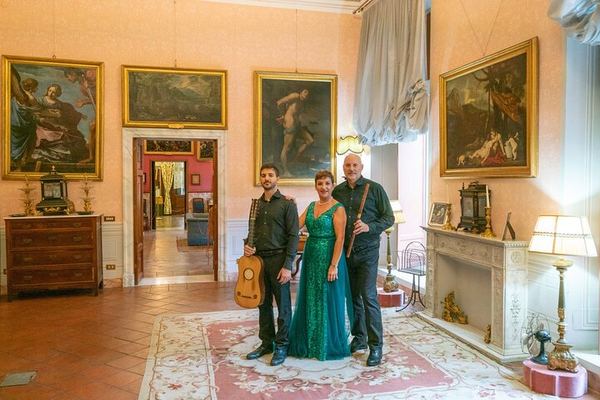
Baroque Instruments in the Princess's Apartment, for Twenty-Five
Theorbo, traverso and soprano, playing music written for these forces in a room this size. Doors close at 7:15 and nobody is let in after.
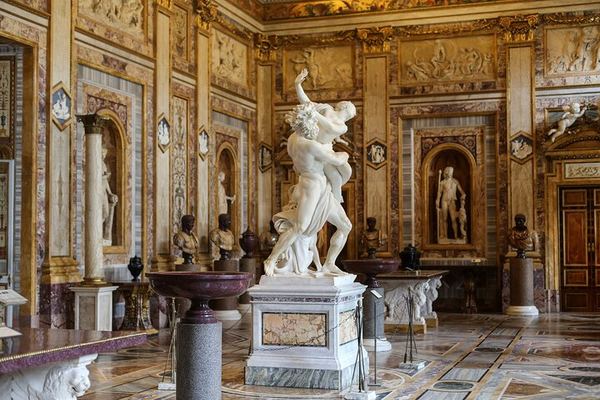
Borghese Gallery and Gardens, Ending on the Pincio
Leaves you at the terrace above Piazza del Popolo rather than back at the villa, with headsets throughout. The exit involves a long staircase.
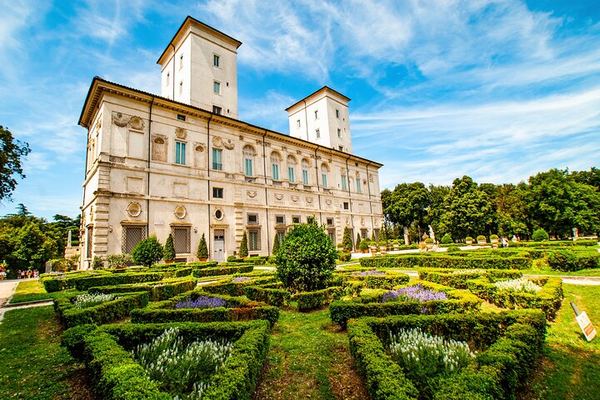
Borghese Gallery, and What to Do in the Park Afterwards
Names the route out: the rowing-boat lake, the Pincio terrace, the Casina Valadier and the smallest cinema in the world. Six, fifteen or ticket only.
Ratings collected by Viator and Tripadvisor
Six Caravaggios, four minutes away, free
Three churches within five minutes of the portico hold six paintings between them and charge nothing. Bring a one-euro coin for the lights.
Data verified on. Opening days and prices from Galleria Spada, Doria Pamphilj, Palazzo Colonna and the parish of San Luigi dei Francesi. Sant'Ivo's hours are not reliably published anywhere.