
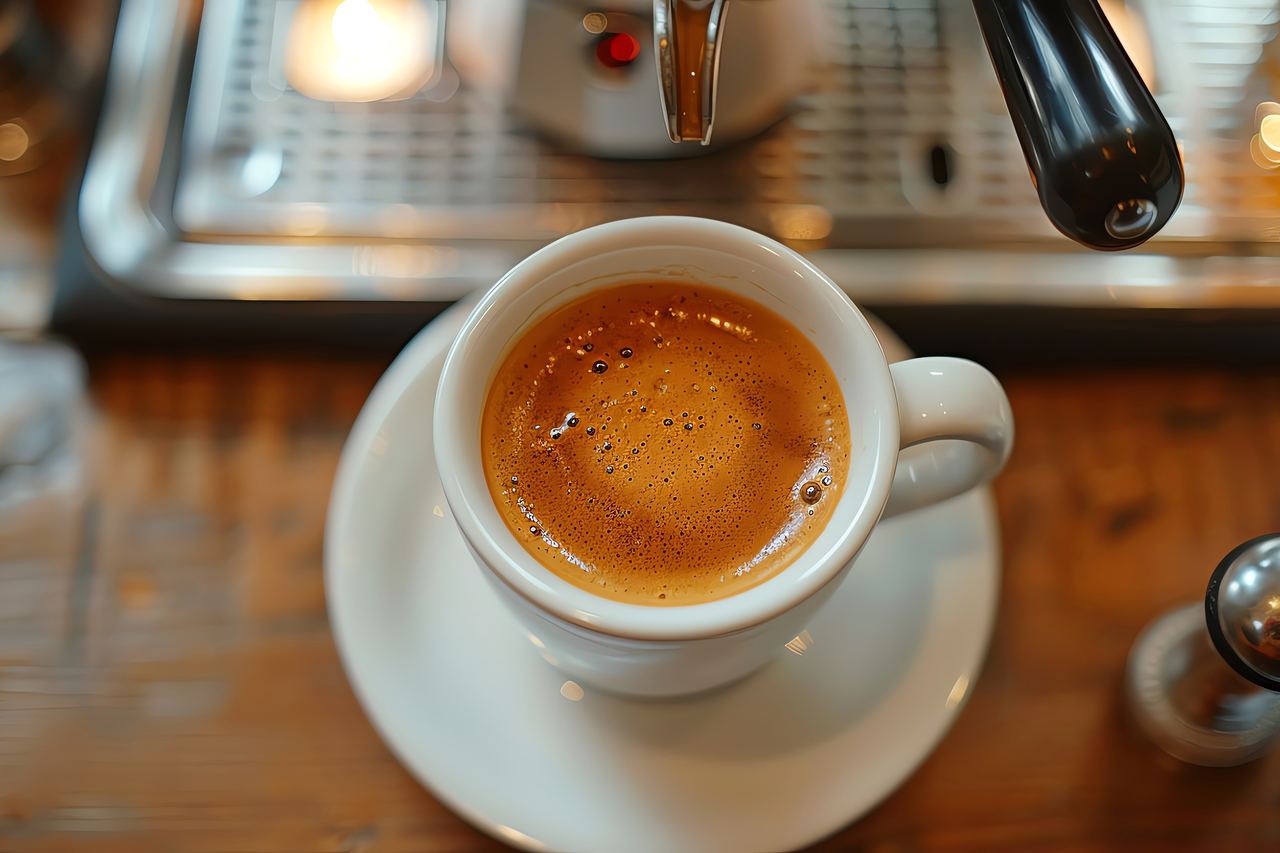
Coffee and gelato at the Pantheon: two bars, ninety-five metres apart
Tazza d'Oro is a minute from the portico, Sant'Eustachio two, and they make coffee differently on purpose. Neither of them needs a ticket.
This is the page where the geography does the work. Two of Rome's best-known coffee bars are on the Pantheon's doorstep — Tazza d'Oro at about a minute, Sant'Eustachio at two — and the city's most famous gelateria is four minutes further. None of them requires a booking, a ticket or a tour.
So the honest framing of the products below: eighteen tours, from €33 to €800, median €60,50, rating 4.92 across 4,197 reviews — and most of them are cooking classes that include a gelato tasting rather than walks between coffee bars. Marketplaces file a class by what it tastes, and the good ones on this page are excellent classes. They are not what the title of this page suggests.
What follows is the part you can act on for four euro: where the places are, what to order, and the three things guides say about Italian coffee that are not true.
One thing to know before you walk into the nearer of the two. At Sant'Eustachio the house coffee arrives already sweetened. If you want it without, you have to say so when you order. It catches out most first-time visitors and it is not written anywhere in the bar.
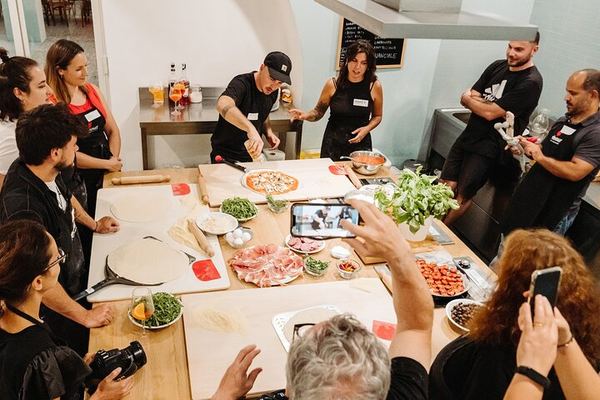
Aperitivo First, Then You Cook: An Evening Class in Trastevere
It opens with a prosecco or spritz before the flour comes out and ends sitting down with unlimited beer and wine. Fifteen guests at most, run by WalksDevour.
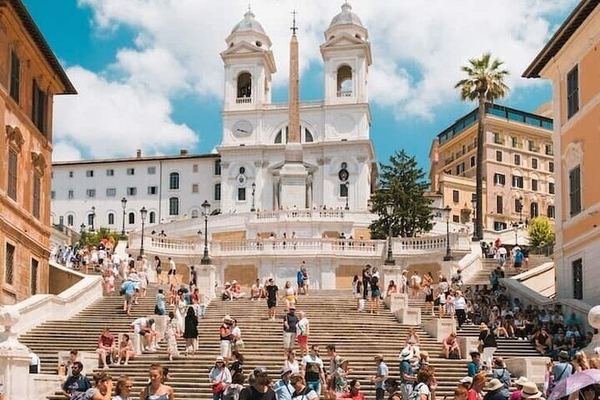
A Private Rome Walk Built Around You, Gelato Included
An official guide, your party only, and a route you help set from the Colosseum to Trevi. Bring photo ID to the meeting point at Colosseo metro.
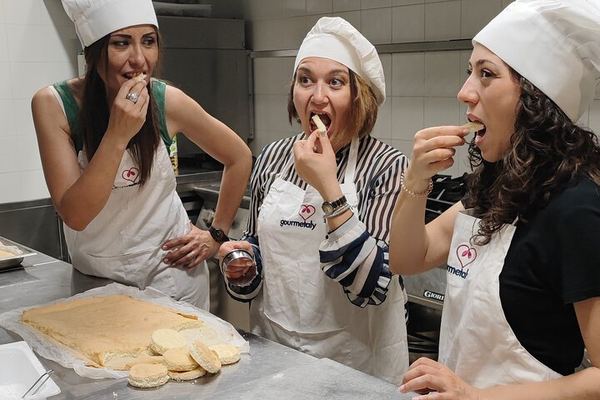
Bake Your Own Savoiardi: A Tiramisu and Gelato Class
You bake the savoiardi yourself instead of opening a packet, which is the step that decides whether it holds. Alcohol free, semi-private.
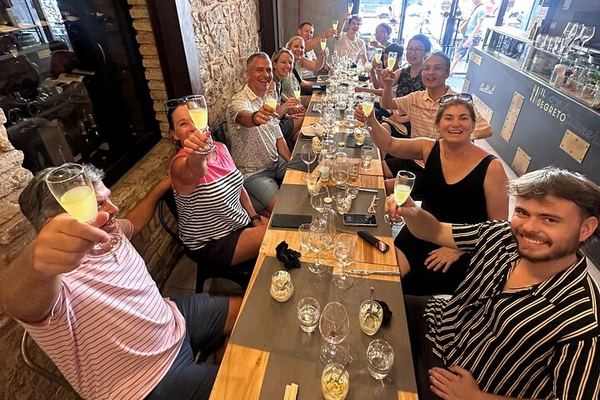
Five Wines from Across Italy, Not Just the Lazio Hills
Pecorino Romano, cheese matured in Barolo and thirty-year-old balsamic, each poured against a different wine. Inside a wine bar Romans use.
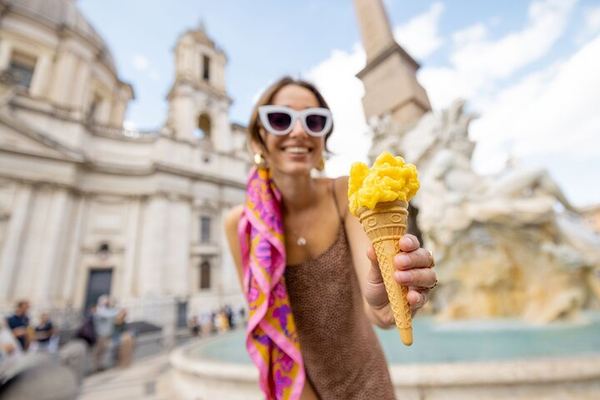
Gelato and Fettuccine Class on Piazza Navona, in Two Parts
You make both by hand, then the restaurant kitchen cooks your pasta and the waiters plate it at your table as they would anything on the menu.
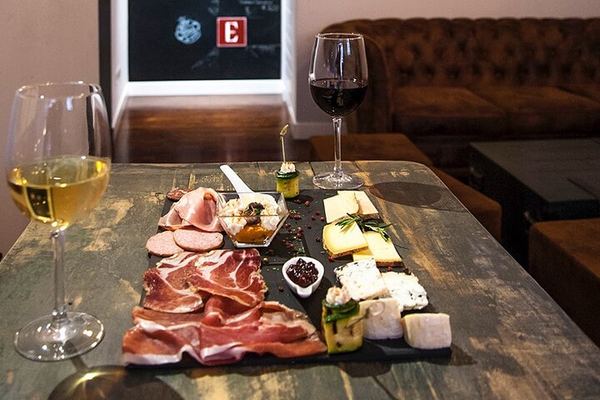
Learn to Pick the Wine Yourself: A Trastevere Tasting
Pairings explained as you drink them, so you can order unaided afterwards. Two different meeting points: check which product you booked.
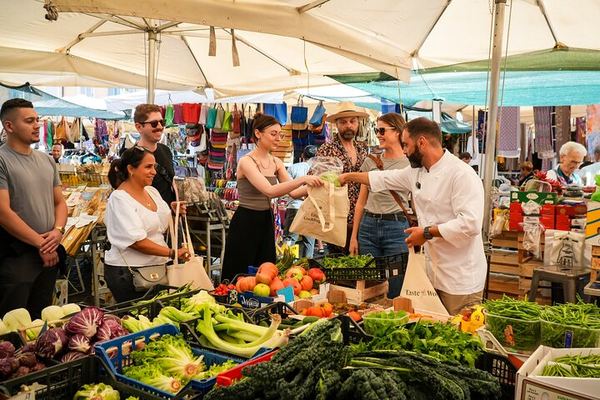
Market, Butcher, Deli, Then Ravioli by the Turtle Fountain
The shopping runs through Campo de' Fiori, Norcineria Viola and Salsamenteria Ruggeri before anyone cooks. Ravioli by hand, small group, wine.
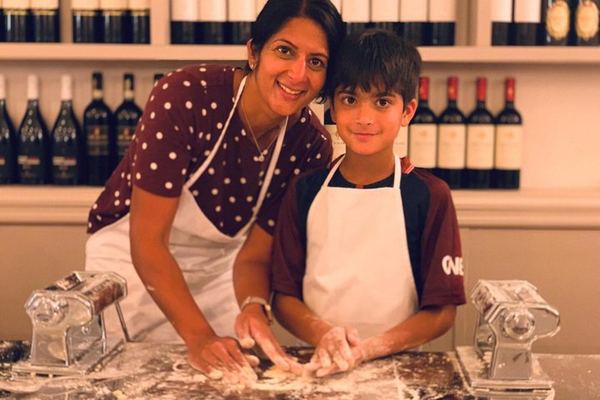
Pasta and Tiramisu at Two O'Clock, a Minute from the Metro
A fixed 14:00 start at La Nicchia Cafe on Via Cipro, one minute from the metro. Wine or prosecco while you work, then both courses sitting down.
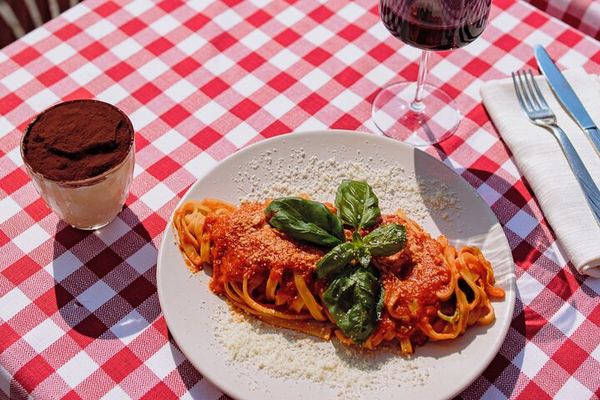
Pasta and Tiramisù Class Overlooking Piazza Navona
Two recipes rather than one, including the dessert most often made badly outside Italy, then a table on the square with drinks and appetisers included.
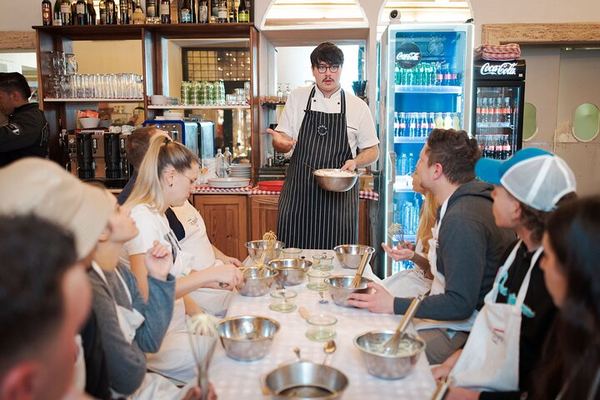
Pizza and Tiramisù Class at Antica Trattoria Agonale
The class sits on Corsia Agonale, a passage whose name preserves the ancient one for the square, and the restaurant stands on the old stadium seating.
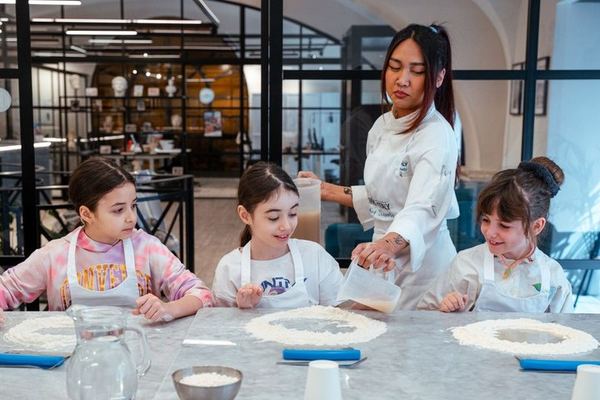
Pizza or Pasta: You Pick One, Not Both
The two classes are alternatives, chosen at booking, with a family version of the pizza one. Seated meal, unlimited wine, recipe booklet to take home.

Rome by Night for Families, with Pizza and Gelato Included
The evening hour is the point: cooler, quieter and easier with children, with treasure hunts alongside the history and both food stops in the price.
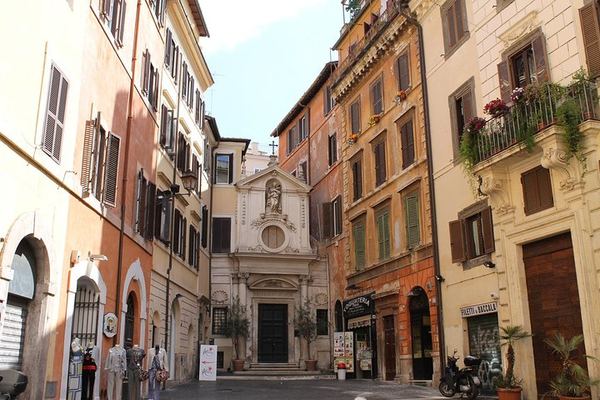
Rome Walking Tour for Six, with the Pantheon and a Gelato
Two hours from the Spanish Steps to Piazza Navona in a group of six, with the gelato paid for and a clear note on which days Pantheon entry drops out.
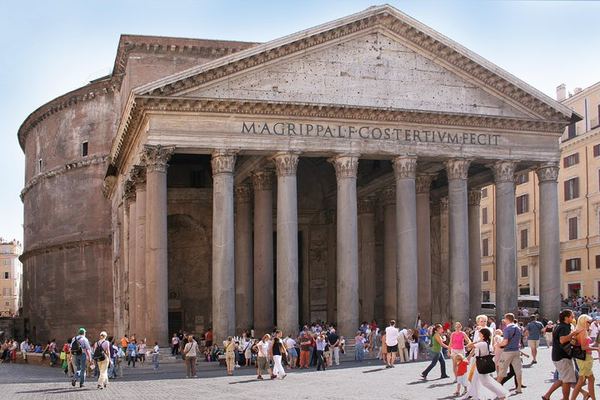
Rome Walking Tour from Caffè Greco to the Pantheon, with Ice Cream
Three hours from Caffè Greco through the government quarter to the Pantheon, taking in the columns and monuments most walking tours pass without stopping.
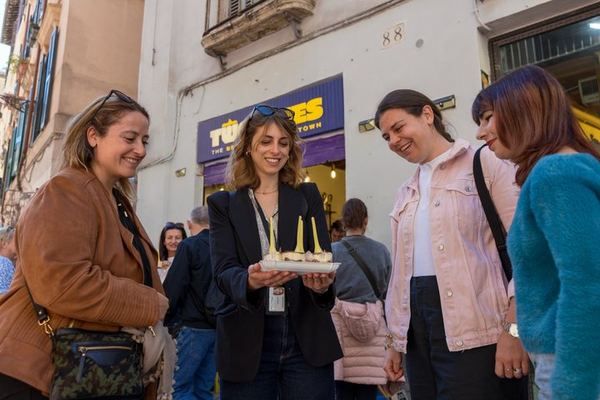
The Moka, Not the Espresso: A Sweet Walk Through Rome
Tazza d'Oro since 1946, a moka demonstration at Bialetti, and tiramisu on Via del Governo Vecchio. No alcohol, and it works for children.
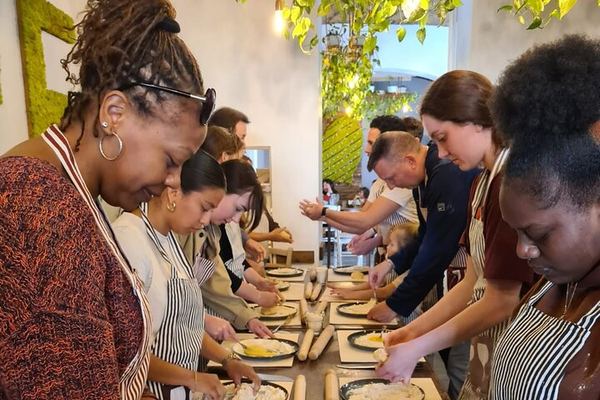
Two Hours with Paolo and Anna: Fettuccine and Tiramisu
A couple teaching a small class at a restaurant on Via della Croce, three minutes from the Spanish Steps. They stay before and after the lesson.
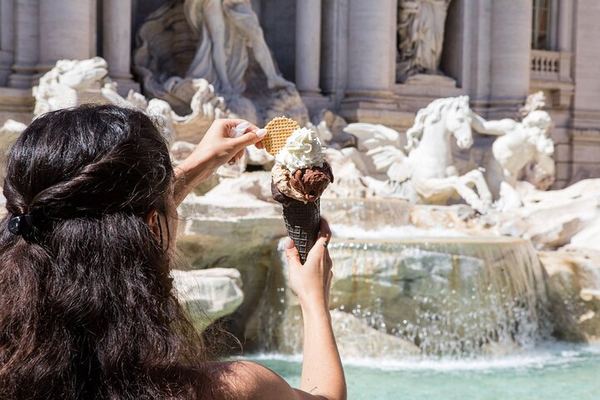
Under the Trevi District in 45 Minutes, Ending in Gelato
The site was found when the old Cinema Trevi was gutted, and its walls are still wet from the aqueduct that feeds the fountain overhead.
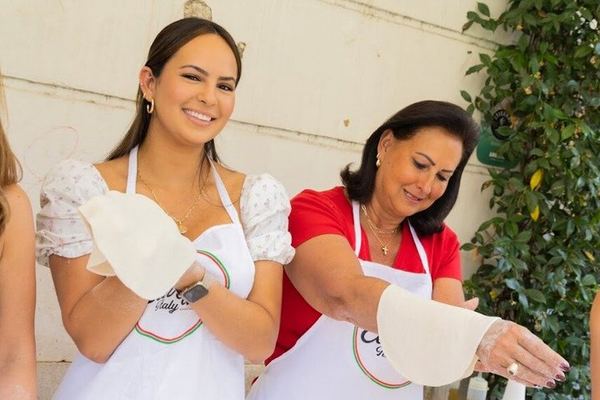
You Make the Gelato Too, Not Just Watch It Being Made
Both recipes are hands-on, which matters because gelato is the one you cannot improvise at home. The kitchen is minutes from Piazza Navona.
Ratings collected by Viator and Tripadvisor
Two bars, and they disagree on purpose
They are ninety-five metres apart and they are not versions of the same thing. Trying both takes twenty minutes and costs under three euro, which is the cheapest comparison available anywhere in this quarter.
| Where | On foot | Since | What to order, and what to know |
|---|---|---|---|
| Tazza d'Oro, Via degli Orfani 84 | 1 min | Company 1944, bar 1946 | The house blend, and in summer the granita di caffe con panna — coffee ice with cream above and below it. The roasting has moved out of the city; the bar has not |
| Sant'Eustachio il Caffe, Piazza Sant'Eustachio 82 | 2 min | 1938, on a site selling coffee since about 1800 | The Gran Caffe, which arrives sweetened unless you ask for it amaro. The machine is behind a screen so nobody can watch how it is made. Open until one in the morning, and two on Saturdays |
| Giolitti, Via degli Uffici del Vicario 40 | 4 min | Company 1890, this shop 1900 | Gelato, from a counter that has been there since the start of the last century. Open every day of the year, half past seven until midnight |
Two corrections while we are here, both of which circulate widely. Tazza d'Oro's Regina dei Caffè is the name of the blend, not a nickname for the bar. And Giolitti's 1890 is the family business, which began as a dairy elsewhere in the city and supplied the royal household; the gelateria on via degli Uffici del Vicario dates from 1900. The company's own pages give both dates, and almost everyone quotes one of them as though it were the other.
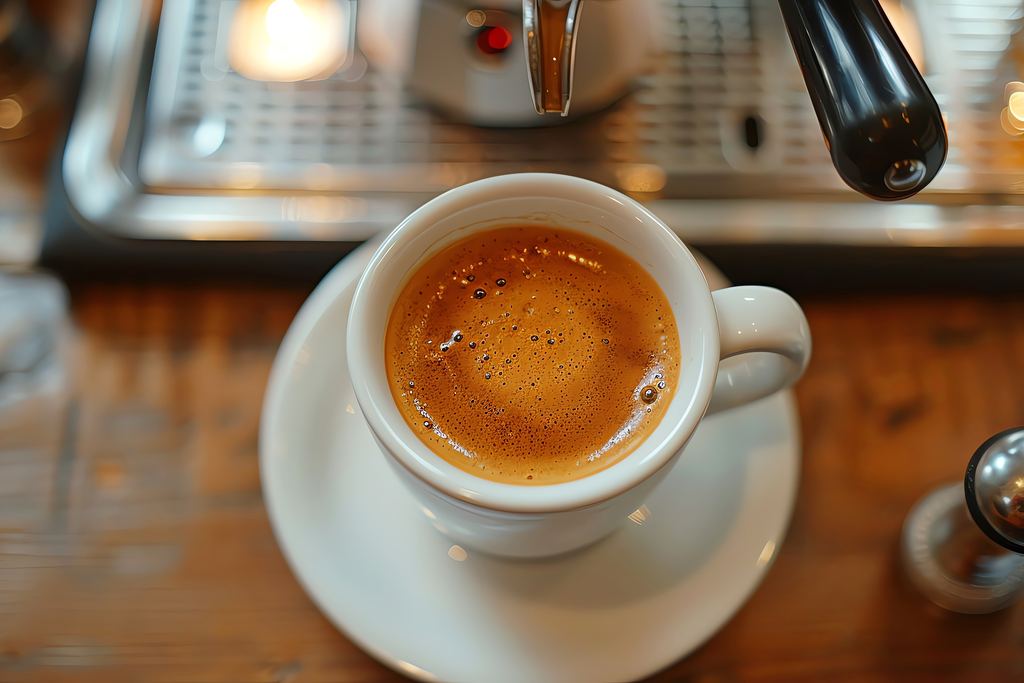
What it should cost
€1.29, and Rome is cheaper than that
A study published in August 2026 put the average price of an espresso at the counter across Italy at €1,29, up more than twenty per cent in five years. Rome's provincial average was still under €1,20, which puts it among the cheaper cities.
That is the number to hold against a bar with a view. At a table in Piazza della Rotonda you are paying for the chair and the view of the portico, and the difference can be several times the standing price. Neither is a scam — table service is a separate tariff and it is posted — but the two prices are not comparable.
There is one myth to retire here. Coffee prices in Italy are not fixed by law. The price has to be displayed; it is not capped. The idea that there is a legal maximum turns up in a great many English-language guides and has no source behind it.
How to tell real gelato from the other kind
The signs are consistent, physical and take three seconds from outside the door.
Look at the pistachio. Real pistachio is a dull grey-green, almost khaki. Bright emerald means colouring. Look at the banana, which should be greyish, like a cut banana left on a plate; and the mint, which should be white or pale, not blue.
Look at the height. Gelato piled into peaks a hand above the rim of the tub is standing up on air and stabiliser. Good gelato sags.
Look for lids. The best places keep it in covered steel pozzetti — round wells sunk into the counter — rather than in an open display, because air and light are what ruin it. You cannot see the colours at all, which is a form of confidence.
Prices in this quarter run from €2 to €4 for a small cone with two flavours, and up to six or seven for a generous one. It costs more the closer you get to the Trevi Fountain, and that is a location premium rather than a quality signal.
| Where | Address | On foot |
|---|---|---|
| Cremeria Monteforte | Via della Rotonda 22 | 1 min |
| Fiocco di Neve | Via del Pantheon 51 | 1 min |
| Punto Gelato, at Sant'Eustachio | Piazza Sant'Eustachio 47 | 2 min |
| Gelateria della Palma | Via della Maddalena 19 | 3 min |
| Il Gelato di San Crispino | Piazza della Maddalena 3 | 3 min |
| Giolitti | Via degli Uffici del Vicario 40 | 4 min |
| Gelateria del Teatro | Via dei Coronari 65-66 | 6 min |
| Tre Scalini, for the tartufo rather than the gelato | Piazza Navona 30-35 | 6 min |
| Fatamorgana | Via dei Chiavari 37 | 9 min |
We have deliberately not ranked those. Every English-language guide to gelato in Rome ranks them and they disagree with each other completely: the place one publication puts first, another lists under the places to avoid. Nine gelaterie in nine minutes is the useful fact. Which one you like is not something a website can tell you, and it costs three euro to find out.
Nine gelaterie within nine minutes, and every guide ranks them differently. The list is the useful part; the ranking is somebody's afternoon.

Three things you will be told that are not true
That the shakerato is banned, or marks you as a tourist. It is neither. Shaken iced espresso is a standard Italian bar drink, codified decades ago and ordered by Italians all summer. What is true, and more useful, is that it is not the local cold coffee at the Pantheon: here the summer drink is Tazza d'Oro's coffee granita with cream, which is a different thing and better.
That gran riserva on a coffee tin means something. For wine, riserva is a legal term with rules attached. For coffee it has no definition at all: any roaster may print it on anything. It is a brand name in the shape of a quality mark.
That you should buy a gelato and eat it on the Spanish Steps. Since July 2019 sitting on them carries a €250 fine and eating on them up to €400. It is enforced. This advice is still in circulation on major travel sites, and it is the single most expensive piece of outdated guidance in Rome.
Is any of this worth a tour?
For coffee, honestly, no. Two bars, ninety-five metres, three euro, twenty minutes. You do not need a guide to walk between them and the pleasure is in doing it yourself.
For gelato, a tasting walk earns its money if it gets you into three or four places you would not have chosen, and explains what you are tasting well enough that you can judge the next one alone. That is a real skill and it is worth an hour.
And the cooking classes that dominate this page — the ones that make gelato or tiramisù as part of a longer session — are among the best-reviewed things in the whole catalogue. If what you actually want is to spend an afternoon learning something, the page next door is the one you want, and this page will send you there.
Coffee and gelato at the Pantheon
Which is better, Tazza d'Oro or Sant'Eustachio?
They are ninety-five metres apart and it costs about three euro to settle it yourself, which is what we would do. Sant'Eustachio's house coffee is sweetened by default and hidden behind a screen; Tazza d'Oro's summer speciality is a coffee granita with cream. Both are a minute or two from the portico.
How much should an espresso cost?
Around €1,20 at the counter in Rome, against a national average of €1,29 in August 2026. A table in a square with a monument in it costs several times that, legitimately, and the tariff is posted. There is no legal cap on the price, whatever you may have read.
How do I know if the gelato is good?
Grey-green pistachio rather than emerald, greyish banana, pale mint, nothing piled above the rim of the tub, and ideally covered steel wells instead of an open display. Four visual checks, three seconds, no ranking required.
How much is a gelato?
€2 to €4 for a small cone with two flavours in this quarter, up to six or seven for a large one. It gets dearer as you approach the Trevi Fountain. Cone and cup usually cost the same; the cup lets you carry a spoon and a napkin, which matters more than it sounds in August.
Can I eat it on the Spanish Steps?
No. Sitting on them has been prohibited since July 2019, with a €250 fine and up to €400 for eating. It is enforced, and the advice to do it is still printed on a good number of travel sites.
Why are cooking classes on this page?
Because marketplaces file a class by what it makes, and several of the best ones include gelato or tiramisu. They are very good products with thousands of reviews. If you want a walk between coffee bars rather than an afternoon in a kitchen, read the durations: anything over two hours is a class.
If you would rather make it
Twenty classes near Piazza Navona, 10,074 reviews, and the highest weighted rating of any page on this site.
Aperitivo First, Then You Cook: An Evening Class in Trastevere
It opens with a prosecco or spritz before the flour comes out and ends sitting down with unlimited beer and wine. Fifteen guests at most, run by WalksDevour.
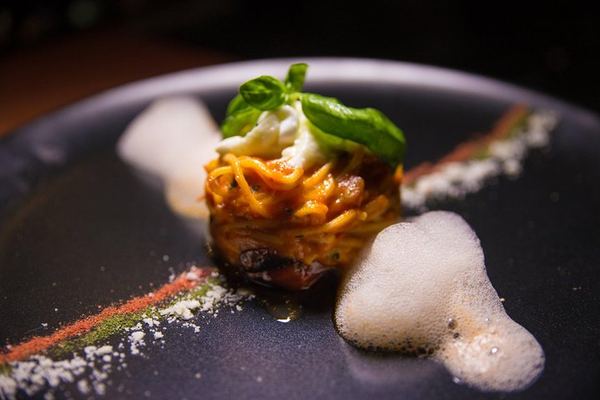
Chef in a Day: Campo de' Fiori Market, Then Cooking in Trastevere
The menu is decided at the Campo de' Fiori stalls rather than in advance, then cooked in a private apartment across the river. Ten people maximum.
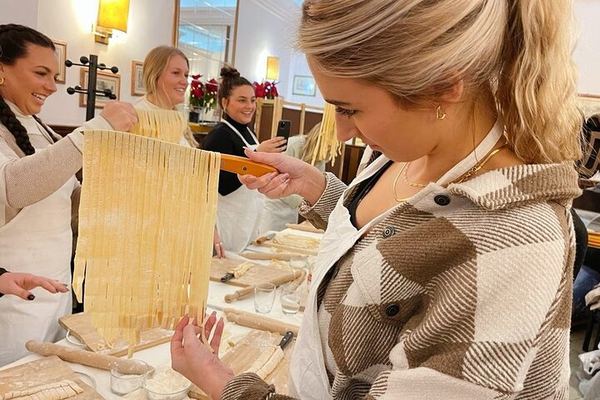
Fettuccine Class on Piazza Navona, at Ristorante Tucci
A pasta workshop held on the square itself rather than off it, with the fountains in the window and a technique that works at home with a rolling pin.
Ratings collected by Viator and Tripadvisor
The meal that goes around it
Twenty-three food tours through Campo de' Fiori, the Ghetto and Trastevere, with the market hours and the artichoke season that decide when to book.
Data verified on. Founding dates, addresses and opening hours from each bar's own website. The espresso price from an August 2026 study of Ministry data. The Spanish Steps fine from Comune di Roma.