
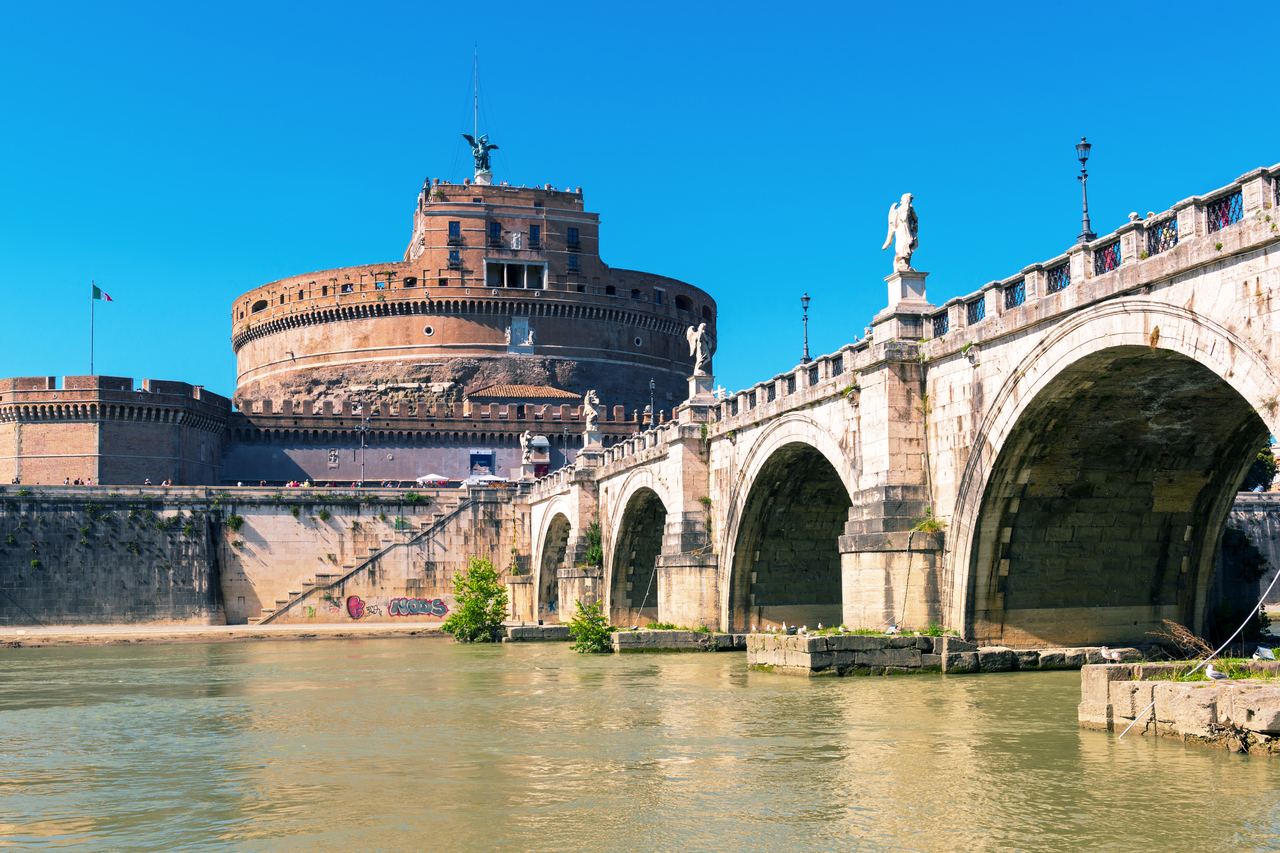
Castel Sant'Angelo from the Pantheon: Hadrian's other building
Seventeen minutes along the river, run by the same state body as the Pantheon — and here, unlike there, a skip-the-line ticket is a real thing.
The emperor who finished the Pantheon built himself a tomb two kilometres away, and it is still standing. Castel Sant'Angelo is seventeen minutes on foot from the portico, along the Tiber, and it is the attraction most often sold in the same booking as the Pantheon.
There is an institutional reason for that pairing, and it is not marketing. The two monuments are administered together, as a single directorate of national museums for the city of Rome. Same body, same rules, adjacent budgets.
Twenty-one products here, from €27 to €435, median €64, rating 4.64 across 2,116 reviews. And a detail that says a great deal about both buildings: eight of the twenty-one carry a skip-the-line flag, more than any other page on this site. At Castel Sant'Angelo that claim is true. At the Pantheon it is not.
One number to correct before you compare prices. The ticket is €18, not €16 and not €30. It rose on 1 July 2026, the same day the Pantheon went from €5 to €7. Aggregators quoting €16 are out of date; anything quoting €30 is a resale bundle being described as the entrance fee.
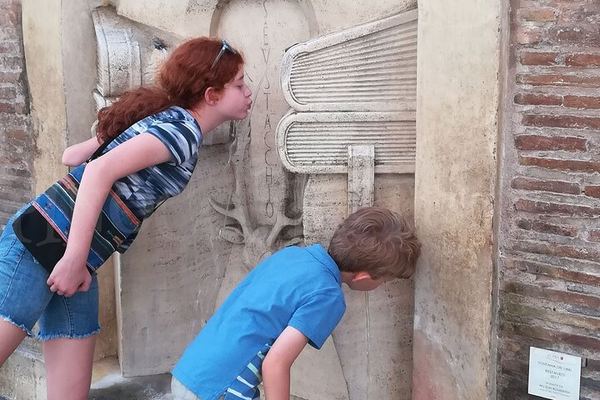
Castel Sant'Angelo and the Pantheon for Families, with Tablets
Starting inside a building that was a tomb, a fortress, a papal flat, a prison and a treasury, with tablets and games instead of a lecture.
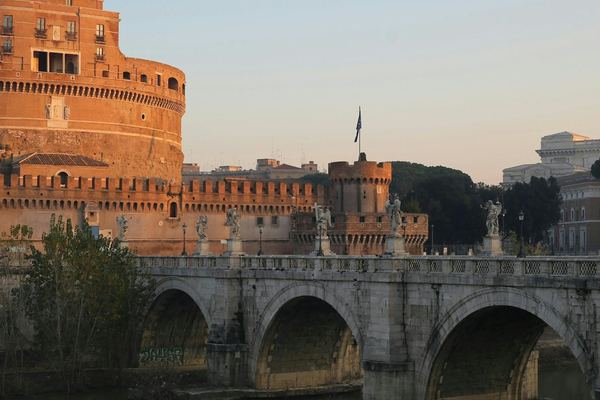
Castel Sant'Angelo and the Pantheon: Two Skip-the-Line Tickets
Both monuments were built by Hadrian within a few years of each other. One closes on Mondays and the other does not, which is worth knowing first.
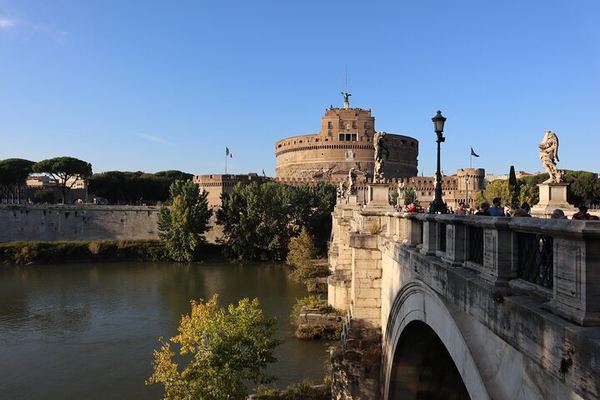
Castel Sant'Angelo Express: Straight Up to the Terrace
Built for speed, with a route through areas normally closed to the public. The ticket is locked to the date and slot you select.
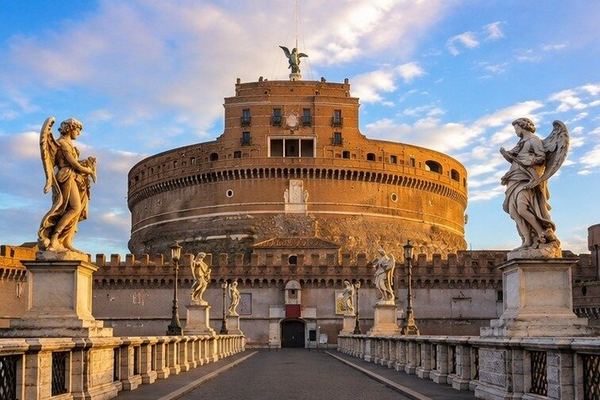
Castel Sant'Angelo Fast-Track: One Route, Bottom to Top
The architecture sets the order and you cannot wander: what a self-guided ticket buys is time at each level, not a different sequence.
Castel Sant'Angelo in Two Hours: Treasury, Cells, Apartments
Follows the building through its jobs in order: emperor's tomb, papal home, state strongroom, prison and scaffold, all in the same walls.
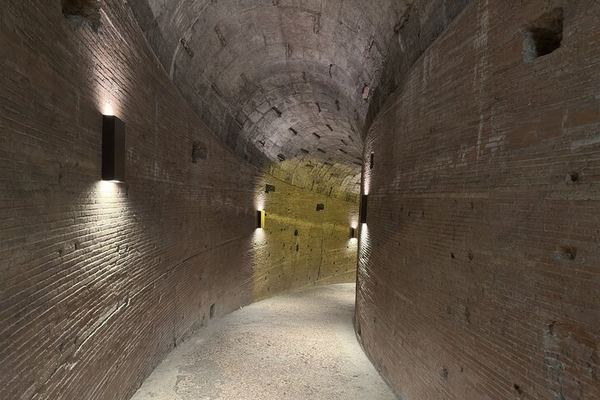
Castel Sant'Angelo Priority Ticket, Guide Optional
A ticket, not a tour: no group to keep up with and no fixed exit time, with a multilingual audio guide available if you want one.
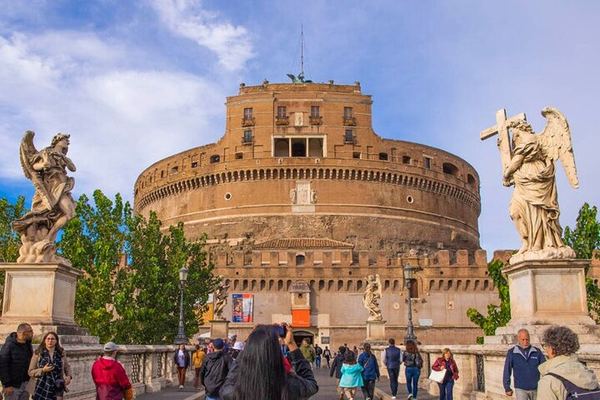
Castel Sant'Angelo Privately: The Borgia, the Cells, the Passetto
Follows the fortress through its worst centuries, from the torture room in the courtyard to the corridor Dan Brown made famous.
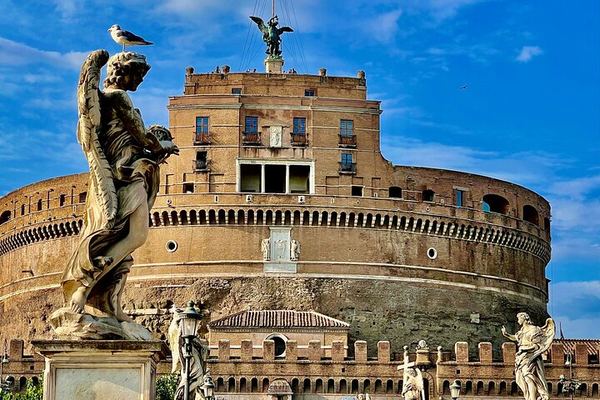
Castel Sant'Angelo Privately: The Cell Behind the Trapdoor
A prison built into a ventilation shaft above Hadrian's ramp, reachable only through a trapdoor, metres from the gilded papal rooms.
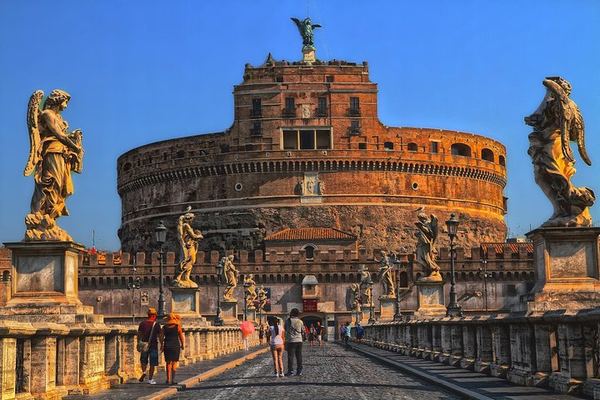
Castel Sant'Angelo Privately: Where the Vatican Meets Rome
Siege refuge, treasury and prison ran in the same walls at once. The route includes stairs, and all sales are final.
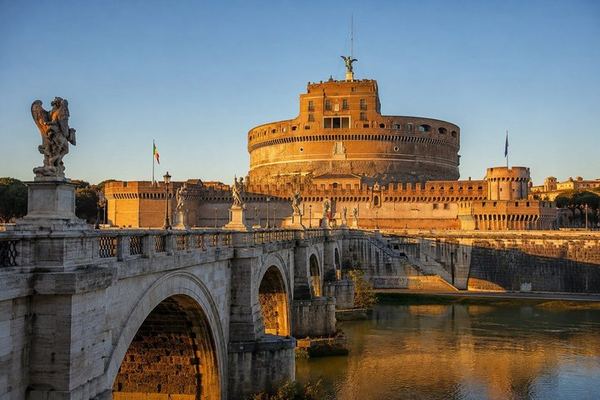
Castel Sant'Angelo Skip-the-Line: The Full Museum Route
Covers the whole stacked building, from the Roman ramp through the courtyards with their cannonballs to the loggias above the river.
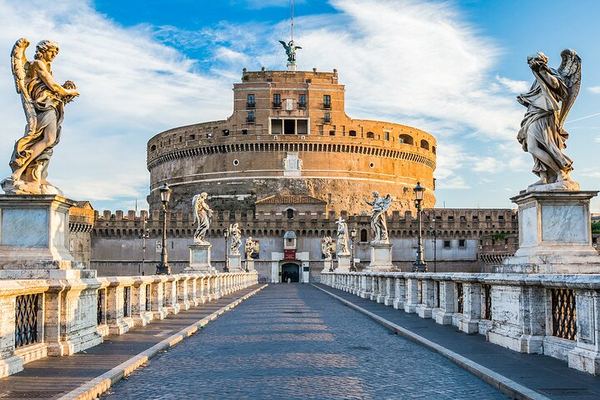
Castel Sant'Angelo Skip-the-Line, with Someone at the Gate
A host at the castle handles the ticket if anything goes wrong. Allow ninety minutes, and pick your hour: the terrace changes with the light.
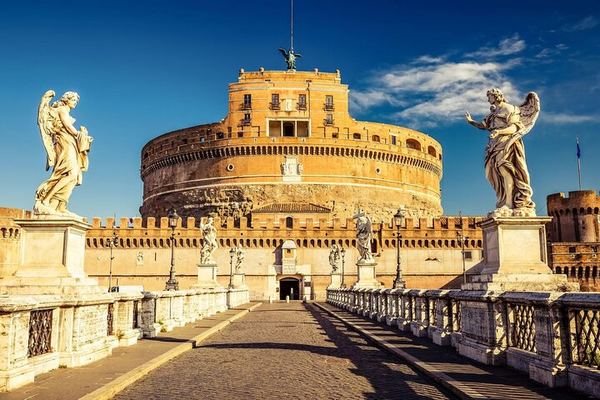
Castel Sant'Angelo with a Live Guide, Arrive Twenty Minutes Early
Check-in and security take twenty minutes and the group will not wait, so the arrival time is not a suggestion. Blue flag at the main gate.
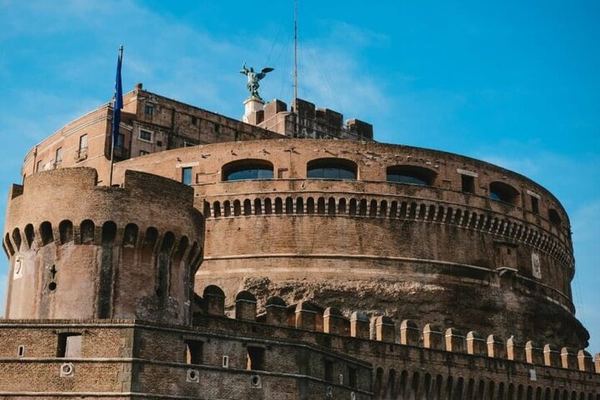
Castel Sant'Angelo with an Audio Guide and the Armoury
Most listings stop at the terrace: this one takes in the rooms of arms the popes kept for the sieges that actually came.
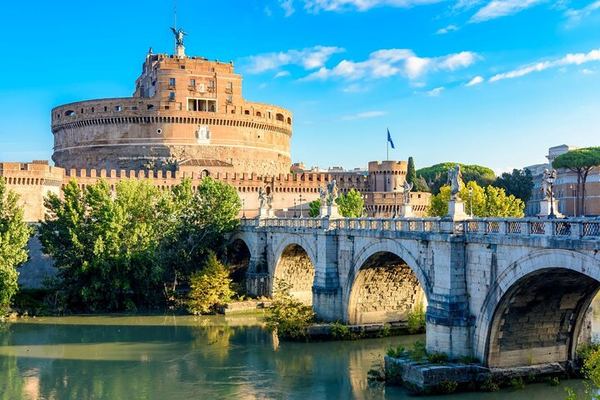
Castel Sant'Angelo, with the Passetto di Borgo on Weekends
Only the Friday and Saturday private option walks the walled corridor a pope escaped through in 1527. Closed Mondays whichever you choose.
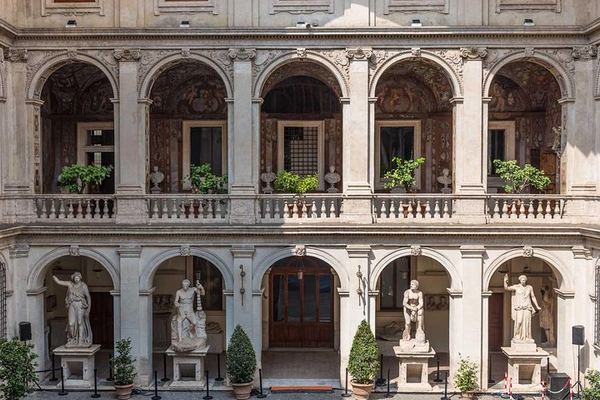
Palazzo Altemps and Castel Sant'Angelo, Privately
Pairs the castle with a museum you can have to yourself: Roman sculpture standing in the frescoed rooms of a Renaissance palace.
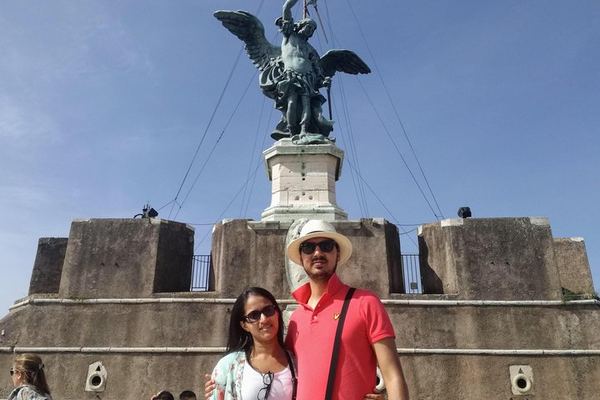
Paul III's Apartments and the Courtyard of Executions
A pope's decorated rooms and the open ground where the sentences were carried out, a short walk apart inside the same walls.
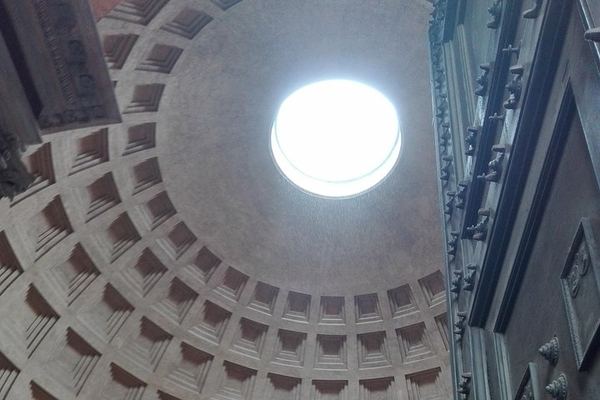
Private Rome Walk from the Spanish Steps to Castel Sant'Angelo
A private route that carries on to the Tiber, where the shape of the city finally makes sense, taking in the free Caravaggio chapel on the way.
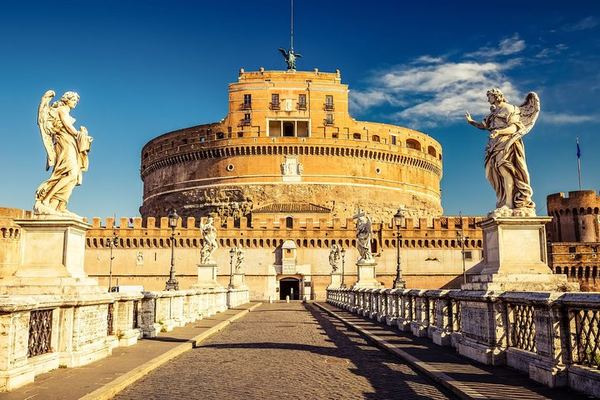
Reading the Renaissance Rooms of Castel Sant'Angelo
Pagan gods painted on a pope's walls to argue that antiquity belonged to the papacy. Without a guide the rooms read as decoration.
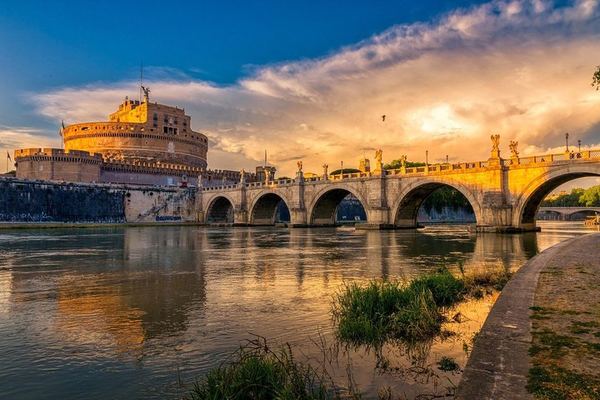
The Angel That Named the Castle: Skip-the-Line Guided Visit
Built around the 590 procession that gave the fortress its name, with the Bernini workshop angels on the bridge outside. Bring original ID.
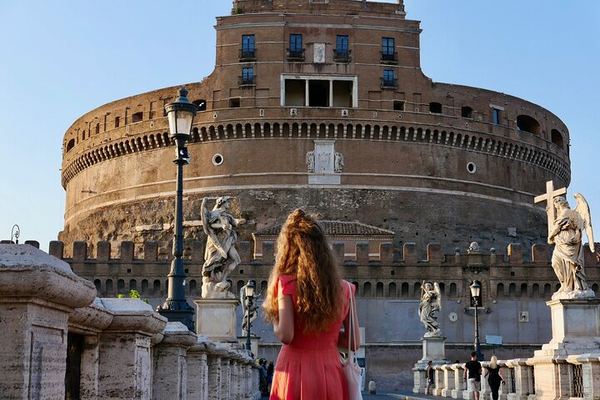
The Gran Loggia and the Painted Ceilings, Shared or Private
Reads the ten angels on the bridge in sequence, then the grotesques and trompe l'oeil inside. States clearly that the Passetto is not included.
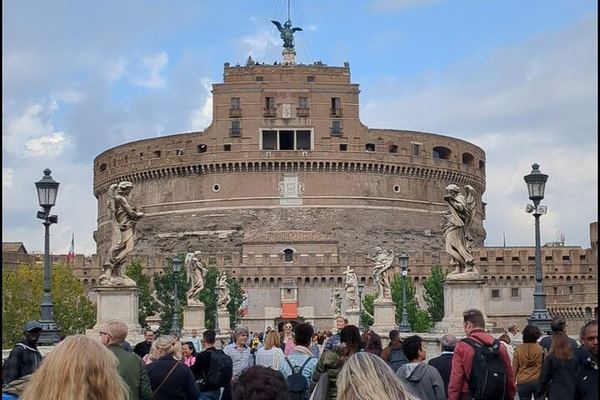
Up the Roman Spiral Ramp to the Hall of Urns, in Two Hours
The climb is the point: a continuous curving ramp built for a funeral procession, still the way visitors reach the emperor's ashes.
Ratings collected by Viator, Tripadvisor and Tiqets
Two monuments, one office, opposite answers
Because the Pantheon and Castel Sant'Angelo are run by the same directorate, the differences between them are decisions rather than accidents — and the biggest one is about queueing.
| The Pantheon | Castel Sant'Angelo | |
|---|---|---|
| Full ticket | €7,00 | €18,00 |
| Reduced, EU 18–25 | €2,00 | €2,00 |
| Open | Every day, 09:00–19:00 | Tuesday to Sunday, 09:00–19:30 |
| Closed | 25 December and 1 January only | Every Monday |
| Priority entrance | Does not exist. The Ministry says so in writing | Exists, and is sold |
| How long inside | About 30 minutes | 90 minutes to two hours |
| Free days | First Sunday of the month, and during Mass | First Sunday of the month, and four fixed dates |
That fifth row is why this page reads differently from the rest of the site. On every Pantheon page we spend a paragraph explaining that skip the line is a phrase without a referent. Here it has one: the castle has a separate entrance for holders of pre-booked tickets, the queue at the ordinary window is real, and paying to avoid it buys something.
If you have read the rest of this site and concluded that we are against the phrase, we are not. We are against it being used where it means nothing.

What it started as
A tomb with a garden on the roof
Hadrian commissioned it around 135 AD, and it was finished by his successor Antoninus Pius in 139. His ashes went in the year before it was done. The last emperor buried here was Caracalla, in 217.
The shape underneath everything is still legible: a square base carrying a vast cylinder, faced in marble, with a frieze of ox skulls and a corridor of coloured stone spiralling up inside it. On top there was a garden, and above that a gilded bronze chariot.
It became a fortress around 401, when the emperor Honorius folded it into the city walls, and it has been military architecture ever since — refuge, prison, barracks — until it was decommissioned in 1901. Almost every later pope added something. What you walk through is nineteen centuries of alterations to a tomb.
Tomb, fortress, refuge, prison, museum
The same cylinder, repurposed about six times.
The origins
139 AD
Hadrian's mausoleum is finished
Commissioned by the emperor around 135 and completed under Antoninus Pius. Hadrian's ashes were placed here in 138. Imperial burials continued to Caracalla in 217, and then stopped.
401-403
It becomes part of the city wall
Honorius incorporates the mausoleum into the Aurelian defences. From this point it is a fortress that happens to contain a tomb, and the marble facing begins to disappear into other buildings.
590
The archangel, and the name
During a plague, Gregory the Great is said to have seen the archangel Michael sheathing his sword above the building, signalling the end of the epidemic. The castle has been named after that vision ever since. The bronze angel on the roof today is Verschaffelt's, of 1753 - the fifth or sixth in the position.
The growth
1277, probably
The Passetto is built
An 800-metre covered wall walk connecting the castle to the Vatican. The date is an attribution rather than a record; the alternative puts it a century later. What is documented is its use: Alexander VI escaped along it in 1494, and Clement VII in 1527 while Rome was being sacked.
1527
The Sack of Rome
The pope and his court hold out inside while the city is destroyed. Benvenuto Cellini, who was there, claimed to have fired the shot that killed the enemy commander. He was later imprisoned in the same building, as was Giordano Bruno, for six years.
1630 onwards
The popes rebuild it, and Bernini decorates the approach
Urban VIII pulls down the earlier fortifications and recasts the defences. Between 1667 and 1669 Clement IX has ten angels placed along the bridge in front, designed by Bernini and largely carved by his workshop. The building's most photographed feature is the path to its door.
Today
1901
It stops being military
Decommissioned and turned over to become a museum. The visitor route now runs across seven levels, from the burial chamber at the bottom to the terrace under the angel. In 2016 it took over 1.2 million visitors.
Everything at this monument has been something else first. The garden became a gun platform, the tomb chamber became a cell, and the escape corridor became a tour.
The Passetto, and the Saturday nobody sells
The Passetto di Borgo — the raised covered corridor running eight hundred metres from the castle towards the Vatican — reopened to visitors in December 2024, and hardly anybody in English has noticed.
It is visited on its own schedule, separately from the ordinary museum route. Daytime visits run Friday, Saturday and Sunday mornings, and there is an evening visit on Saturdays, from 19:00 to 23:00, when the museum itself is shut — the bastions, the chamber of the urns, the spiral ramp and the ancient entrance corridor, in the dark, with the city lit below.
Bookings go through the state's own portal. It is not sold by marketplaces, it is not in the twenty-one products on this page, and it is the only genuinely nocturnal thing in this whole quarter apart from the Pantheon's experimental August openings.
If you have read a novel in which somebody runs along a secret passage from the Vatican to a castle, this is the passage, and you can walk part of it on a Saturday night.

Eighteen euro, and the days it is less
Full admission is €18,00. EU citizens aged 18 to 25 pay €2,00, which is the same concession the Pantheon offers and is one of the better deals in Rome. Under-18s are free.
It is free on the first Sunday of every month, and on a handful of fixed dates through the year. There is also a €5 Monday rate running from early August to early December 2026, sold at the ticket office only — and since the castle normally closes on Mondays, that applies to the special Monday openings rather than to every Monday. Check the calendar before building a day around it.
Two practical notes that the product pages do not carry. The visit is seven levels connected by ramps and stairs, and the spiral ramp is the original Roman one, which means it is stone, uneven and continuous. And the terrace at the top is where the view is — across the river to the whole centre, with the Pantheon's dome visible if you know where to look. Budget ninety minutes minimum; two hours if you intend to read anything.
Visiting Castel Sant'Angelo
How much is a ticket?
€18,00 full, €2,00 for EU citizens aged 18 to 25, free under 18 and on the first Sunday of the month. The price rose from €16 on 1 July 2026. Anything quoting €30 is a reseller's package rather than the admission.
Is it really closed on Mondays?
Yes, and this is the single most common wasted journey in the quarter. Tuesday to Sunday, 09:00 to 19:30, last entry 18:30. There are occasional special Monday openings in the afternoon and evening, but they are announced individually and are not a standing arrangement.
Does skip the line work here?
Here, yes. Unlike the Pantheon, Castel Sant'Angelo has a genuine priority entrance for pre-booked tickets and a real queue at the ordinary window in summer. Eight of the twenty-one products on this page sell it and they are describing something that exists.
How long does it take?
Ninety minutes to two hours. It is seven levels, and the route climbs through an ancient spiral ramp, papal apartments and a set of terraces before reaching the top. It is much more of a visit than the Pantheon, which is half an hour in one room.
Can I walk the Passetto?
Part of it, since December 2024, on its own schedule: Friday to Sunday mornings, and an evening visit on Saturdays from 19:00 to 23:00 when the museum is closed. It is booked through the state portal rather than through marketplaces, and none of the products on this page includes it.
Is it worth combining with the Pantheon?
They are seventeen minutes apart and run by the same body, so logistically yes. Bear in mind the asymmetry: the Pantheon is €7 and half an hour, the castle is €18 and two hours. A combined ticket sold at €50 is charging €25 for the convenience, which may or may not be what you want.
Other pairings from the portico
Twenty-one tours that put the Pantheon together with one more place, with the real walking times and what each second stop now costs.
Castel Sant'Angelo and the Pantheon for Families, with Tablets
Starting inside a building that was a tomb, a fortress, a papal flat, a prison and a treasury, with tablets and games instead of a lecture.
Castel Sant'Angelo and the Pantheon: Two Skip-the-Line Tickets
Both monuments were built by Hadrian within a few years of each other. One closes on Mondays and the other does not, which is worth knowing first.
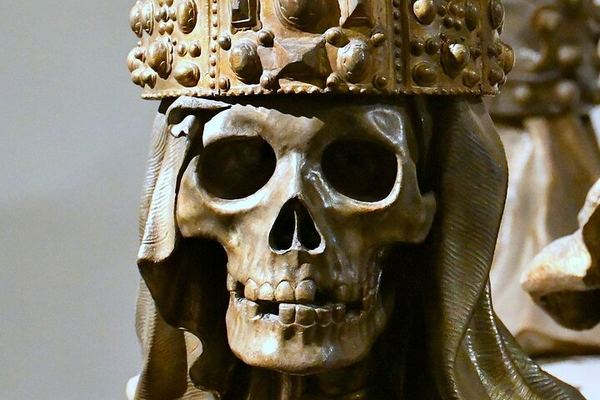
From the Capuchin Crypt to the Pantheon, Ending Inside the Rotunda
From a room of arranged bones to the calmest interior in Rome, in that order on purpose, finishing inside the rotunda rather than in the square.
Ratings collected by Viator, Tripadvisor and Tiqets
The castle in fiction, and the castle in the record
Twenty-one tours of Rome's legends and crimes, including the Angels and Demons trail — and which of its stops the Vatican's own archive contradicts.
Data verified on. Prices, hours, free days and the Monday rate from CoopCulture, the official concessionaire. Passetto arrangements from the museum's own pages. Walking time measured on street routes.