
The Pantheon was free to enter for about fourteen centuries. It stopped being free on 3 July 2023, and on 1 July 2026 the price went from five euro to seven. Most of the English-speaking web has not noticed. When we checked twelve Pantheon websites in August 2026, ten of them still printed 5.00 euro or gave no price at all, and one of those had updated its page the previous month.
So here is the number, with the source next to it, and the date we checked. Below that, the more useful question: four different organisations sell something they call a Pantheon ticket, and only one of them is the Italian state.
What the state charges
| Who | Price | Notes |
|---|---|---|
| Adults | 7.00 EUR | Raised from 5.00 on 1 July 2026 |
| EU citizens aged 18 to 25 | 2.00 EUR | Unchanged by the increase |
| Under 18 | Free | Any nationality |
| Residents of the Comune di Roma | Free | In force since 1 April 2026, reviewed after three years |
| Licensed EU tourist guides | Free | A tour manager without the licence pays, and may not give explanations |
| Visitors with a disability, plus one companion | Free | Applies across Italian state museums |
| Everyone, first Sunday of the month | Free | Cannot be booked online. One queue for all |
| Everyone, during Mass | Free | 17:00 Saturdays and eves, 10:30 Sundays and feast days |
Two things follow from that table that nobody puts in a headline. The first is that roughly half of the people inside the Pantheon paid nothing. In 2024 the monument took 14,712,752 euro from 4,086,947 visitors, which is 3.60 euro a head against a five euro ticket. The second is that the free routes are real, documented and easy to use, which is exactly why the sites that sell tickets do not mention them.
The four people who will sell you a ticket
This is the part that generates three years of unresolved forum threads, and it is not complicated once somebody writes it down. Four separate organisations have something to sell, and they are not the same organisation.
| Who they are | What they sell | Price | How to tell |
|---|---|---|---|
| The Italian state | Admission. Nothing else | 7.00 | The building is state property. Tickets go through the Musei Italiani portal and app, or the desks and machines on site |
| The Chapter of the basilica | The audio guide and its own guided visits | Varies | The church side of the building, which is a working parish. Its site is the one ending .org |
| A commercial concession | The audio guide, packaged with entry | About 17.50 | Holds three domains built around the monument's name. Not the state and not the church, though the naming makes that hard to see |
| Online travel agencies | Entry, or entry plus a service | 10.00 to 17.50 | Viator, Tiqets, GetYourGuide, Civitatis and the affiliate sites that resell them |
The single most useful fact here: the state does not sell an audio guide at all. The only things on the government portal are individual tickets, group tickets, evening openings and the walk behind the rotunda. So every product advertising an official audio guide means the Chapter's audio guide, which is a different organisation and a different transaction. That ambiguity is where the threads titled is this a scam? come from, and it is not really a scam, it is two landlords in one building.

On the day
You can just turn up and pay
There is no compulsory advance booking and no booking fee on the official channel. Desks and card machines operate on site, and the cash desk is on the left of the entrance as you face it.
Two practical limits. The ticket is personal: your name is on it and staff check identity documents at the door, and after 10 March 2026 the name can be corrected only once, at least 72 hours ahead. And the state calendar is set month by month, with tickets released around the middle of the previous month, so nothing genuinely exists more than about six weeks out.
If a booking page offers you a guaranteed time nine months from now, it is selling a catalogue entry, not a slot.
What resellers add, and the price inversion nobody mentions
We read the live catalogues of three affiliate platforms in August 2026 and worked out the median asking price for each kind of product that includes admission. The result contains one genuine oddity.
| What you buy | How many | Lowest | Median | Highest |
|---|---|---|---|---|
| The state ticket, direct | - | 7.00 | 7.00 | 7.00 |
| Admission resold on its own | 19 | 7.00 | 20.00 | 286.00 |
| Admission plus an audio guide | 12 | 4.50 | 13.00 | 25.00 |
| Guided visit, standard group | 9 | 12.00 | 43.00 | 69.90 |
| Guided visit, small group | 5 | 32.00 | 59.00 | 129.00 |
| Private visit | 33 | 24.99 | 195.00 | 860.00 |
Look at the middle two rows. The bare ticket costs more than the ticket with a commentary attached: a median of 20.00 against 13.00. Sellers who add nothing to the state's seven euro mark it up by thirteen; sellers who actually include a service take less. That is the opposite of what anyone would predict, and it is the strongest argument on this page for not buying admission on its own from anybody but the state.
If you are going to pay a middleman, pay one who is giving you something. The commentary is cheaper than the convenience.
The two products priced at 4.50 and 4.99 are below the state's own ticket, which is not possible for a full adult admission. Either they are reduced fares presented as full ones, or the headline price excludes the entry. We have not published them, and neither should anyone else without opening the booking flow first.
One number here will look wrong against the rest of this site, so here is why it is not. The medians above describe the whole Viator catalogue for Rome, unfiltered: nineteen products resell bare admission and the middle one asks 20.00. What we actually list under Entry Tickets is a selection of fourteen, with a median nearer 10.35, because the selection drops the listings that were poor value. Both figures are true and they measure different things — one the market, the other what survived the filter. If they matched, the filter would not be doing anything.
The one thing worth paying extra for
Oltre il Pantheon, which the state sells under that Italian name even in English, is a 45-minute visit to the spaces behind the rotunda, in what survives of the Basilica of Neptune. It costs 10.00 euro on top of the 7.00 admission, in groups of 25, in Italian or English, every day except the first Sunday of the month.
It is the only genuinely exclusive thing on sale at this monument, it appears on exactly two products in the entire affiliate catalogue, and in English almost nobody explains how to buy it. We wrote a page about it.
Common questions about the price
How much does it cost to enter the Pantheon in Rome?
7.00 euro for adults, since 1 July 2026. It was 5.00 before that date, which is what most websites still say. EU citizens between 18 and 25 pay 2.00, and under-18s are free.
Is the Pantheon free?
Not generally, but often. It is free for under-18s, for residents of Rome, for licensed EU guides, for visitors with a disability and a companion, for everyone on the first Sunday of each month, and for anyone attending Mass. It stopped being free for everyone else in July 2023.
Do I need to book in advance?
No. There is no compulsory booking and no booking fee on the official channel. Tickets are sold at the monument, and the cash desk moves faster than most people expect. Booking gets you a fixed time slot, not a faster queue.
Is a skip-the-line ticket worth it?
There is nothing to buy. The ministry states in writing that skip-the-line entry is not available at the Pantheon, and the ticket is personal with document checks. Products sold under that name give you a time slot, or a voucher you must collect somewhere else first.
Why do some tickets cost 17.50 when the state charges 7.00?
Because they bundle the audio guide, which the state does not sell. The commentary belongs to the basilica's Chapter, a separate organisation from the ministry that owns the building. You are buying two things from two owners through one checkout.
Can somebody else use my ticket?
No. It carries your name and identity documents are checked at the door. Since 10 March 2026 the name can be changed once only, and at least 72 hours before the visit. The ministry also warns that tickets bought from unauthorised resellers may not get you in.
If you would rather have it in your hand before you arrive
Admission resold with a fixed time slot. Every one of these includes entry to the monument.
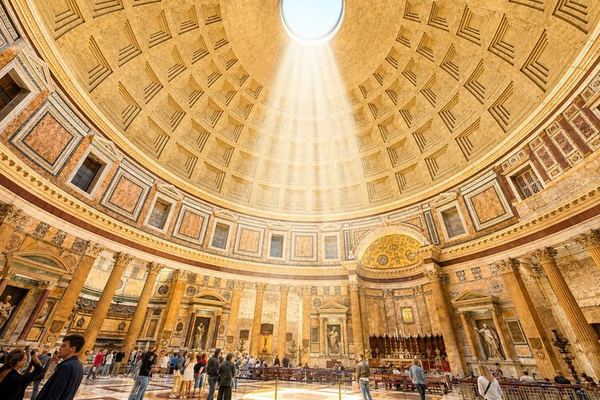
Pantheon Admission and Interactive Audio Guide, Sent by Email
No meeting point here: Golden Ticket emails the pass and the audio guide, and at the door the middle security queue is the one for visitors who booked.

Pantheon Entry Ticket for a Visit with No Guide and No Clock
Admission on its own, with no commentary and no group to keep up with. Reserved ahead, so the purchase queue at the door is not part of the visit.
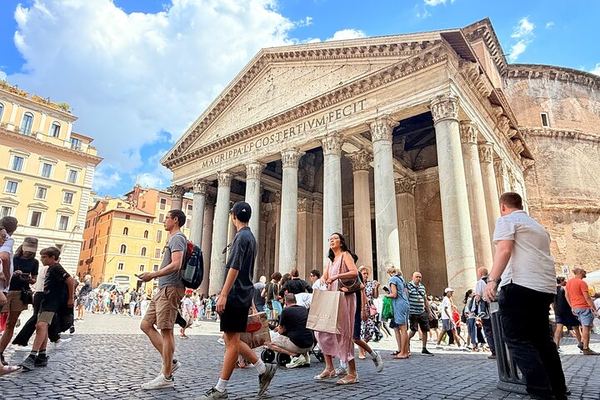
Pantheon Entry Ticket with a Host at Piazza Capranica and a Phone Audio Guide
A host with a white flag meets you in Piazza Capranica and walks you through the door; from there the audio guide runs on your own phone at your own pace.
Ratings collected by Viator and Tripadvisor
Not sure which of these you actually need
Four families of product, one comparison table, and an honest case for buying nothing at all.
Data verified on. Prices and exemptions from the Direzione Musei nazionali di Roma; visitors and revenue from the Ministry of Culture, 2024; reseller medians from the live Viator, Tiqets and Civitatis catalogues.