
Pantheon Museum · Tour
The Pimpaccia, the Golem and a Slice of Pizza
A dark-history walk that stops to eat, and that names its ghosts. It starts at the Portico d'Ottavia in the Jewish quarter, with the mystical traditions the district carried, the symbolism attached to the number seven, and the Golem, the figure said to have been made to protect the community when it needed protecting. On Via dei Giubbonari, once the street of the tailors, the ghost is Olimpia Maidalchini, whom Romans called the Pimpaccia. She ran the city through her brother-in-law the pope, accumulated a great deal of money and was widely detested for both. She is supposed to still be about here after dark. On Via Giulia the subject is Giulia Tofana and the Aqua Tofana she sold: a few drops in wine or soup, slow, undetectable, bought by women with no legal way out of a marriage. Between those, Roman pizza. Later, wine and local biscuits. The route also covers the Passetto del Biscione and its frescoed vault, the madonnelle, Giordano Bruno's statue in Campo de' Fiori, the bone-fronted church of Santa Maria dell'Orazione e Morte, and the Arco dei Banchi, where a plaque still marks how high the Tiber came. It ends at the Ponte Sant'Angelo with Mastro Titta.
What's included
- Pizza and local sweet
- Alcoholic Beverages
Itinerary
The map could not be loaded. Please try again in a moment.
Via del Portico d'Ottavia, 29, Roma
At the beginning of Via del Portico d'Ottavia, in front of the Hostaria sign.
The Portico of Octavia
The Portico d'Ottavia stands at the entrance to the Jewish quarter, part of a complex Augustus built and dedicated to his sister. Here the guide covers the mystical traditions of Kabbalah, the symbolic weight of the number seven, and the Golem, the figure said to have been made to protect the community during persecution. The columns still standing over the street are the surviving front of a much larger building.
Roman Ghetto
The Jewish quarter was created in the 16th century and kept its traditions through three centuries of confinement. The stop covers Kabbalah, the symbolism of the number seven, and the ghost of Berenice. By day it is bakeries and narrow lanes; after dark it reads differently.
Via dei Giubbonari is a lively street connecting Campo de’…
Via dei Giubbonari runs from Campo de' Fiori to Piazza Cairoli and takes its name from the tailors who worked it. The ghost here is Olimpia Maidalchini, the Pimpaccia, a 17th-century noblewoman who exercised real power through a pope and was hated for how she used it. She is said to walk the street at night.
Campo De' Fiori
Campo de' Fiori is a market square by day. At the centre stands Giordano Bruno, the friar and philosopher burned alive here in 1600 for heresy, hooded, facing the Vatican. The guide covers his trial and his death, and what else the square was used for over the centuries.
Chiesa di Santa Maria dell'Orazione e Morte
Santa Maria dell'Orazione e Morte was built in the 16th century by a confraternity that gave proper burial to people who drowned in the Tiber or died with no family to claim them. The facade carries carved skulls, winged skeletons and Latin warnings, and inside there are niches of real bone. It was a working sanctuary for the anonymous dead, and it looks like it.
Via Giulia
Via Giulia is quiet and expensive now. In the 17th century Giulia Tofana lived here and sold the Aqua Tofana: a few drops in wine or soup, no taste, no smell, and death slow enough to look natural. Her customers were mostly women trapped in marriages the law would not release them from, and her network reached both the nobility and the poor.
Arco Dei Banchi
Near Castel Sant'Angelo, the Arco dei Banchi takes its name from the benches of the bankers and money changers who worked around it. Pilgrims heading for the Vatican sheltered under its vault, lit at night by a small image of the Madonna. A centuries-old plaque on the wall records how high the Tiber rose in one of its floods, which is worth standing under to appreciate.
St. Angelo Bridge
The walk ends at the Ponte Sant'Angelo, with Bernini's angels each carrying an instrument of the Passion. This was where Mastro Titta, the papal executioner, carried out much of his work, and the guide tells that story here, with the castle behind and the river underneath.
Via del Banco di Santo Spirito, Roma
In front of the Sant'Angelo restaurant.
Not included
- gratuities for the guide
Good to know
- Infants and small children can ride in a pram or stroller
- Service animals allowed
- Public transportation options are available nearby
- Suitable for all physical fitness levels
Show 4 moreShow less
- non suitable for gluten-free
- Up to 10 travelers per booking.
- Mobile or paper ticket accepted
- Guiding available in: en, fr, es.
Reviews
Loading reviews…
Keep exploring
More experiences in Mysteries, Legends & Ghosts
-
 Free cancellation
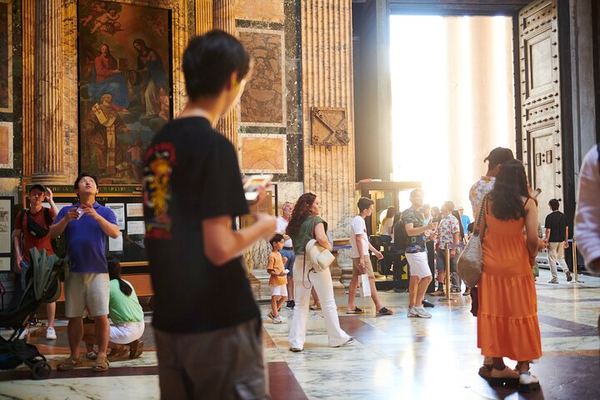
Angels and Demons Privately: Sorting the Novel from the Record
4.9 (8) 4.9 stars out of 5, 8 reviewsThe Bavarian Illuminati postdate Bernini by a century, and what actually happened between the artists and the Church is stranger. Hotel pick-up.
€ 382.50 -
 Free cancellation
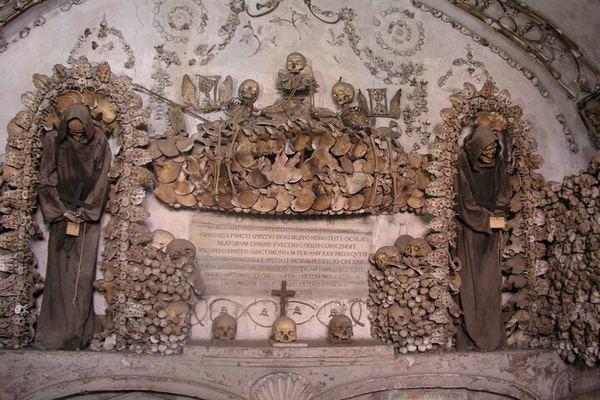
Combo: The Bone Crypts and the Dark Side, Two Hours Each
5.0 (27) 5.0 stars out of 5, 27 reviewsTwo walks at a reduced price, taken on one evening with a break or on separate nights. The operator calls you to confirm which.
€ 55.00 -
 Free cancellation
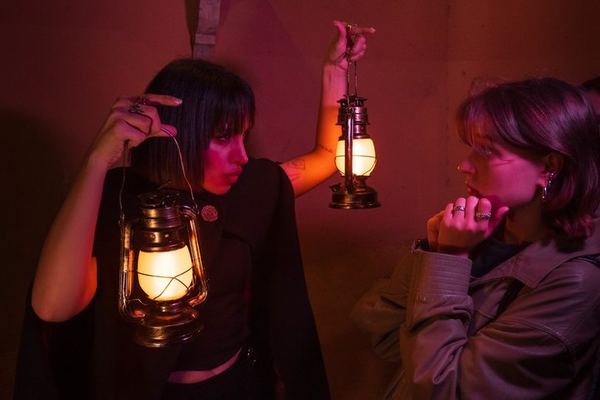
From the Bars to the Bridge: A Ghost Walk in One Direction
4.8 (42) 4.8 stars out of 5, 42 reviewsThe stops get quieter and worse in order, from a square full of tables to the bridge where the executed were displayed. Kit and certificate included.
€ 25.00
Ratings collected by Viator and Tripadvisor