
Underground Rome Self Guided: Two of the Three Sites by the Pantheon Are Shut, and One Is Still on Sale
We checked all three underground sites in the Pantheon's quarter of Rome on 28 October 2026, one official page at a time. Only Vicus Caprarius is open, at €4 at the door. The stadium under Piazza Navona is closed for restoration, and its tickets are still up.
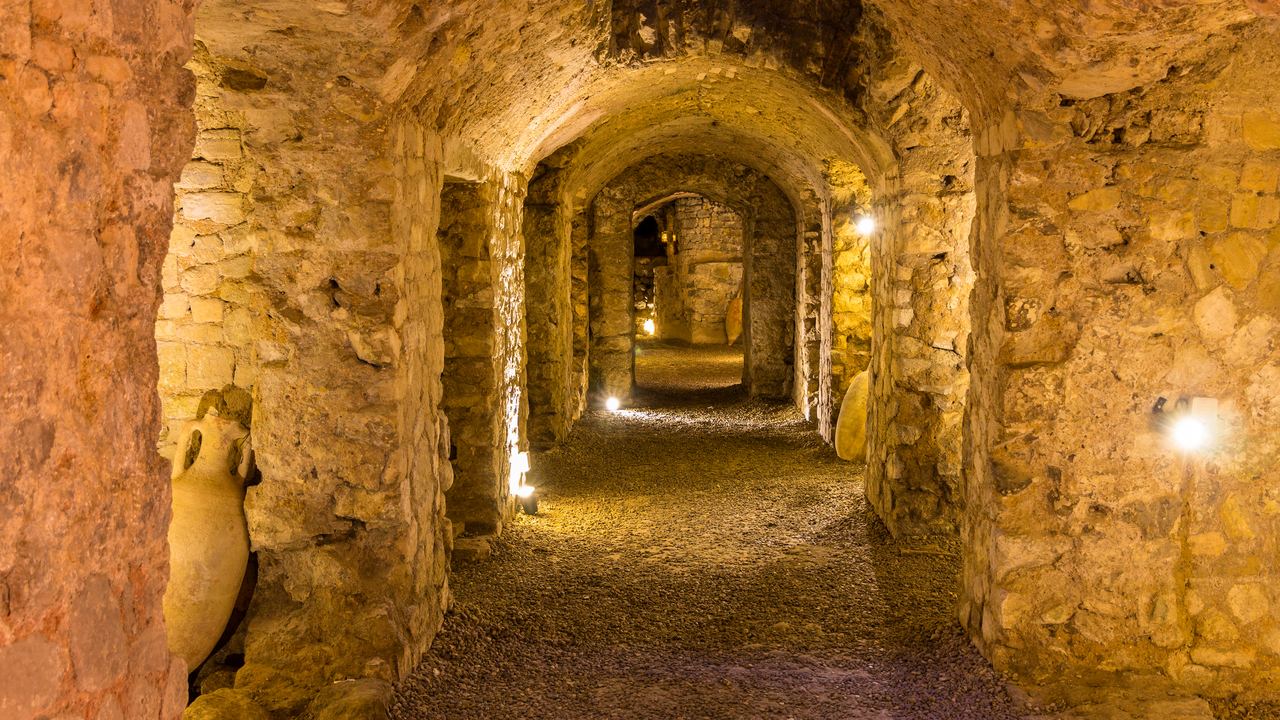
Underground Rome, self guided, looks like a short morning on paper. Three excavated sites sit inside the few hundred metres between the Pantheon, the Trevi Fountain and Piazza Navona. Each has its own door, its own ticket and its own opening hours, and none of them needs a guide booked six weeks out.
We checked all three on 28 October 2026, one official page at a time. Two of them are shut.
That is not the awkward part. The awkward part is that one of the closed ones is still being sold this morning, from pages that publish its opening hours as though nothing had happened. So this is both the walk, with the real price at each door, and the list of what is on sale for a site you cannot enter.
What underground Rome self guided actually means in this quarter
Three doors, three different reasons for being below the street, and they are walkable in one go. The classic surface triangle of Pantheon, Trevi and Navona is about 2.3 km, and all three excavations sit on or just off it.
Here is where each one stood when we read its own page, rather than a marketplace listing, on 28 October 2026.
| Site | Status today | Admission | Hours | Booking |
|---|---|---|---|---|
| Vicus Caprarius, under the Trevi Fountain | Open | €4.00 full; guided visit €8.00 | Tuesday to Sunday 11:00-17:00, closed Monday | Phone or WhatsApp only. Vicolo del Puttarello 25 |
| Stadium of Domitian, under Piazza Navona | Closed for restoration works, no reopening date published | Not on sale by the site | None published | Via di Tor Sanguigna 3 |
| Aqua Virgo section, Via del Nazareno | Temporarily closed for works | €4.00 full, €3.00 reduced still listed | Accompanied groups only, max 20 people | Booking line 060608, 9:00 to 19:00 |
| Piazza Navona and the Trevi Fountain, above ground | Open | Navona free; Trevi €2.00 for the fenced basin area | Trevi 9:00-22:00, from 11:30 on Monday and Friday | No booking for the square |
The fourth row is there because it changes the plan more than anything else in the table. The two squares you would be walking between are free, or nearly free, and they are open. What is underneath two of them is not.
The stadium under Piazza Navona is closed, and the tickets are still up
Piazza Navona has the shape it has because a stadium is holding it. The arena was built for Greek-style athletic contests, the city grew over it, and the oval of the square is the track. A stretch of the original seating survives below the north end, reached from Via di Tor Sanguigna, and for years you could walk down and look at it.
The page for that area on Rome's own tourism site is one line long, in English and in Italian:
The archaeological area is closed for restoration works.
No reopening date. No phased schedule, no partial access, nothing about guided slots. The Italian page says the same thing in the same number of words, and it too stops there.
There is a second oddity, and it is on the custodian's side rather than the seller's. The Sovrintendenza Capitolina, which looks after the site, has its own page for the stadium, and that page carries no closure notice at all. The only closure it was advertising when we read it concerned a different monument entirely, over at the Capitoline Museums. A visitor who starts from the custodian rather than the tourist board would come away thinking the place is open.
While we were on those two pages we also collected the thing nobody reconciles. The Sovrintendenza gives the stadium as 265 by 106 metres. Turismo Roma gives it as about 275 by 106 metres, with room for roughly 30,000 spectators. Both are official, both are current, and the ten-metre gap sits between two arms of the same city administration. We publish both numbers rather than pick the rounder one. Picking quietly is how a ten-metre gap disappears from the record.

What is still on sale for a site you cannot enter
We looked at what the ticketing side is doing, on the same day, and reported only pages we could actually open.
Tiqets still has a product page for the stadium. It says, where the calendar would be, "We don't have these tickets right now" — so nothing can be bought through it, which is the correct outcome. The same page, a little further down, still publishes the visiting hours: "Open today: 10:00 - 19:00", seven days a week, and a price of about $11. The inventory knows. The content does not.
Then there is a domain that exists only for this monument. It is an affiliate site, which it discloses, and it sends its buyers on to Headout, GetYourGuide and Tiqets. It publishes "Most visits run between 10:00 and 19:00, with last entry around 18:20" and sells entry with an audioguide "From €8". Nowhere on the page, when we read it, was there a word about restoration works or a closure.
Product pages for the same site also remain indexed on Viator, Musement and Tripadvisor. We are not going to tell you what those three show today, because their pages refuse automated requests and we could not open them; an unopened page is not a source. What we can say is that the listings have not been taken down.
One of those products is in our own catalogue, and we would rather say so than have you find it. It is a stadium entry ticket carrying 331 genuine reviews, nearly all of them left when the place was open. We have not hidden it and we have not quietly deleted it. What we did was write the closure into the first two sentences of its own listing, where a buyer reads it before the price. A review left while the door was open is no evidence that it opens now, and a catalogue that trades on the confusion is doing the thing we are complaining about.
This is the same shape as the ticket problem at the monument up the road, where ten of twelve sites sell a priority lane the Ministry says in writing does not exist. We took that one apart in an earlier piece on skip-the-line at the Pantheon. The mechanism is boring and it is always the same: a product page is written once and then earns money without being read again.
Vicus Caprarius: four euros at the door, and the eight that is not the ticket
The one site that is open is also the one with the most misreported price in the quarter, so this is worth getting exactly right.
In 1999 a cinema basement near the Trevi Fountain was being cleared for renovation and the work stopped. Nine metres down there was an imperial Roman house, a stretch of street, and a tank belonging to the Aqua Virgo, the aqueduct that still fills the fountain overhead. The site opened as Vicus Caprarius, the City of Water. The water has never been switched off, which is the thing that makes it worth the stairs: you are standing next to working plumbing from the first century.
Its own ticket page, read on 28 October 2026:
| Ticket | Price | Who |
|---|---|---|
| Full admission | €4.00 | Everyone else |
| Reduced | €2.50 | Roma Pass holders, EU students 18-25, EU teachers, journalists, police |
| Heavily reduced | €1.00 | Ages 14 to 17 |
| Free | €0 | Under 14s, EU archaeology undergraduates, Rome City Pass holders |
| Guided visit, on booking | €8.00 | Added to the visit, not a substitute for the ticket |
So the number to hold on to is €4.00. The €8.00 that turns up all over the internet as "the Vicus Caprarius ticket" is the guided visit, which is a different product and an optional one. If you walk in and pay, you pay four euros.
Two more things that catch people out. There is no online booking: the site takes phone calls and WhatsApp messages on a single number, and its phone line is open Tuesday to Sunday from 10:00 to 16:00, which is a narrower window than its own opening hours. Rome's tourism site adds that booking is required at weekends and on public holidays and strongly advised on weekdays. Anyone hunting for a booking engine will not find one, and that is the most common way a visit here fails before it starts.
And one small pleasure for anyone keeping score on city passes. A Roma Pass gets you a discount here, down to €2.50. The same card is worth nothing at the Pantheon, which is not in the Roma Pass or Omnia circuit at all. Two ticket desks a few streets apart, and the card is worth something at one of them.
Vicus Caprarius, the City of Water
An imperial Roman house and a tank of the Aqua Virgo aqueduct, nine metres under the streets beside the Trevi Fountain. Tuesday to Sunday 11:00-17:00, closed Monday. Admission €4.00.
Vicolo del Puttarello 25, Rome
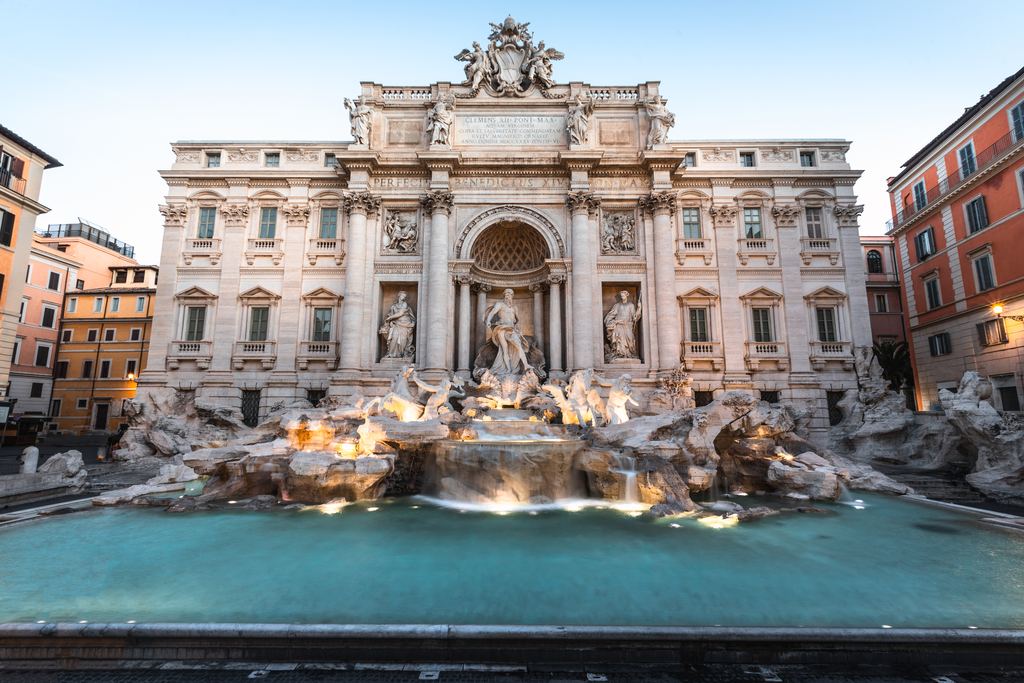
Above and below the same water
The fountain upstairs now has a ticket too
The Trevi Fountain stopped being free to stand at. Since 2 February 2026 the fenced basin area costs €2.00, in timed bands from 9:00 to 22:00, with last access at 21:00 and a later start of 11:30 on Mondays and Fridays. From the street it is still free, and after 22:00 the whole thing is.
That makes an unusual pairing for a morning. Two euros for the fountain, four for the Roman house and the aqueduct tank underneath it, and the water in both is arriving through the same channel. Six euros, two tickets, one piece of plumbing.
The third door, and the one nobody has noticed is shut
The Aqua Virgo has a second place where you can get at it: a stretch of the aqueduct's channel at Via del Nazareno, looked after by the Sovrintendenza Capitolina and visited by appointment rather than by turning up.
Its page says "Temporaneamente chiuso per lavori" — temporarily closed for works. We have not found anybody writing about this one, which is probably because almost nobody was selling it in the first place. It was never a walk-in.
The page is worth a look anyway, as an illustration of how these notices decay. Underneath the closure it still carries the full admission scale, €4.00 full and €3.00 reduced, free for residents of Rome and the metropolitan area and for MIC card holders. It still explains that entry is for accompanied groups only, at a maximum of twenty people, bookable on 060608 between 9:00 and 19:00. And in the field for days the site is closed, it lists all seven days of the week, which is either a very precise statement of the current position or a form that nobody has filled in. We read it as the second one.
If this one matters to your plan, the number on the page is the only way to find out when it comes back. There is no email, no newsletter, and no published schedule of works.
Doing underground Rome self guided: the walk that is left
One open site does not make an itinerary, so here is the honest version of the morning. It is shorter than the one you were promised and it costs about six euros.
The three doors, and what to do at each
Status and prices read on each site's own official page, 28 October 2026.
Vicus Caprarius. Go.
Open Tuesday to Sunday, 11:00 to 17:00, €4.00 at the door. Message the WhatsApp number first, and do that on a weekday morning when the phone line is actually staffed. Allow about forty-five minutes below ground. This is the only one of the three you can currently walk into.
Piazza Navona. Stay upstairs.
The archaeological area underneath is closed for restoration with no reopening date. Nothing to book and nothing to pay. The square itself is free, open, and the better part of the stop in any case: read the oval as the running track it was built on.
Via del Nazareno. Phone first.
The Aqua Virgo channel is temporarily closed for works. Accompanied groups of up to twenty only, by appointment on 060608 between 9:00 and 19:00. The prices on the page are still live even though the door is not, so take them as what it will cost rather than what it costs.
Two practical notes that have nothing to do with tickets. There is a drinking fountain in Piazza della Rotonda, about 87 metres from the Pantheon, and it is one of the rare nasoni with three dragon-head spouts; the big fountain in the middle of the square, on the other hand, is not drinkable and you can be fined for trying. And almost everything within five minutes of the Pantheon portico is free to go into, which is the fact that makes this quarter worth walking rather than booking. The squares and fountains of the centre cost nothing except the Trevi basin.
When a guided visit is worth it instead
We sell guided visits, so treat what follows with the suspicion it deserves, and then check the arithmetic, because the arithmetic is the point.
At the door, Vicus Caprarius is €4.00, or €12.00 with the site's own guided visit added. The guided products in our catalogue for the same site run from about €34 to €46. That is a real difference and it is not explained by the entrance fee, so it has to be explained by something else or it is not worth paying.
Three cases where it genuinely is. If you cannot ring an Italian number and the WhatsApp thread stalls, a booked product solves a problem four euros does not. If you want the aqueduct explained rather than looked at, a licensed guide in a small group is a different thing from reading the panels. And if the site is one stop on a walk somebody else has planned, you are buying the walk rather than the ticket.
The case against is just as plain. If you only want to see a Roman house and a working aqueduct tank, and you will send a WhatsApp message two days earlier, the door is four euros and the site is small enough to read by yourself in three quarters of an hour. Nobody selling a tour has any reason to tell you that. Hence this paragraph.
One filter we apply before showing you anything: no product in the grid below includes the closed stadium, and none of them promises priority entry at the Pantheon, because there is no such thing to promise.
What people usually mean by Rome underground, and why it is not in this quarter
A fair number of people searching for underground Rome want none of the above. They mean the Colosseum's hypogeum, the catacombs on the Appia, or the Scavi under St Peter's. Those are real and worth doing, they are all outside this quarter, and they all need booking well ahead.
It is worth untangling one more pairing, because the names invite it. Vicus Caprarius is not under the Pantheon. It is in the Trevi quarter, several streets away, and the thing that connects the two is the aqueduct rather than the ground. There is no excavated level under the Pantheon open to visitors. What there is, is the history of the building itself, which has been standing and in use since 609 and has never needed digging up.
Questions about underground Rome near the Pantheon
Can you visit the Stadium of Domitian under Piazza Navona?
Not at the moment. Rome's own tourism site says the archaeological area is closed for restoration works, and it publishes no reopening date. We read that page on 28 October 2026 in both English and Italian. Several ticketing platforms still carry a product page for it, and at least one of those pages still publishes opening hours, so an indexed listing is not evidence that the door opens.
How much is a Vicus Caprarius ticket?
€4.00 for full admission, read on the site's own ticket page on 28 October 2026. Reduced is €2.50 for Roma Pass holders, EU students aged 18 to 25, EU teachers, journalists and police; €1.00 for ages 14 to 17; free for under-14s, EU archaeology undergraduates and Rome City Pass holders. The €8.00 figure that circulates as the ticket price is the guided visit, which is a separate and optional purchase.
Do you need to book Vicus Caprarius in advance?
At weekends and on public holidays, yes, and on weekdays it is strongly advised. There is no online booking of any kind. The site takes reservations by telephone or WhatsApp on one number, and the phone line runs Tuesday to Sunday from 10:00 to 16:00, which closes an hour before the site does.
Is there anything to visit underneath the Pantheon itself?
No. There is no excavated or visitable level under the Pantheon, and the building has been in continuous use since 609, so it has never been dug out the way the sites under the squares were. Vicus Caprarius, often described as being under the Pantheon, is in the Trevi quarter. The link between them is the Aqua Virgo aqueduct, not the ground.
Can you do underground Rome self guided, without a tour?
For the one site that is open, yes. Vicus Caprarius sells admission at the door for €4.00, has its own panels, and takes about forty-five minutes. You will need to message or ring ahead rather than book online. The other two sites in the quarter are closed, so there is no self-guided route through all three at present.
What about Crypta Balbi?
Our own check, in August 2026, found it closed to the public except for Saturday site-works visits on booking, and two competitors still publishing its ordinary opening hours. We were not able to re-open its page for this piece, so treat our August finding as the last thing we verified rather than as today's position, and ring the museum before building a morning around it.
Is the Roma Pass any use for this walk?
Partly, and the split is unintuitive. It takes Vicus Caprarius admission down to €2.50. It is worth nothing at the Pantheon, which is not in the Roma Pass or Omnia circuit at all, and the Ministry says so on its own page for the monument.
Does the Trevi Fountain cost money now?
The fenced basin area does: €2.00 since 2 February 2026, in timed bands between 9:00 and 22:00, with last access at 21:00 and an 11:30 start on Mondays and Fridays. Looking at it from the street is still free, and so is the whole thing after 22:00.
The excavations in this quarter, and which of them you can actually get into
Our page for the underground sites near the Pantheon, with the status of each door and the products that still sell the closed one.
Guided visits to the one site that is open
All four go to Vicus Caprarius, the only one of the three doors you can currently walk through. Ordered by how many reviews they carry, most first. None of them includes the closed stadium under Piazza Navona, and none promises priority entry at the Pantheon, which does not exist. Compare them against €4.00 at the door, or €12.00 with the site's own guided visit, and buy one only if it is doing something those do not.
Nine Metres Under Trevi: The Domus and Its 800 Coins
Found in 1999 when a cinema basement was cleared, with African oil amphorae and a marble head of Cleopatra's son among the finds.
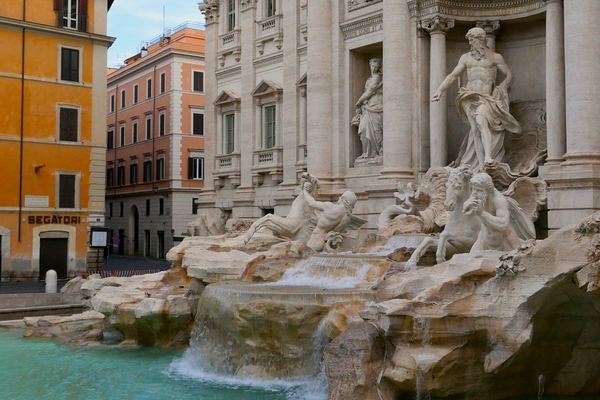
Forty Minutes at the Trevi Fountain and the Domus Below It
A guide reads the facade in the order it was composed, then takes you nine metres down to the aqueduct that has never stopped supplying it.
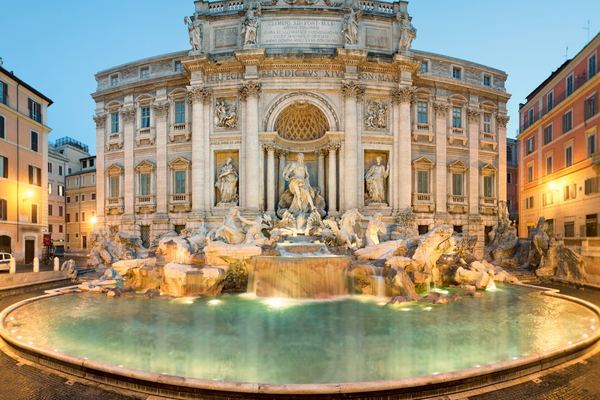
Following the Trevi Water Through the City Below It
All three sections of the site, tracing the aqueduct from the fountain into the pipes and basins of the Roman house built to use it.

Under the Trevi District in 45 Minutes, Ending in Gelato
The site was found when the old Cinema Trevi was gutted, and its walls are still wet from the aqueduct that feeds the fountain overhead.
Ratings collected by Viator, Tripadvisor and Tiqets
Data verified on . Status, hours and prices read 28 Oct 2026 on each site's own page: Turismo Roma and Sovrintendenza Capitolina for the two closed sites, vicuscaprarius.com for Vicus Caprarius.


