
Pantheon Rome Skip the Line: Ten of Twelve Ticket Sites Advertise a Queue That Does Not Exist
We read twelve English-language sites that sell entry to the Pantheon in Rome, one page at a time. Ten advertise skip-the-line access to a monument where the ministry states in writing that there is no such thing. Here is what those products really deliver.
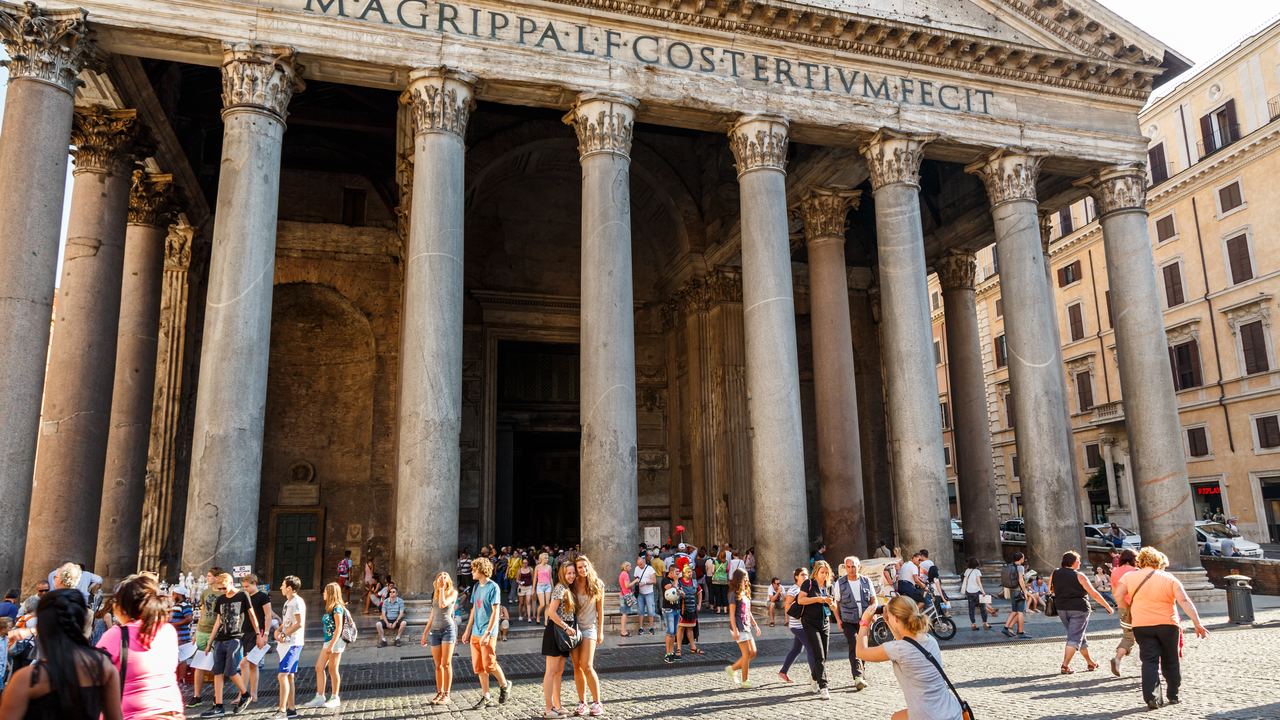
Search for a Pantheon Rome skip the line ticket and you will find dozens. Priority entry, fast track, beat the queue: the wording moves around, the promise does not. The ministry that owns the building publishes the opposite, in English, on the monument's own page.
Last month we sat down with twelve English-language sites whose entire business is selling entry to this one building, and read them a page at a time. Ten advertised some form of queue-skipping. One attached the label to the ticket desk on the pavement outside, with a stated wait of forty-five to sixty minutes printed underneath it.
Skip-the-line entry is not available.
The twelve sites, read one at a time
The list was not scraped and it was not random. We took the English-language sites that surface when somebody plans this visit, the ones whose whole purpose is selling a way in here, and read each of them page by page on 28 August 2026. Twelve in total, by hand, because the interesting sentence is always in the small print and a crawler does not read small print.
Ten of the twelve advertised skip-the-line or priority access. Ten either still printed €5 as the price or gave no price at all, eight weeks after it became €7, and one of those had refreshed its page the month after the rise and left the old figure sitting there. Not one of the twelve had a page about accessibility, although the ministry publishes all of that in English too.
We looked again on 9 September 2026, in less depth. The same wording is still in use across the platforms we sampled. We are not publishing a new count off a spot check, and we are not naming anyone. The point is the shape of the market, not a list of defendants.
The fast lane is not the only thing they get wrong
Reading twelve sites end to end has a side effect. You stop noticing individual mistakes and start seeing the shape of a whole layer of the web.
Take a number with no commercial interest attached to it at all. The opening at the top of the dome is about nine metres across, which is thirty Roman feet, and the specialist literature has agreed on roughly that for the better part of a century. Across the twelve sites the figure circulated anywhere between 7.6 and 9.2 metres. One of them published four different values on four of its own pages, which means nobody there has ever read two of their own pages side by side.
The origin of that one is almost sympathetic. The basilica's own website gives 8.2 metres, and an institutional source is precisely the kind you copy without checking. Our best guess is that it started as twenty-seven feet misread for thirty, and it has been reproduced ever since by people with no particular reason to doubt it.
The price behaves the same way. Admission became €7 on 1 July 2026, and eight weeks later most of the English-speaking web still had it at €5. So does accessibility: the ministry publishes the step-free entrance, the dress code and the ban on phone calls inside, in English, and not one of the twelve had put any of it on a page.
Almost nobody here is lying. They are copying each other, which from where the reader stands is the same problem in a better coat. Our own measurements, including the places where the surveys genuinely disagree with one another, are on the dome and the oculus.
Why a Pantheon Rome skip the line cannot exist
This is not a commercial policy that could be relaxed for the right fee. It is arithmetic at a doorway.
Every ticket carries the name of the person who bought it, and staff check that name against an identity document as you go in. Since 10 March 2026 the name can be corrected once only, and no later than seventy-two hours before the visit. Entry is released in hourly bands between 9:00 and 18:00, with as many as 1,200 people in each one. All of them arrive at the same ancient door, where a member of staff reads one document at a time.
Insert a priority lane into that and nobody has moved forward. You have only decided whose document gets read first, and the state has declined to sell that decision. There is nothing to buy, which is why the ministry can write the sentence flatly rather than diplomatically.
What a Pantheon Rome skip the line ticket actually delivers
The products themselves are mostly real. A booked time band is a real thing to sell. An audio commentary is a real thing to sell. What has gone wrong is the label on the tin, and once you know which product is hiding behind which phrase, the whole category becomes legible in about a minute.
| What the listing promises | What arrives | What it is worth here |
|---|---|---|
| Skip the line, fast track | An hourly entry band, which the state sells with no fee attached | Nothing over booking direct. The band opens when it opens |
| Priority entrance | The pre-booked lane, one of the three outside the door | It moves with the clock rather than faster than the crowd |
| Avoid the ticket queue | You miss the ticket desk. The entrance is unchanged | The cash desk clears in about 5 to 15 minutes. Roughly €10 for that quarter of an hour |
| Instant mobile voucher | Sometimes a code to be exchanged for the ticket at a shop | One collection point is about ten minutes away on foot, each way |
| Guaranteed time, months ahead | A catalogue entry. The state calendar runs about six weeks out | The date can be reissued or refunded closer to the day |
Ten euro to miss a fifteen-minute queue is a perfectly reasonable trade. It is just not the trade the words describe.
The detour nobody prices in
The voucher you have to go and collect
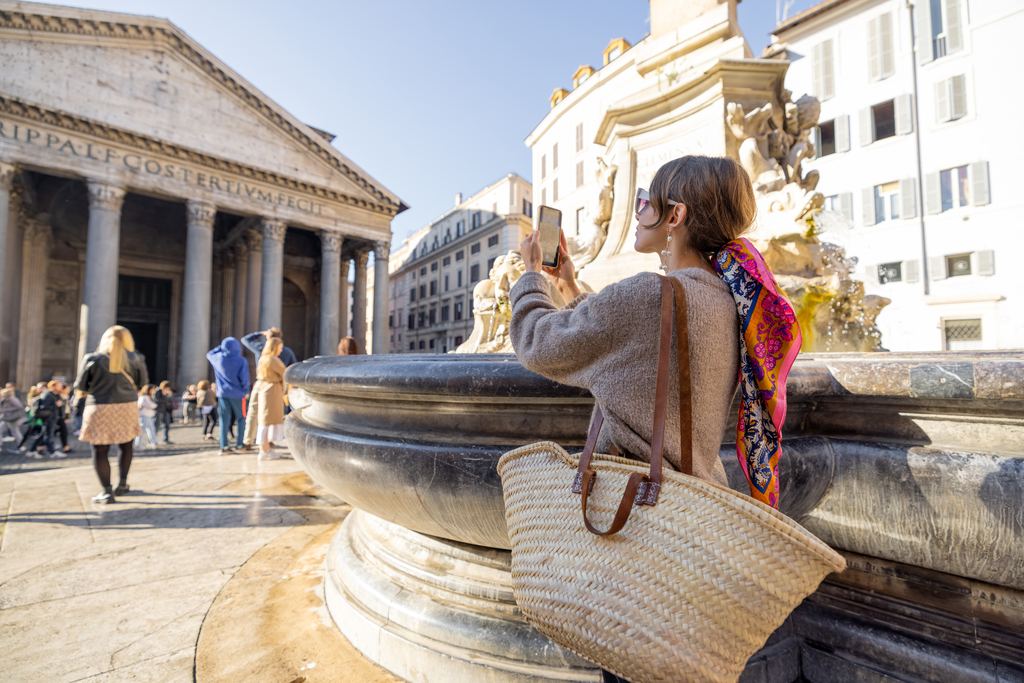
Some of these products never put a ticket on your phone. They put a code on it, and the code is exchanged for the real ticket at a shop with an address of its own. One such collection point sits roughly ten minutes' walk from the portico.
Call it twenty minutes on the round trip, in a city where you are already walking a great deal, and at the end of it you join the same entrance as everybody else. This is not fraud. It is a service that has been named after a benefit it does not provide.
If the small print mentions collection, pickup or an exchange point, that is what it means. Read that line before you read the price.
When paying more does buy you something
A complaint that applies to everything is worth nothing, so here is the other half of it. Elsewhere in Rome, paying more genuinely changes what happens at the door, and the difference is structural rather than moral.
At several museums in the city the operator caps how many people are inside at once and releases entry in fixed slots. There the reservation is not a shortcut past a queue, it is the only door, and turning up on the day may simply not work. Castel Sant'Angelo, run by the same state body as the Pantheon and seventeen minutes away along the river, is a useful comparison: €18 since 1 July 2026, €2 for EU citizens aged 18 to 25, and closed on Mondays. Worth checking before you buy a combined ticket that assumes both buildings are open on the same day.
Then there is the other kind of premium, which is not about queues at all. Palazzo Doria Pamphilj publishes an admission of €16 to €17. We have seen the same entry resold at €32. Nothing about the waiting changes at that price. The difference is the intermediary, and it should be described as such.

How to spot a bad listing in three seconds
You do not need to know anything about Roman architecture to do this. Six tells, any one of which is enough to make you read the rest properly.
- The word official attached to an audio guide. The state sells no audio guide at this monument, so the commentary belongs to somebody else and the checkout is quietly selling you two things from two owners.
- A guaranteed entry time more than about six weeks out. The state calendar is set month by month and tickets are released around the middle of the previous month. Beyond that, the slot being sold has not been created yet.
- A guaranteed time on the first Sunday of the month. Admission is free that day, nothing can be booked online, and the three queues collapse into one. Any timed product sold for those dates cannot be delivered as described.
- Skip the line printed next to a stated waiting time. One of the twelve managed both on the same screen, which is at least honest by accident.
- Any mention of collection, pickup or an exchange point. See above.
- Roma Pass or Omnia listed as valid. The Pantheon is in neither circuit, and the ministry says so plainly.
What to ask before you pay
Five questions, in the order that matters. A seller who cannot answer the first two is not selling what you think.
- Does this include the €7 state admission, or only a service on top of it?
- Whose audio guide is it, if there is one?
- Is the ticket issued in my name, and can that be changed if my plans move?
- Do I collect anything anywhere, and where exactly?
- What happens to my booking if the date turns out to be a free Sunday?
If you would rather deal with the state directly, that route has no booking fee and we have written out how the official channel works, including which site is actually the official one.

What we are not saying
None of this is an argument for buying nothing from anybody. Resellers do real work. They take payment in your currency, they answer at midnight, and some of them attach a guide who is worth every cent.
It is an argument about wording, and there is a number in the same catalogues that makes the case better than any complaint could. Across the Rome listings that include admission here, read on 27 August 2026, bare admission resold on its own had a median of €20 over nineteen products. Admission with an audio guide attached had a median of €13 over twelve. The product that adds nothing costs more than the product that adds something. The full comparison, with the four organisations that will each sell you a Pantheon ticket, is on our tickets and prices page.
If you are going to pay a middleman, pay one who is handing you something in return. And if what you actually want is to be walked in by somebody who has already done the booking, that product exists and it is not sold on a false premise: reserved-entry guided visits are the best-rated way into this building on our own catalogue.
There are three queues outside, and the fastest one is free
Which line is which, where each of them stands, and why the one nobody photographs moves in about a quarter of an hour.
Questions about skipping the line
Is there a skip the line ticket for the Pantheon in Rome?
No. The ministry that runs the monument states in writing that skip-the-line entry is not available, and the ticket is personal with document checks at the door. The products sold under that name are time bands, ticket-desk bypasses or audio guides wearing a borrowed label.
What do priority entry tickets to the Pantheon actually include?
An hourly entry band, most of the time. Occasionally a code you have to exchange for the ticket somewhere else first. The band gets you in when it opens and not a minute earlier, and the state sells the same band with no fee on top.
Why do so many sites advertise skip the line at the Pantheon?
Because it is the phrase people type, and because the products underneath it are genuine products sold under the wrong name. Nobody is contradicted at the door either: you arrive, you queue a little, you go in, and the wording is never tested.
Can I just turn up and buy a ticket at the Pantheon?
Yes. There is no compulsory booking and no fee on the official channel. The desks and machines work on site, the ticket office closes at 18:00 and last entry is 18:30. Bring notes. The cash desk empties far faster than it looks, five to fifteen minutes even in August, according to the people who have just used it.
Does the Roma Pass get me into the Pantheon?
No. The monument is in neither the Roma Pass nor the Omnia circuit, which the ministry states on its own page and almost nobody else repeats. Budget the €7 separately, or come on the first Sunday of the month, when everybody gets in free.
The nearest thing to a fast lane, honestly described
Sixteen of these exist on this site. What you are paying for is somebody licensed who has already done the booking and knows which desk is which, not a shorter queue.
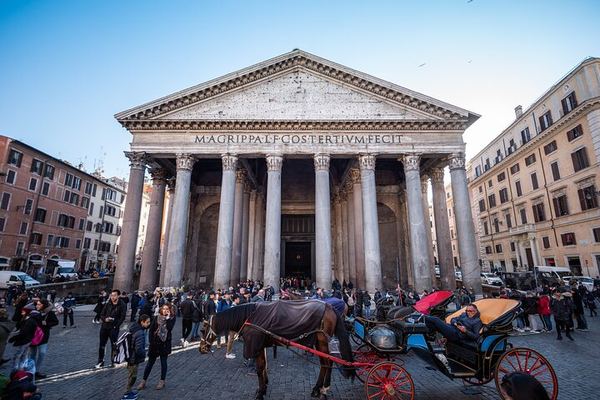
Pantheon Elite Tour: 50 to 60 Minutes with a Native-Speaking Guide
An hour is the deliberate length here, meeting outside Antica Salumeria, and the ground itself gets covered: the Campus Martius and Romulus.
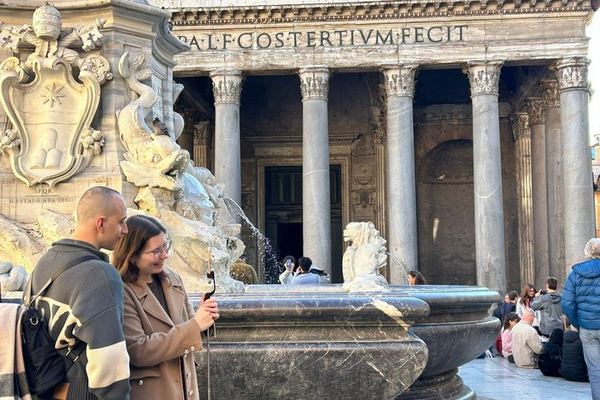
Pantheon Entry with a Walk from Campo de' Fiori and Largo Argentina
The walk starts at Touristation Navona and takes in Campo de' Fiori and the sunken temples of Largo Argentina before the Pantheon, wine tasting optional.
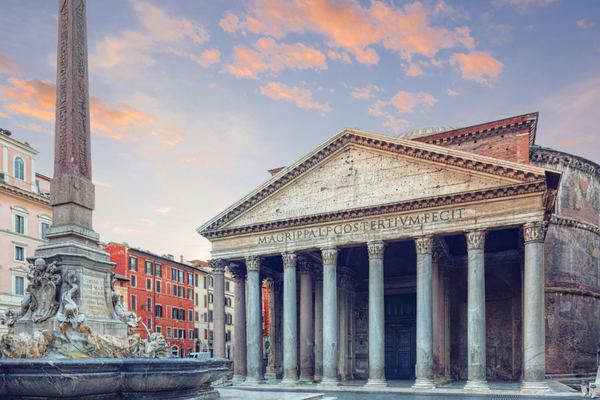
Pantheon Fast-Track Ticket and Guided Tour of the Rotunda
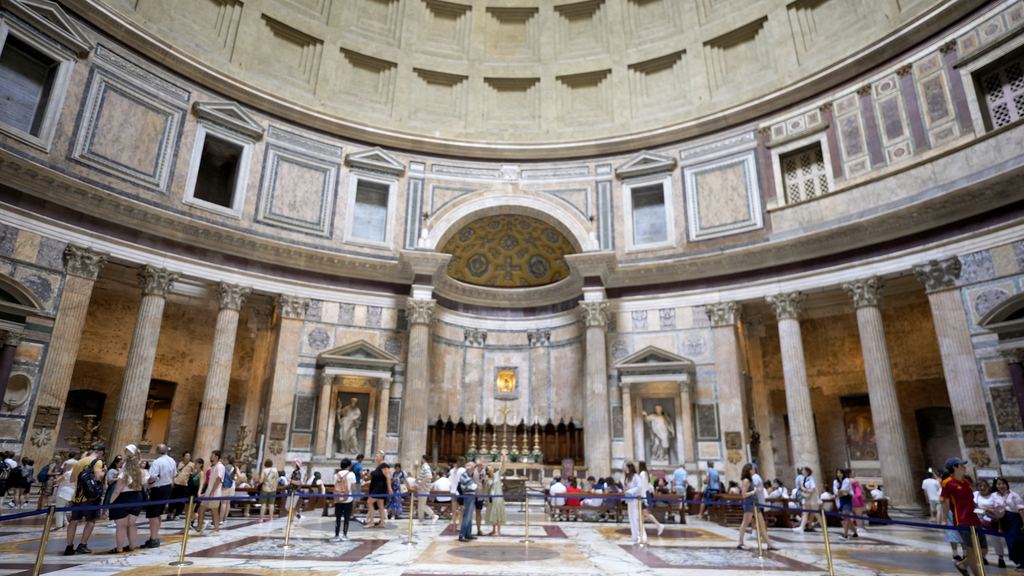
A guide walks the room Michelangelo praised, and the dome's numbers explain it: concrete 5.90 metres thick at the base, 1.50 at the rim of the oculus.
Ratings collected by Viator, Tripadvisor and Tiqets
Data verified on. Entry rules and the skip-the-line statement from the Direzione Musei nazionali di Roma, read 2 September 2026. Site census 28 August 2026, spot-checked 9 September.


