
Pantheon Museum · Tour
The Ara Pacis, and the Only Modern Building in Old Rome
Ratings collected by Tiqets
Richard Meier's museum is the only significant contemporary building put up in the historic centre of Rome since the Second World War. That fact alone made it one of the most argued-about structures in Italy when it opened: white travertine, glass and steel, dropped beside the Tiber among ochre facades. Whether it belongs there is still a live question, and standing in it is the only way to form a view. Inside is the reason it was built. The Ara Pacis, the Altar of Peace, was inaugurated in 9 BC under Augustus, the first Roman emperor and Julius Caesar's great-nephew. His reign opened the Pax Romana, the two centuries in which the empire went largely without major war, and the altar was his statement of that intention, carved with a procession of the imperial family in which individual faces are recognisable. It was buried for centuries under later building and excavated in pieces, which is why the reconstruction is itself part of the story. The Mausoleum of Augustus stands in the square immediately outside, so the man and his monument are a hundred metres apart. The ticket covers admission and nothing else. No guide, no commentary, no fixed group. What it gets you is a building designed around a single object, with the altar standing free in daylight, so the visit is short unless you decide to make it long. An hour covers it comfortably. The argument about the building has dates attached. It opened in 2006, the first new civic building inside the historic centre in something like seven decades, and by 2008 a newly elected mayor of Rome was promising to pull it down. He did not, and the question has been left to whoever is standing in front of it. The altar was vowed by the Senate in 13 BC, when Augustus came back from three years in Spain and Gaul, and dedicated on 30 January of 9 BC. The long sides carry the procession: the imperial household walking to a sacrifice, Agrippa among them with a small child holding on to his cloak, which is the kind of detail state monuments did not put on themselves before this one. The corner panels are mythological, and one of them, a seated woman with two infants and a lapful of fruit, has been called Tellus, Italia, Pax and Venus by serious scholars and is still unsettled. Getting it back took longer than making it. Fragments came out from under a palace on the Corso from the sixteenth century onwards, and the last of them only in 1937 and 1938, when engineers froze the waterlogged ground beneath the building to lift the remaining blocks out. The reassembly was unveiled for the two thousandth anniversary of Augustus's birth, and the outer wall of the museum carries his own account of his reign, the Res Gestae, in bronze letters facing the tomb across the square. That tomb is a separate site with its own booking, so treat it as a second visit rather than something this ticket reaches.
What's included
- Entry ticket
Itinerary
The map could not be loaded. Please try again in a moment.
Ara Pacis Museum
Keep exploring
More experiences in Palaces & Private Galleries
-
 Free cancellation
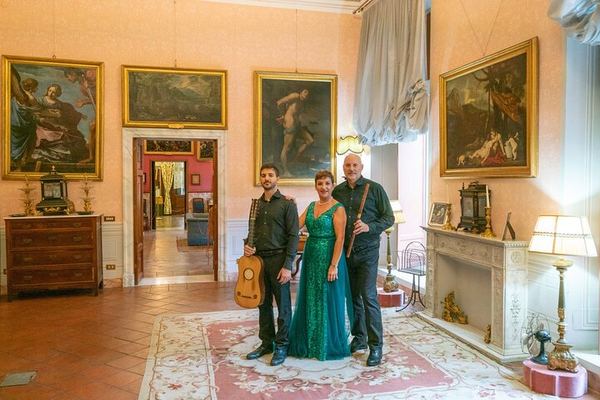
Baroque Instruments in the Princess's Apartment, for Twenty-Five
4.9 (27) 4.9 stars out of 5, 27 reviewsTheorbo, traverso and soprano, playing music written for these forces in a room this size. Doors close at 7:15 and nobody is let in after.
€ 96.00 -
 Selling fast
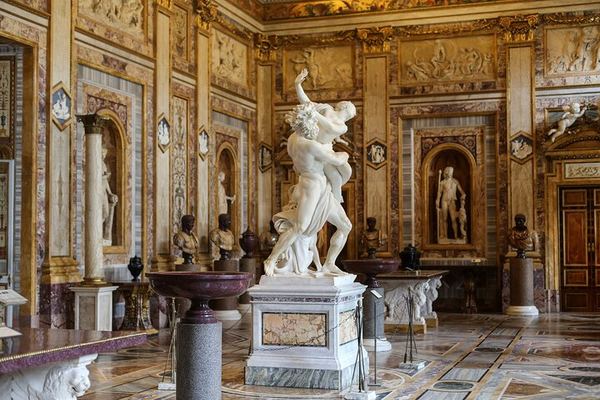
Borghese Gallery and Gardens, Ending on the Pincio
4.6 (2,311) 4.6 stars out of 5, 2,311 reviewsLeaves you at the terrace above Piazza del Popolo rather than back at the villa, with headsets throughout. The exit involves a long staircase.
€ 54.00 -
 Selling fast
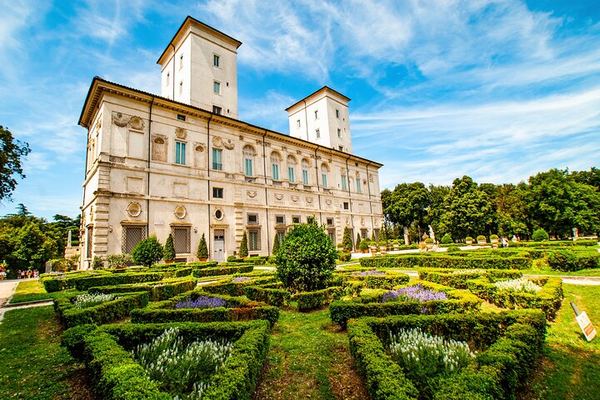
Borghese Gallery, and What to Do in the Park Afterwards
4.9 (161) 4.9 stars out of 5, 161 reviewsNames the route out: the rowing-boat lake, the Pincio terrace, the Casina Valadier and the smallest cinema in the world. Six, fifteen or ticket only.
Discounted price€ 26.97Regular price€ 29.00
Ratings collected by Viator and Tripadvisor