
Pantheon Museum · Tour
One Hundred Audio Stories Across Fifty Places in Rome
A hundred recorded stories tied to fifty locations, which is roughly five times the coverage of a normal audio walk and the reason to choose this one. The famous stops are there, the Trevi Fountain, the Spanish Steps, Piazza Navona, the Pantheon, but so are the Aqueduct Park, Santa Costanza, the Janiculum, Villa Doria Pamphilj, three Tiber bridges and the Orange Garden on the Aventine. If you are in Rome for a week rather than a weekend, that is where the value sits. It runs in the browser with nothing to install. Headphones and a data connection are the whole requirement. Start where you are, stop when you want lunch, pick it up two days later in a different part of the city. The narration is written as storytelling with soundscapes behind it rather than as a list of dates, which works better while walking than a lecture does. Two practical notes. Activation is done by entering the last five digits of your phone number in the promo code field at App.trales.io after booking. And all sales are final: cancellations are not refunded.
What's included
- Web app with map
- Stories & guides about top sights, historic events & famous people
- Captivating storytelling & soundscapes
- 1 step access: Link to easily activate and access your audio guide
Itinerary
The map could not be loaded. Please try again in a moment.
Rome
No meeting point. Start and stop wherever you like. A good opening is the Colosseum, then past the Roman Forum and on into the centre from there.
Pantheon
One of 100 location-based stories: The Pantheon, and what a temple to all the gods was actually for. Walk it at your own pace and in your own order. All you need is a phone with a connection and headphones. Nothing to download, it runs from the browser, and you can stop and restart wherever you like.
Colosseum
One of 100 location-based stories: The Colosseum, with the gladiators, the programme of a games day and the emperors who paid for it.
Roman Forum
One of 100 location-based stories: The Roman Forum, the square that ran the empire for centuries, and how to read the ruins that are left of it.
Trevi Fountain
One of 100 location-based stories: The Trevi Fountain: where the water comes from, who built it and what the coins are about.
Spanish Steps
One of 100 location-based stories: The Spanish Steps, and why a staircase between a square and a church became the most famous one in Europe.
Piazza Navona
One of 100 location-based stories: Piazza Navona, its shape, its fountains and the arena underneath it.
St. Peter's Basilica
One of 100 location-based stories: St Peter's Basilica, the building and the century and a half it took to finish.
Piazza Venezia / Ancient City
One of 100 location-based stories: Piazza Venezia, where ancient Rome and the modern capital sit on top of each other.
Trastevere
One of 100 location-based stories: Trastevere, across the river, and what the district was before it became the place everyone eats.
Piazza del Popolo
One of 100 location-based stories: Piazza del Popolo, the gate travellers arrived through for centuries, and the square built to receive them.
Basilica di Santa Maria Maggiore
Santa Maria Maggiore, the largest church in Rome dedicated to the Virgin, and the legend of the snow that explains its plan.
Villa Borghese
Villa Borghese, the park and the collection, and Cardinal Scipione Borghese, who assembled both.
Appian Way (Via Appia Antica)
The Appian Way, the road the legions marched south on, still paved with the stones they marched over.
Colle del Gianicolo
The Janiculum, the hill outside the famous seven, with the gods, the heroes and the view.
Navona / Pantheon / Campo de’ Fiori
Campo de' Fiori, a market by morning and something else entirely by night, with the history under the stalls.
Piazza Barberini
Piazza Barberini, the square the Barberini family built themselves, and what it looked like before the traffic.
Piazza della Repubblica
Piazza della Repubblica, its curve traced from the exedra of the Baths of Diocletian standing behind it.
Piazza Venezia
Piazza Venezia again, from the other side: the layers underneath and what was demolished to make the square.
Piazza della Minerva
Piazza della Minerva, named for the temple of Minerva Chalcidica that stood on this ground long before the church did.
Piazza Farnese
Piazza Farnese and the palace that fills one side of it, built for Cardinal Alessandro Farnese in the 16th century.
Piazza Navona
Piazza Navona a second time, for the buildings around the edge rather than the fountains in the middle.
Piazza del Popolo
Piazza del Popolo again: the obelisk, the twin churches and the trick of perspective they were built to perform.
Spanish Steps
Piazza di Spagna at the bottom of the steps, with the embassy that gave the square its name.
Piazza del Campidoglio
Piazza del Campidoglio, laid out by Michelangelo over the most sacred hill of the ancient city.
Piazza Farnese
Piazza Farnese once more, this time for the two granite basins in it, taken from the Baths of Caracalla.
Discover the secrets of Rome's Turtle Fountain in Piazza…
The Turtle Fountain in Piazza Mattei, and the story of how the turtles arrived on its rim long after the rest.
Discover the secrets of Rome's iconic Fountain of the Four…
The Fountain of the Four Rivers in Piazza Navona, and what the four figures are meant to be doing.
Via Del Corso
Via del Corso, the straight line through the centre, once used for a horse race run without riders.
Via Veneto
Via Veneto, where the film crews and the photographers of the Dolce Vita years worked the pavement.
Mouth Of Truth
The Mouth of Truth, a colossal stone face of a titan god, and what it was before it became a lie detector.
Ponte Sisto
Ponte Sisto, and the bridge that stood on the same crossing before it.
St. Angelo Bridge
Ponte Sant'Angelo, Roman built and now for pedestrians only, with the angels installed centuries after the arches.
Pont Fabricius
The Pons Fabricius, more than two thousand years old and still carrying people across the Tiber to the island.
Ponte Cestio
The Pons Cestius, on the other side of the island, and what a Roman bridge had to survive to still be here.
Arch of Constantine
The Arch of Constantine, and the older monuments its sculptors quietly took their reliefs from.
Basilica di Santa Maria in Trastevere
Santa Maria in Trastevere, with a history that reaches back to the 220s and mosaics that are worth the walk on their own.
Mausoleo di Santa Costanza
Santa Costanza, a round mausoleum with 4th-century mosaics, and the two imperial sisters buried in it.
Basilica di Santa Sabina
Santa Sabina on the Aventine, and its wooden doors, carved when the empire was still standing.
Arcibasilica di San Giovanni in Laterano
San Giovanni in Laterano, the cathedral of Rome, and the Laterani family whose land it was built on.
Step back in time to the awe-inspiring Circus Maximus
The Circus Maximus, the largest venue Rome ever built, now a green hollow the shape of the track.
Embark on a thrilling journey to the ancient Aventine Hill
The Aventine, one of the original hills, and its part in the founding of the city.
Uncover the secrets of Rome's past on the illustrious…
The Oppian Hill, with Nero's Golden House under the park and Trajan's baths on top of it.
Discover Rome's secret sanctuary
The Orange Garden on the Aventine, small, walled, and with one of the best views in Rome over the far bank.
Villa Doria Pamphilj
Villa Doria Pamphilj, the largest park in Rome, laid out in the 17th century for a family with a pope in it.
Pincian Hill
The Pincian Hill, where the gardens of the Roman rich once stood, above Piazza del Popolo.
Colle del Gianicolo
The Janiculum again, this time for the cannon fired at noon and the terrace it is fired from.
Discover the enchanting Villa Lante al Gianicolo
Villa Lante al Gianicolo, designed by Giulio Romano, with the city laid out below it.
Uncover Rome's grandeur at Parco degli Acquedotti
The Parco degli Acquedotti, 240 hectares of open ground with the aqueduct arches running across it.
Step onto Tiber Island
Tiber Island, a hospital site for two thousand years, from the temple of Asclepius to the one standing there now.
Vatican City
Vatican City, the smallest independent state in the world, with St Peter's and the Sistine Chapel inside its walls and an influence out of all proportion to its size.
Rome
Not included
- Offline access
- Smartphone & headphones (bring your own)
- Physical in-person guide (not needed)
Good to know
- Wheelchair accessible
- Infants and small children can ride in a pram or stroller
- Service animals allowed
- Public transportation options are available nearby
Show 6 moreShow less
- Transportation options are wheelchair accessible
- Suitable for all physical fitness levels
- Not recommended for travelers with hearing impairment
- Up to 15 travelers per booking.
- Mobile or paper ticket accepted
- Guiding available in: de, ru, cmn, en, it, pl, fr, es.
Reviews
Loading reviews…
Keep exploring
More experiences in Self-Guided Walks & Audio Apps
-
 New
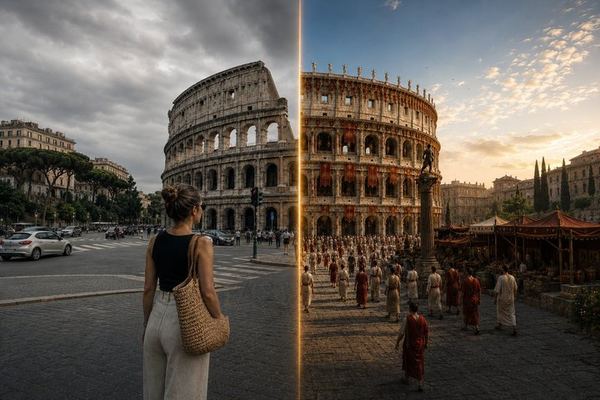
NewChronoWalk: 21 Rome Stops with Then and Now Reconstructions
5.0 (6) 5.0 stars out of 5, 6 reviewsAt selected stops, press and hold the screen and the missing building fades in over the ruin. Runs in the browser, no app, and can be spread over days.
€ 14.99 -
 Free cancellation
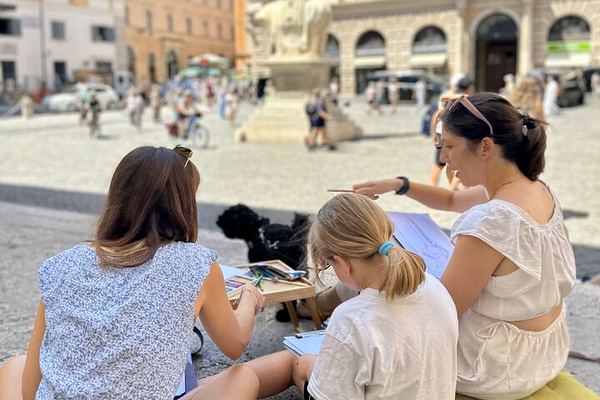
Family Hunt for Rome's Hidden Animals, with an Art Workshop
5.0 (39) 5.0 stars out of 5, 39 reviewsChildren look for bees, lions, dolphins and one elephant carrying an obelisk; the history arrives while they search. Workshop moves indoors if it rains.
€ 89.00 -
 Free cancellation
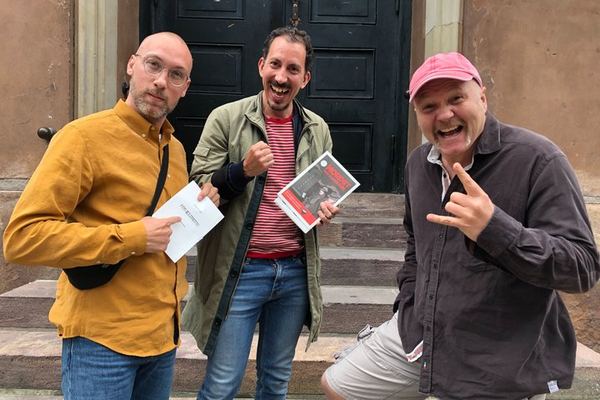
Paper Mystery Walk Outside the Pantheon, from a Real Case
4.0 (5) 4.0 stars out of 5, 5 reviewsCollected as a physical envelope from a kiosk on Via Zanardelli, not downloaded. The real case file comes at the end, once you have solved it.
€ 39.00
Ratings collected by Viator and Tripadvisor